
Analytics Engineer Resume: dbt, Metrics Layer and Data Warehouse Examples That Pass ATS (2026)
Written by Armen Mkhitaryan
Hiring-manager checklist - six signals that prove an analytics engineer will succeed in 2026
- Production dbt repo with model tests and CI history
- Automated tests and model-level coverage (schema, data, and contract tests)
- Clear ownership of ELT pipelines and SLAs for freshness and latency
- Measurable performance changes (query cost reduction, latency improvements, adoption metrics)
- Observability and alerting artifacts (lineage, run logs, SLA dashboards)
- Enablement deliverables (metrics layer definitions, transformation docs, onboarding guides)
What hiring teams actually evaluate
How hiring patterns usually work
- Hiring teams want evidence you build reliable, production-ready transformations that analytics consumers trust.
- They prioritize candidates who combine SQL and engineering discipline with product thinking about data consumption.
Key evaluation criteria
- Ownership: ownership statements tied to pipelines, schedules, and incident outcomes.
- Reproducibility: CI, tests, and clear repo structure for others to use.
- Impact: measurable improvements that show business value.
- Collaboration: examples of enabling analysts, data scientists, or product teams to self-serve.
Practical note
- Avoid vague phrases like "built pipelines." State the pipeline, the SLA, the tool, and the measurable result.
Resume structure and section-by-section snippets
Recommended sections and order
- Header (name, role, location, contact, GitHub/repo links)
- Professional summary or objective
- Grouped technical skills and tools
- Professional experience (reverse chronological)
- Projects or portfolio section for dbt/SQL artifacts
- Education and certifications
Summary examples (short snippets to paste)
- Senior-level summary - example
- Analytics Engineer with 7 years building dbt-based ELT pipelines on Snowflake and BigQuery. Focused on data modeling, metrics layer design, CI/CD, and reducing query costs while increasing BI adoption.
- Experience bullet templates (use active verbs and measurable outcomes)
- Designed dbt model for product events, reducing downstream query time by 45% and lowering compute costs by 28%.
- Implemented CI tests and schema contracts for 120 models, decreasing production incidents by 60%.
- Led rollout of metrics layer and training that increased self-serve dashboard usage by 35% over 6 months.
Projects section tips
- Name each project with Role, Tooling, and Outcome.
- Include small repo README excerpts: purpose, inputs, expected outputs, tests, and usage examples.
- Show CI badge status and sample lineage diagram image or description.
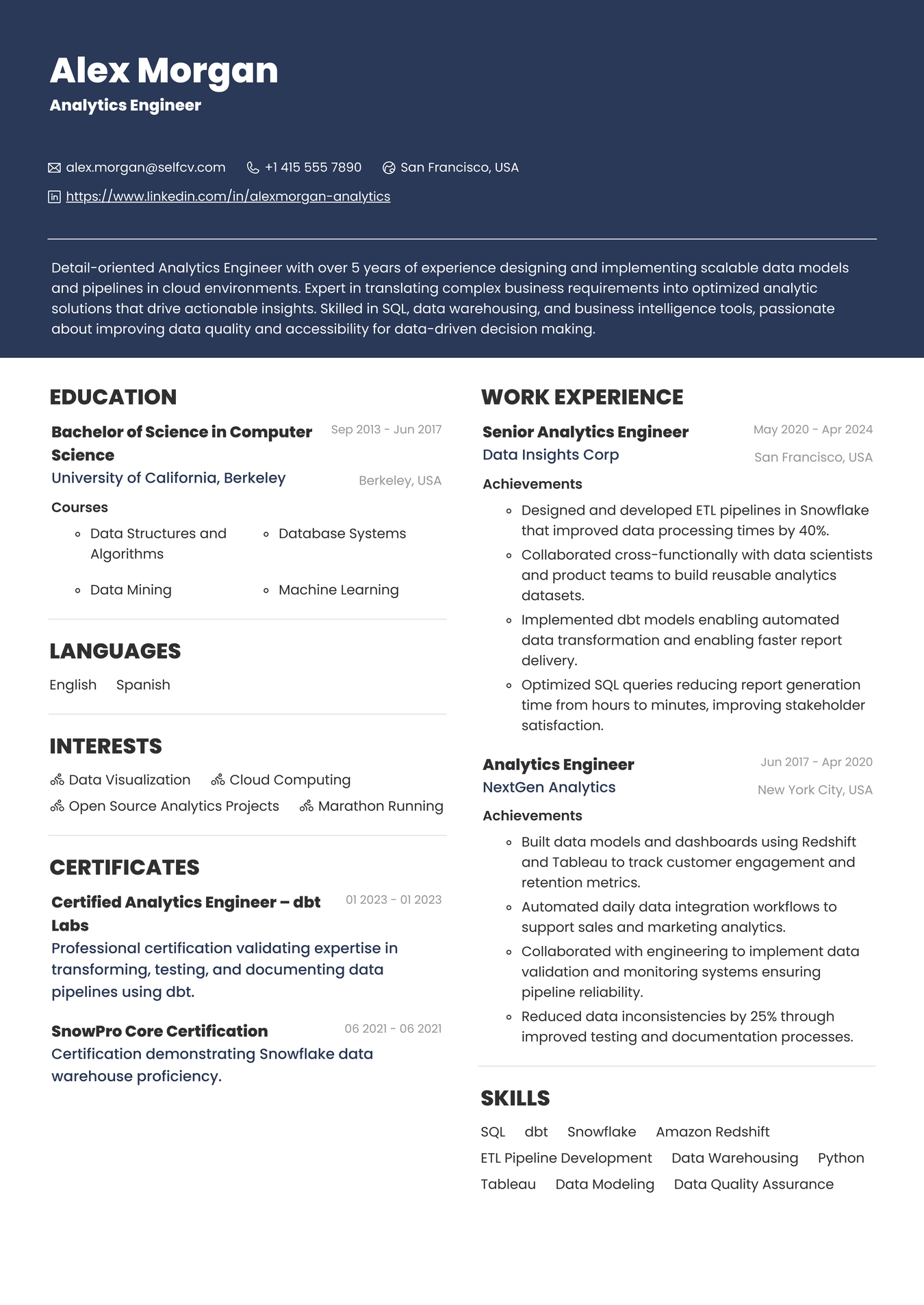
Resume Example for Analytics Engineer
Complete resume example
The candidate, companies, and career history shown here are fictional examples created for illustration and any resemblance to a real person or organization is coincidental.
Candidate Name
Maya R. Patel
Target Position
Senior Analytics Engineer
Location
Austin, TX (open to remote)
Professional Summary
Analytics engineer with 6 years delivering reliable ELT and transformation pipelines using dbt, Snowflake, and Airflow. Specializes in dimensional modeling, metrics layer implementation, test-driven transformations, and observability to support self-serve analytics across product and finance teams.
Grouped Skills
- Languages: SQL (expert), Python (intermediate)
- Tools: dbt, Airflow, Snowflake, BigQuery, Looker, Metabase
- Practices: ELT, dimensional modeling, CI/CD for data, schema and data testing, data contracts
- Observability: lineage diagrams, run metrics, SLAs, query cost tracking
Professional Experience
Senior Analytics Engineer, BrightRetail Analytics, Austin, TX, 2022-2026
- Owned dbt repo of 180+ models and implemented model-level tests and CI that reduced deployment incidents by 62%.
- Re-architected orders and sessions modeling, cutting key dashboard query latency by 50% and compute spend by 30% month-over-month.
- Built metrics layer definitions and docs used by 45 analysts, increasing dashboard adoption by 28% within two quarters.
Analytics Engineer, Nova Payments, Remote, 2019-2022
- Built ELT patterns with Airflow and dbt to standardize transactional ingestion across 6 sources, improving freshness from 6 hours to 30 minutes.
- Introduced contract tests that caught schema drift early, preventing three production outages during migrations.
- Created onboarding notebooks and a metrics glossary to reduce new analyst ramp time from 3 weeks to 10 days.
Data Analyst (transition role), ClearOps, Austin, TX, 2017-2019
- Implemented standardized event tracking and authored initial dbt models to support funnel analytics and cohort analysis.
- Produced reusable SQL templates and taught team sessions on writing performant queries.
Education / Training
- B.S. in Information Systems, University of Texas at Austin
- dbt Learn (completed), SQL advanced coursework
Certifications
- dbt Fundamentals (optional realistic certification)
- SnowPro Core Certification (optional realistic certification)
Resume makeovers: two short before-and-after examples
Makeover 1: Entry-level → Mid-level
Before
- Wrote SQL queries for analytics team.
After
- Built and scheduled dbt models for weekly revenue ETL, added schema tests and reduced data errors by 85%.
Why this works
- The after version shows tool, deliverable, and measurable outcome rather than vague activity.
Makeover 2: Data Analyst → Analytics Engineer transition
Before
- Converted analytics into dashboards and ad hoc queries.
After
- Standardized event ingestion and created dbt staging models that enabled a reusable events schema, improving cross-team analysis and reducing duplicate queries by 40%.
Why this works
- The after version demonstrates engineering work, ownership, and measurable impact.
ATS keywords and keyword strategy
How to think about keywords
- Place role-specific keywords naturally in summary, experience, and skills.
- Prioritize tools, practices, and measurable deliverables over filler terms.
Suggested keyword clusters
- Tools and platforms: dbt, Airflow, Snowflake, BigQuery, Databricks, Looker, Metabase, GitHub Actions
- Practices and concepts: ELT, data modeling, dimensional modeling, metrics layer, data contracts, CI/CD, model tests, lineage
- Outcomes and metrics: query optimization, cost reduction, freshness SLA, BI adoption, data quality
ATS placement tips
- Put exact tool names in a skills section and again in context inside experience bullets.
- Avoid keyword-stuffing; make each mention support a real achievement or responsibility.
Portfolio checklist: what to publish and how
Essential portfolio items for analytics engineering roles
- dbt project with clear README and repo structure
- Examples of models with tests (schema tests, data tests, generic tests)
- CI run history or badge showing test pass/fail and run duration
- Lineage diagram or dependency visual for a core domain
- Before/after performance notes showing query time and cost improvements
- Sample metrics layer definitions and usage examples in a BI tool
- Short walkthrough video or README explaining where to start in the repo
Files and artifacts to include
- README.md with purpose and how to run
- models/, tests/, macros/, snapshots/ folders following dbt conventions
- sample SQL transformation with comments and expected outputs
- small synthetic dataset or sample extracts to let reviewers run locally
Presentation tips
- Keep projects focused: one well-documented small domain is better than many half-finished ones.
- Provide a quick start section so non-technical reviewers can click a badge and follow CI logs.
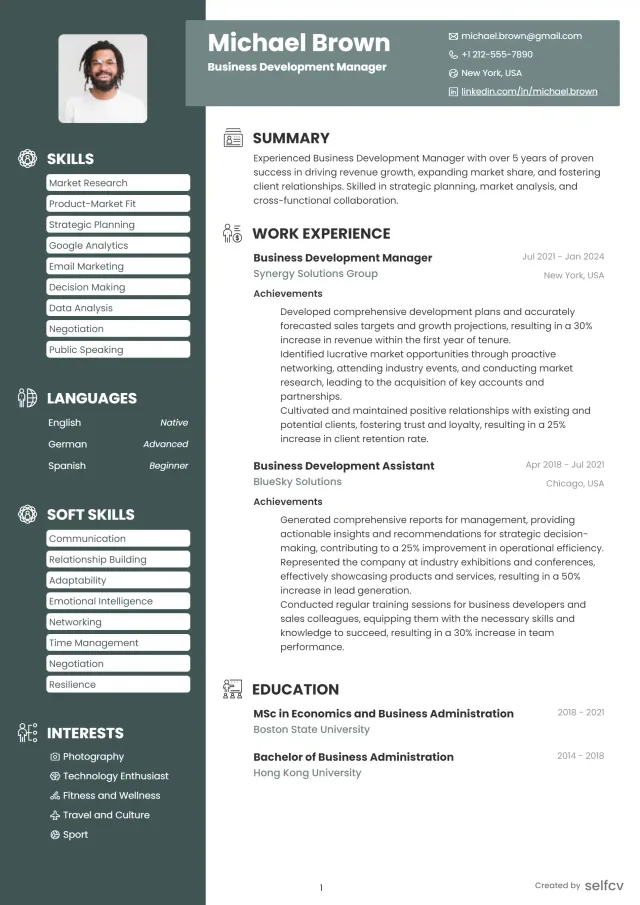
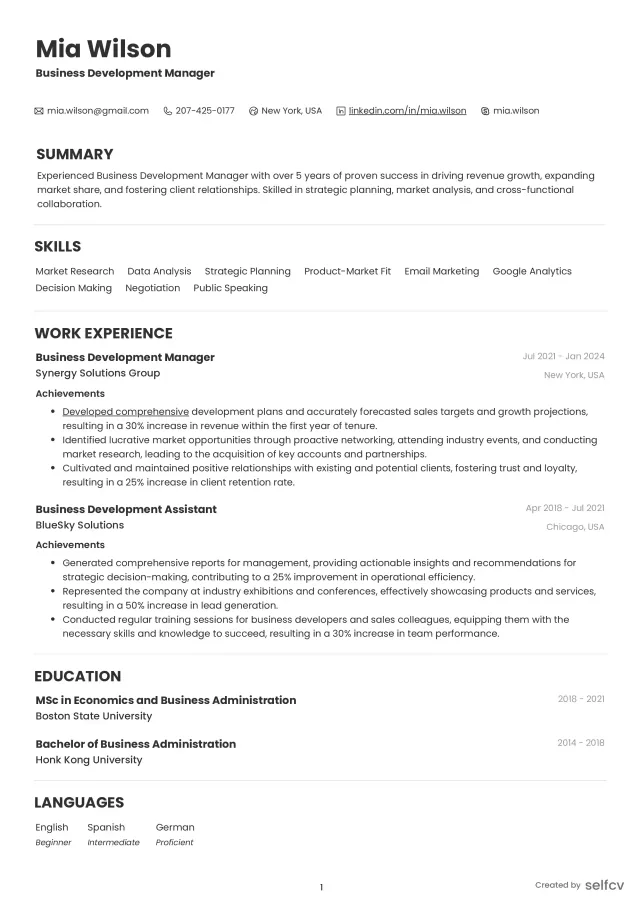
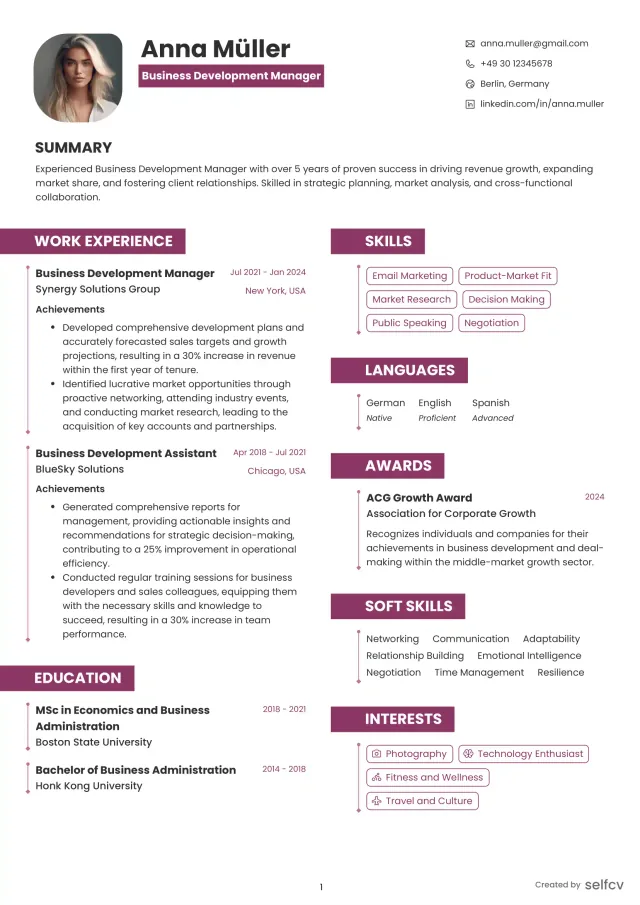
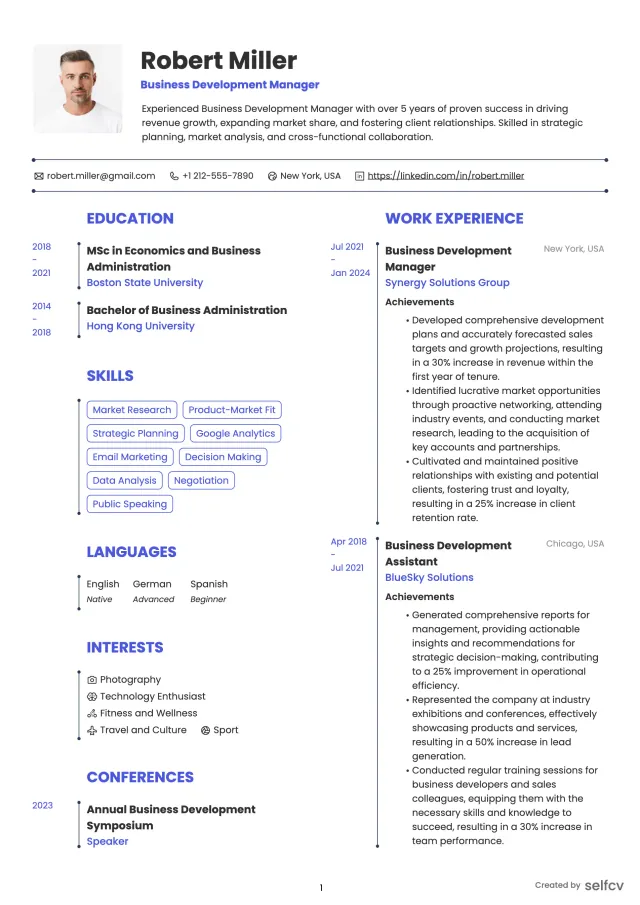
Find the template that’s right for you
No need to build anything from scratch. Using our templates or upload feature, you’ll get started easily and have a powerful resume in a few clicks.
Measuring impact: achievement templates and weak-to-strong examples
Achievement templates to adapt
- Designed/Implemented/Rewrote [artifact] using [tool] that resulted in [measurable outcome].
- Reduced [metric: latency/cost/errors] by [percent or absolute] for [stakeholder or product area] by [specific action].
- Rolled out [metrics layer / docs / onboarding] to [audience], increasing [adoption or self-serve rate] by [value].
Example 1:
Weak:
- Built dbt models for events.
Strong:
- Rewrote event transformation into incremental dbt models with targeted tests, reducing daily pipeline runtime from 3 hours to 40 minutes and eliminating a recurrent data backfill.
Why it works:
- Tooling, measurable runtime improvement, and problem prevented are explicit.
Example 2:
Weak:
- Improved dashboard performance.
Strong:
- Optimized aggregate tables and introduced materialized views for finance dashboards, lowering median query time from 6s to 1.2s and saving approximately $2,000 monthly in compute.
Why it works:
- Shows specific technique, measurable latency and cost impact.
Example 3:
Weak:
- Added tests to models.
Strong:
- Implemented schema, uniqueness, and custom data-contract tests across 120 dbt models; CI failures flagged breaking changes before deployment, reducing production incidents by 60%.
Why it works:
- Demonstrates scale, test types, CI integration, and incident reduction.
Tools, technical skills, deliverables, stakeholders and environments
Typical tools and software to list
- dbt, Airflow, Prefect, GitHub/GitLab, Snowflake, BigQuery, Databricks, Redshift, Looker, LookML, Metabase, Tableau
Technical skills and deliverables
- SQL authoring and query optimization
- Data modeling (star schema, slowly changing dimensions)
- ELT orchestration and DAG ownership
- Metrics layer design and documentation
- Automated testing, CI/CD, and monitoring
- Lineage and observability artifacts
Common stakeholders
- Data analysts and BI teams
- Data scientists
- Product managers and finance
- Platform engineers and SREs
- Data governance and privacy teams
Work environments and compliance considerations
- Remote, hybrid, or on-prem SaaS deployments
- Compliance areas: GDPR, HIPAA considerations for data handling (describe policy adherence, not certifications)
- Quality standards: code reviews, test coverage, service-level objectives for freshness and latency
Check Your Resume with ATS
Make sure your resume passes Applicant Tracking Systems before recruiters see it.
- 📄 Upload your resume and get instant ATS feedback
- 🎯 Improve keyword matching for your target job
- ⚡ Boost your chances of getting shortlisted
Career level summary and objective examples
Entry / Junior Analytics Engineer (0-2 years) - Summary example
- Junior analytics engineer with hands-on SQL experience and early dbt projects. Delivered tested staging models and contributed to a metrics glossary to support analyst workflows.
Mid-level Analytics Engineer (2-5 years) - Summary example
- Analytics engineer with 3 years building dbt transformations and maintaining ELT pipelines on Snowflake. Focused on testing, CI, and enabling a metrics layer used by product and finance teams.
Senior / Staff Analytics Engineer (5+ years) - Summary example
- Senior analytics engineer driving data platform improvements, responsible for architecture of transformation practices, cross-team enablement, and substantial cost and latency reductions.
Career changer (data analyst → analytics engineer) - Objective example
- Data analyst transitioning into analytics engineering; seeking a role to apply SQL, dbt, and CI practices to standardize pipelines, introduce testing, and scale self-serve analytics.
Interview prep prompts and 30/60/90 day impact plan template
Interview prompts to prepare
- Explain a dbt model you wrote: choices for materialization, tests, and references to upstream sources.
- Walk through a production incident you helped resolve and what you changed to prevent recurrence.
- Show how you measure pipeline health and which SLAs you track.
- Discuss a time you enabled analysts and how you measured adoption.
30/60/90-day impact plan template (short)
- 0-30 days: repo walkthrough, run key jobs locally, identify the highest-impact regression or pain point.
- 31-60 days: deliver a small, tested refactor or a new model with CI and monitoring; document usage for consumers.
- 61-90 days: own rollout of an enablement artifact (metrics layer, onboarding guide) and demonstrate adoption or performance improvement.
Common resume mistakes and quick fixes
Mistake: vague responsibilities
- Fix: use the artifact + tool + measurable outcome template.
Mistake: no portfolio or repo evidence
- Fix: publish a focused dbt project with README and tests; include CI badge.
Mistake: mixing analytics and engineering achievements without clarity
- Fix: separate analytic insights from engineering work. For example, put exploratory analysis under 'Projects' and production transformations under 'Experience'.
Mistake: ATS-unfriendly links or code snippets
- Fix: include short, labeled links in header and ensure the resume is parsable by ATS with plain text descriptions for repos.
FAQ (focused on real search intent)
How do I write a resume for an analytics engineer role?
- Emphasize production artifacts, tooling, and measurable results. Use dbt/model/test examples and show ownership. Add a portfolio link.
What keywords do recruiters look for on an analytics engineer resume?
- dbt, ELT, data modeling, metrics layer, CI/CD, Airflow, Snowflake, BigQuery, model tests, lineage, query optimization.
How to show dbt and ELT experience on a resume?
- Mention the repo size, number of models, types of tests added, CI integration, and specific outcomes such as latency or cost improvements.
Examples of measurable achievements for analytics engineers?
- Reduced pipeline runtime from X to Y, cut monthly compute cost by Z%, increased dashboard adoption by N%, decreased incidents by M%.
How to build a portfolio for analytics engineering roles?
- Publish a focused dbt project with README, tests, CI badge, lineage visuals, and performance before/after notes.
How to transition from data analyst to analytics engineer resume?
- Highlight any engineering work: staging models, ETL automation, dbt contributions, tests, and CI. Reframe analyst tasks as enablement and productionized workflows.
Which tools should I list (dbt, Airflow, Snowflake)?
- List tools you can discuss in depth. For each tool listed, be ready to explain a concrete use case from your experience or portfolio.
Related careers
Related professions to consider or highlight for lateral moves
- Data Engineer
- Data Analyst
- Data Platform Engineer
- BI Engineer
- Machine Learning Engineer
- Analytics Manager
Conclusion, checklist and next actions
Practical close and next steps
- Publish one focused dbt project with README, tests, and CI badge.
- Convert three experience bullets into the artifact + tool + measurable outcome format.
- Prepare a 30/60/90-day impact plan to bring to interviews.
Quick checklist before applying
- Header includes GitHub/repo link and concise location/availability.
- Summary states role target and core specialization (dbt, metrics layer, data modeling).
- Top 6-8 skills list includes exact tool names and practices.
- At least one portfolio item with tests and CI evidence.
Immediate next action
- Pick a single production problem you solved and write a 2-minute narrative: the issue, your technical fix, and the measurable outcome. Use that narrative in one resume bullet, your portfolio README, and a 30-second interview answer.
Why job seekers choose selfcv
Thousands of professionals use selfcv to build modern, ATS-friendly resumes, customize templates, and apply for jobs with confidence.
Thanks to SelfCV, I now have a professional and polished resume that I'm confident in sending to potential employers. I will definitely be recommending your service to other job seekers. Keep up the great work!
SelfCV offers an intuitive interface that makes creating a professional CV straightforward. Whether you're a student, a fresh graduate, or an experienced professional, the step-by-step process ensures that users of all levels can craft an impressive CV.
Easy to use resume builder. They have very intuitive ui for customizing and keeping multiple versions of resume.
The right tool for creating CVs. As a student I was looking for a tool that could help me quickly create a CV for internship applications. This was just the right tool. I am very satisfied!
This is one of the best tools I’ve ever used - I was able to build my CV in seconds with high quality template. Highly recommended!
Amazing app with easy user experience. Loved it. Its intuitive and easy to navigate, designs are very nice.
