
Data Scientist Resume (2026): Stand Out with Production ML Impact and Clear Business Metrics
Written by Armen Mkhitaryan
Too many data scientist resumes list models and libraries but leave out measurable outcomes and production signals.
Weak bullet example:
- Trained a random forest to predict customer churn.
Strong bullet example:
- Deployed XGBoost churn model to production via Flask API, reducing monthly churn from 4.8% to 3.9% and increasing subscription revenue by 6% within 12 weeks.
This article gives a step-by-step blueprint to convert technical experience into interview-moving achievements, cover ATS-safe keyword placement, and prepare a portfolio that hiring teams can validate quickly.
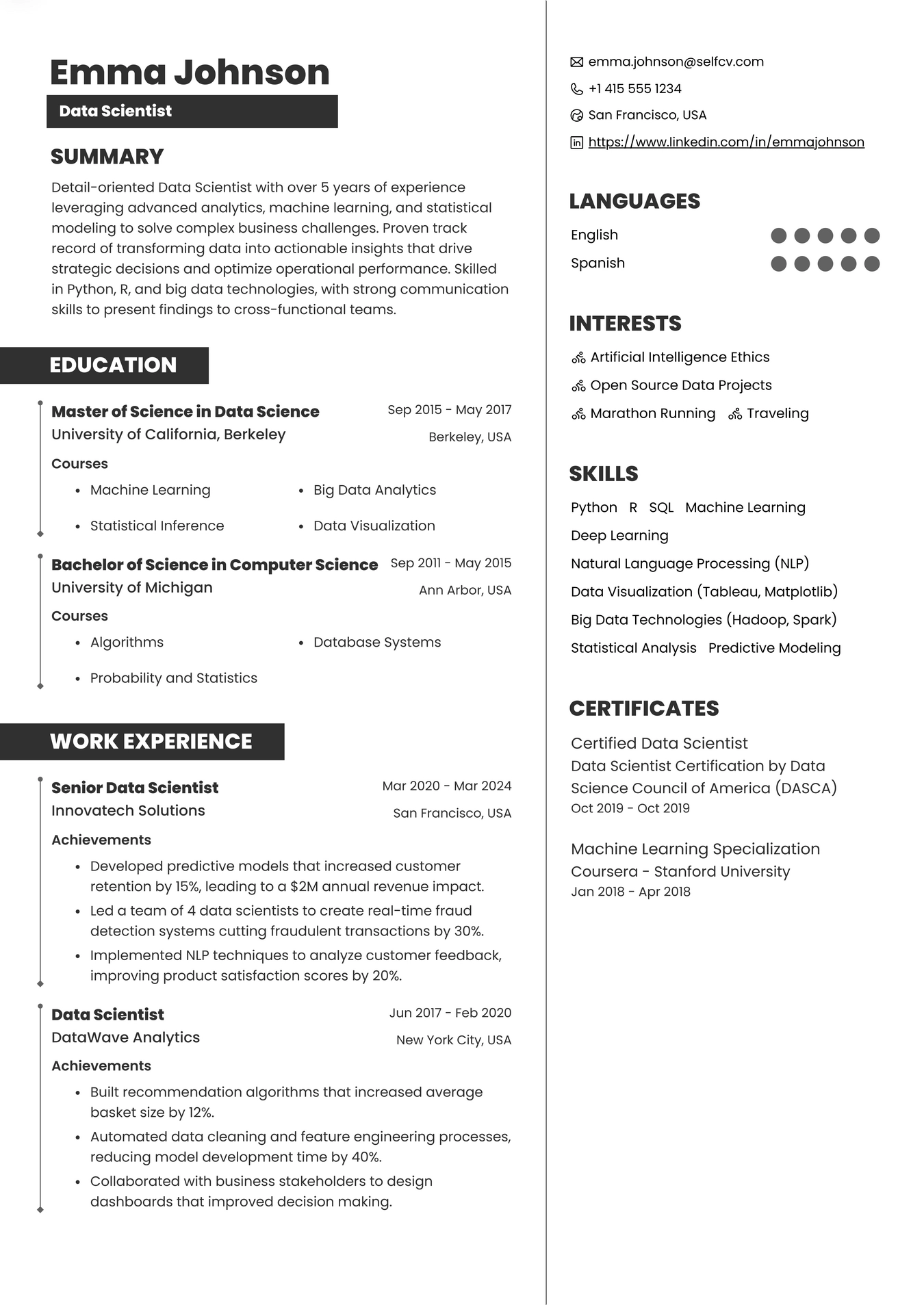
How hiring teams screen data scientist resumes
Hiring patterns to expect:
- Quick ATS pass/fail on top skills and role keywords.
- 6-12 second recruiter skim for headline, recent title, and production signals.
- Deeper hiring manager read for measurable impact, scale, and collaboration with engineering/product.
Screening signals that matter most:
- Role-aligned headline (Data Scientist, Applied ML Scientist, etc.).
- Explicit production keywords (model deployment, API, monitoring, MLOps).
- Business KPIs and scale (users, data volume, latency, cost savings).
How to position for both ATS and humans:
- Put core keywords in a short skills block and sprinkle them naturally in achievements.
- Lead with outcome-focused bullets that include metric, action, and context.
Resume sections and recommended order for 2026
High-priority layout (one page for entry and mid-level, up to two pages for senior/principal):
- Header with contact, LinkedIn, GitHub/portfolio README link, optional demo URL.
- Headline and 2-3 line professional summary or objective tailored to the target role.
- Top achievements or production highlights (2-4 bullets) for senior candidates.
- Core technical skills and tools grouped by category.
- Selected projects or production work with short context-action-result bullets.
- Professional experience with 3-5 achievement bullets per recent role.
- Education and relevant certifications.
- Optional: publications, open source contributions, talks.
Formatting tips:
- Use short bullets, active verbs, and one metric per bullet when possible.
- Avoid long research narratives; show how models were used and maintained in production.
Resume Example for Data Scientist
ATS keywords, technical skills, and tools
Top ATS and recruiter-friendly keywords to include naturally:
- Python
- SQL
- machine learning
- model deployment
- MLOps
- feature engineering
- TensorFlow
- PyTorch
- Docker
- Kubernetes
- Spark
- AWS (or GCP/Azure)
Group tools by function to make parsing easier:
- Languages: Python, R, SQL
- Modeling: scikit-learn, TensorFlow, PyTorch, XGBoost
- Data processing: Spark, pandas, Airflow
- Deployment and MLOps: Docker, Kubernetes, MLflow, SageMaker
- Cloud: AWS, GCP, Azure
- Monitoring and tracking: Prometheus, Grafana, Weights & Biases
Include context when listing niche tools to avoid tool-list-only red flags.
How to show production ML experience and deliverables
Production signals hiring teams want to see:
- Deployed model type and endpoint (batch job, streaming, REST/gRPC API).
- Ownership of feature pipelines, ETL, or feature store components.
- Monitoring, alerting, and model retraining cadence.
- Cost, latency, throughput, and quality improvements.
Sample production-focused bullets:
- Deployed BERT-based inference service to reduce query classification latency by 45% and sustain 5k QPS.
- Implemented feature-store ingestion jobs in Airflow, enabling feature reuse across 4 models and cutting feature engineering time by 60%.
- Built model monitoring with Prometheus alerts for data drift, reducing production incidents by 70%.
Present deliverables clearly:
- Deployed APIs
- Dashboard and model cards
- Reproducible notebooks and CI/CD pipelines
- Feature store entries and ETL scripts
Projects, portfolio strategy, and ATS-safe linking
What to include in a project entry:
- One-line problem statement and audience.
- Dataset source (public, synthetic, or redacted internal) and preprocessing notes.
- Approach and model stack.
- Key metrics and business outcome.
- Deployment or reproducibility notes (Dockerfile, CI, demo link).
Portfolio linking that won't break ATS:
- Put a single short URL in the header (GitHub or portfolio readme) and reference project names in bullets.
- Use short slugs or a single landing README that lists projects with brief descriptions.
- Avoid long URLs embedded in experience bullets; keep links centralized in header.
Portfolio deliverables that hiring teams value:
- End-to-end notebook with README and requirements.txt
- Live demo or lightweight web app for interaction
- Diagram of data flow and deployment pipeline
Weak-to-strong achievement examples
Example 1:
Weak:
- Built a model to predict customer churn.
Strong:
- Deployed XGBoost churn model via REST API, improving 90-day retention by 8% and informing a targeted retention campaign that increased ARPU by 4%.
Why it works:
- Adds deployment, measurable business result, and concrete channel that used the model.
Example 2:
Weak:
- Improved model accuracy from 72% to 81%.
Strong:
- Re-engineered feature pipeline and tuned ensemble to raise AUC from 0.72 to 0.81, cutting false positives by 30% and reducing manual review costs by $120k/year.
Why it works:
- Translates metric gain into cost savings and operational impact.
Example 3:
Weak:
- Worked on NLP project for document classification.
Strong:
- Implemented a distil-BERT classifier and combined rule-based preprocessing to classify claims with 94% F1, integrated into claims intake workflow to automate 55% of manual triage.
Why it works:
- Shows model type, performance metric, and adoption rate inside a process.
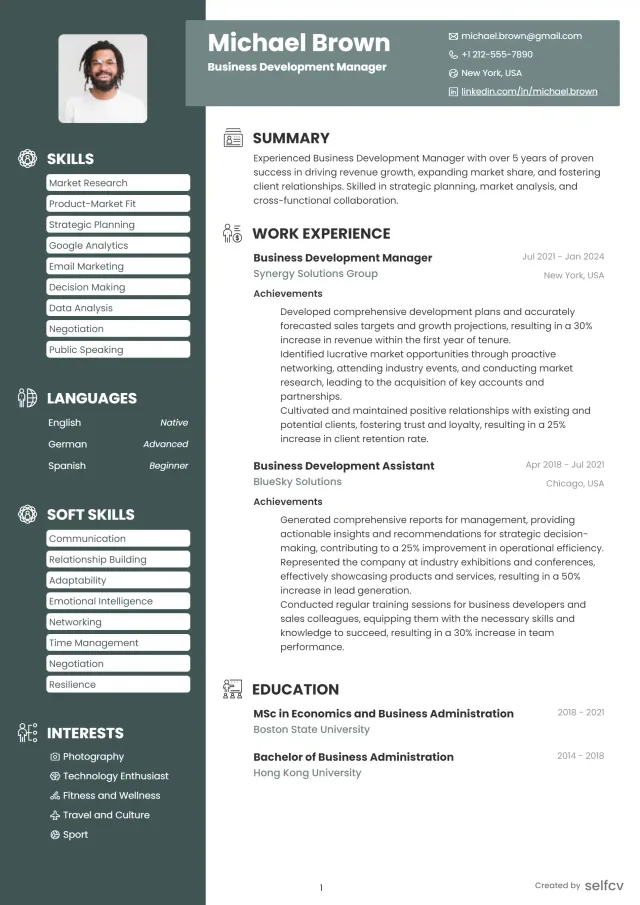
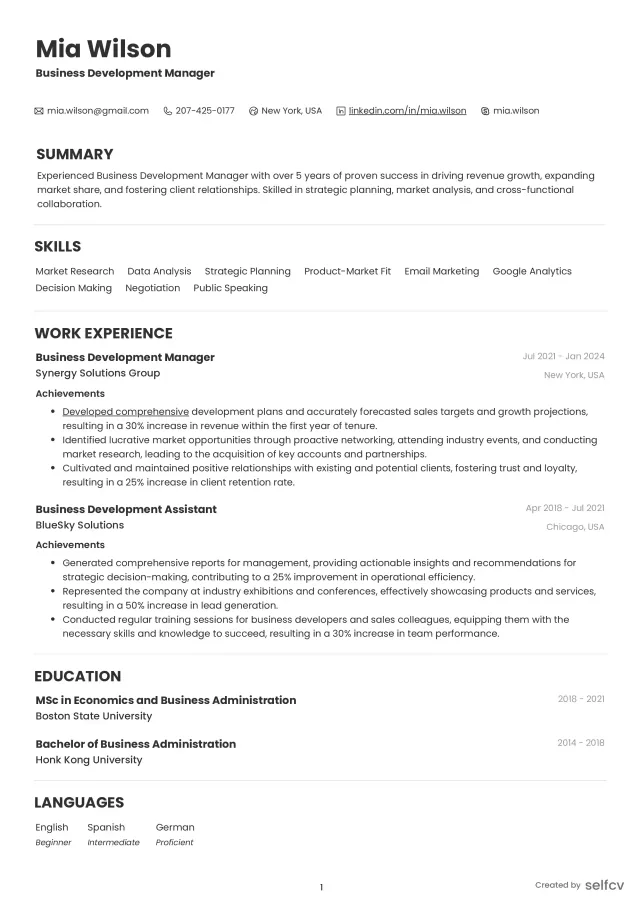
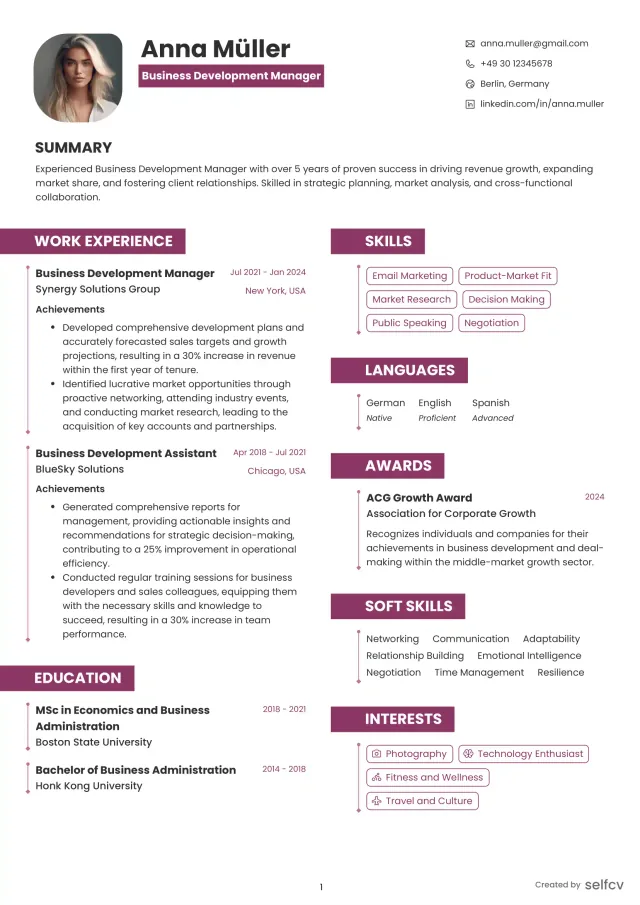
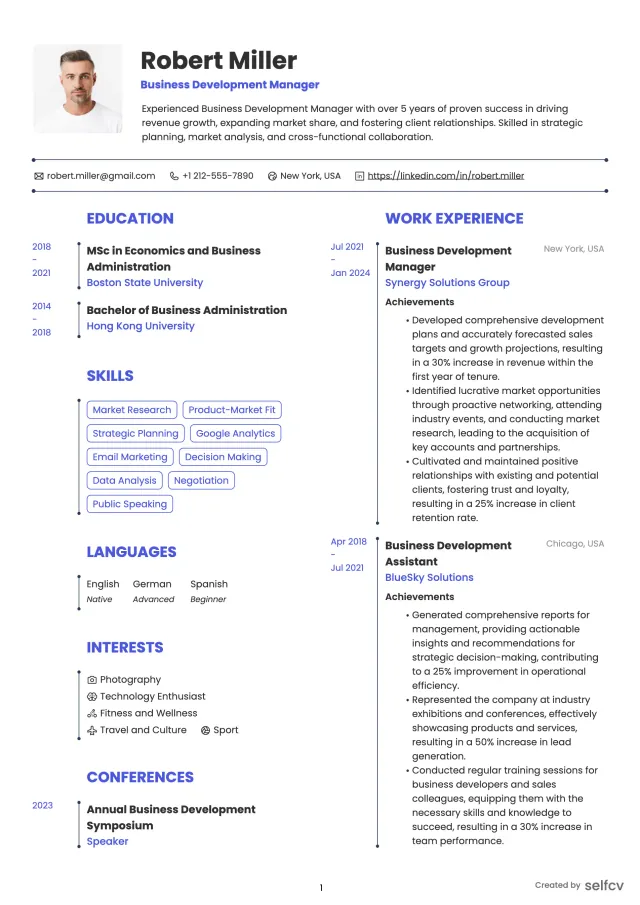
Find the template that’s right for you
No need to build anything from scratch. Using our templates or upload feature, you’ll get started easily and have a powerful resume in a few clicks.
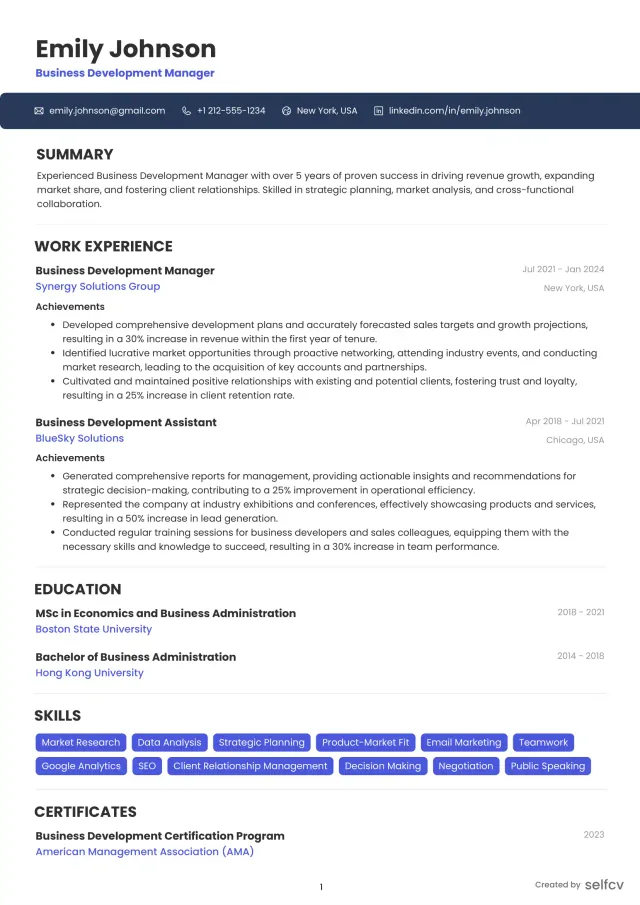
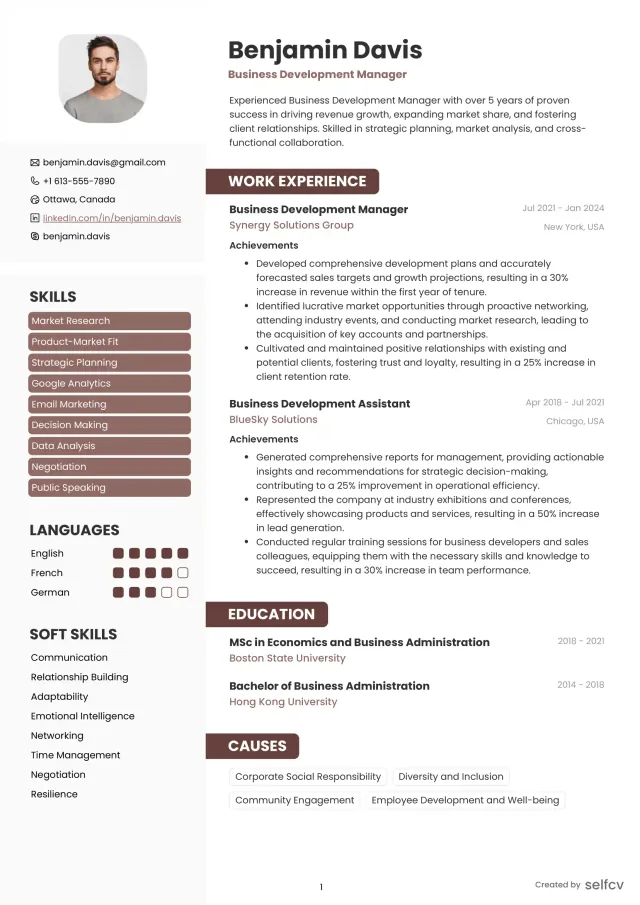
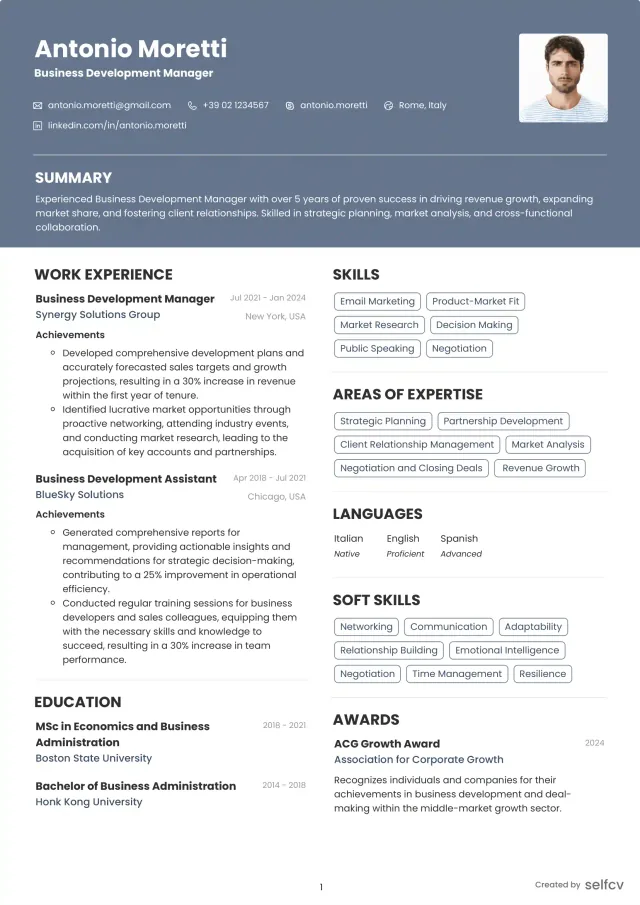
Resume summary and objective examples by career level
Entry level objective (0-2 years):
- Recent MS in Data Science with experience building end-to-end Kaggle and internship projects in Python and SQL. Seeking a data scientist role to apply feature engineering and A/B testing skills to improve user retention.
Mid-level summary (2-5 years):
- Data Scientist with 3 years of product ML experience, strong background in time series forecasting and experimentation, delivered features that increased conversion by 12%. Comfortable shipping models to production with Docker and MLflow.
Senior summary (5+ years):
- Senior Data Scientist specializing in recommender systems and MLOps. Led cross-functional team to launch a real-time recommendation API serving 2M users, reduced inference latency by 60%, and established model monitoring and retraining pipelines.
Career changer objective (from software engineer):
- Software engineer transitioning to data science with 4 years of backend and API experience, trained on ML fundamentals and deployed an image classification microservice; seeking a data scientist role with emphasis on production ML and feature engineering.
Complete resume example (fictional single-person resume)
The candidate, companies, and career history shown are fictional examples created for illustration and any resemblance to a real person or organization is coincidental.
Candidate Name
Samira Patel
Target Position
Senior Data Scientist, Production ML
Location
Boston, MA (open to remote)
Professional Summary
Senior data scientist with 7 years of applied ML experience across SaaS and healthcare. Led deployment of real-time models and built monitoring and retraining systems. Strong in feature engineering for time series and survival analysis; comfortable with cloud MLOps and cross-functional product launches.
Grouped Skills
- Modeling: XGBoost, LightGBM, PyTorch, TensorFlow, survival models
- Data: SQL, pandas, Spark, feature stores
- MLOps: Docker, Kubernetes, MLflow, Airflow, SageMaker
- Cloud: AWS (EC2, S3, Lambda), GCP (BigQuery)
- Evaluation & testing: A/B testing, uplift modeling, confusion matrix metrics
Professional Experience:
Senior Data Scientist, HealthTech Insights
2022-2026
- Deployed a survival-analysis model to prioritize patient outreach, increasing successful follow-ups by 22% and reducing readmission rates by 9%.
- Built an Airflow-based feature ingestion pipeline feeding a feature store, enabling 6 downstream models to share stable features and reducing feature duplication by 70%.
- Implemented model monitoring with Grafana dashboards and data drift alerts, cutting production incidents by 68% and enforcing retrain thresholds.
Data Scientist, CloudCommerce (SaaS)
2019-2022
- Led recommender system overhaul using matrix factorization and neural embeddings, lifting click-through-rate by 15% and average order value by 5%.
- Containerized inference pipeline with Docker and Kubernetes, achieving 99.9% uptime and 120ms median latency at peak.
- Collaborated with product and engineering to add model explainability features to customer dashboards.
Data Science Engineer, ResearchLab Analytics
2016-2019
- Built end-to-end fraud detection pipeline using ensemble models, reducing false negatives by 40% and saving $1.2M annually.
- Established CI for notebooks and reproducible experiments using MLflow and unit-tested preprocessing code.
Education / Training
- MS in Computer Science, Boston University, 2016
- BSc in Mathematics, University of Mumbai, 2014
Certifications
- AWS Certified Machine Learning - Specialty (optional realistic certification)
- Professional Certificate in Applied Data Science (online)
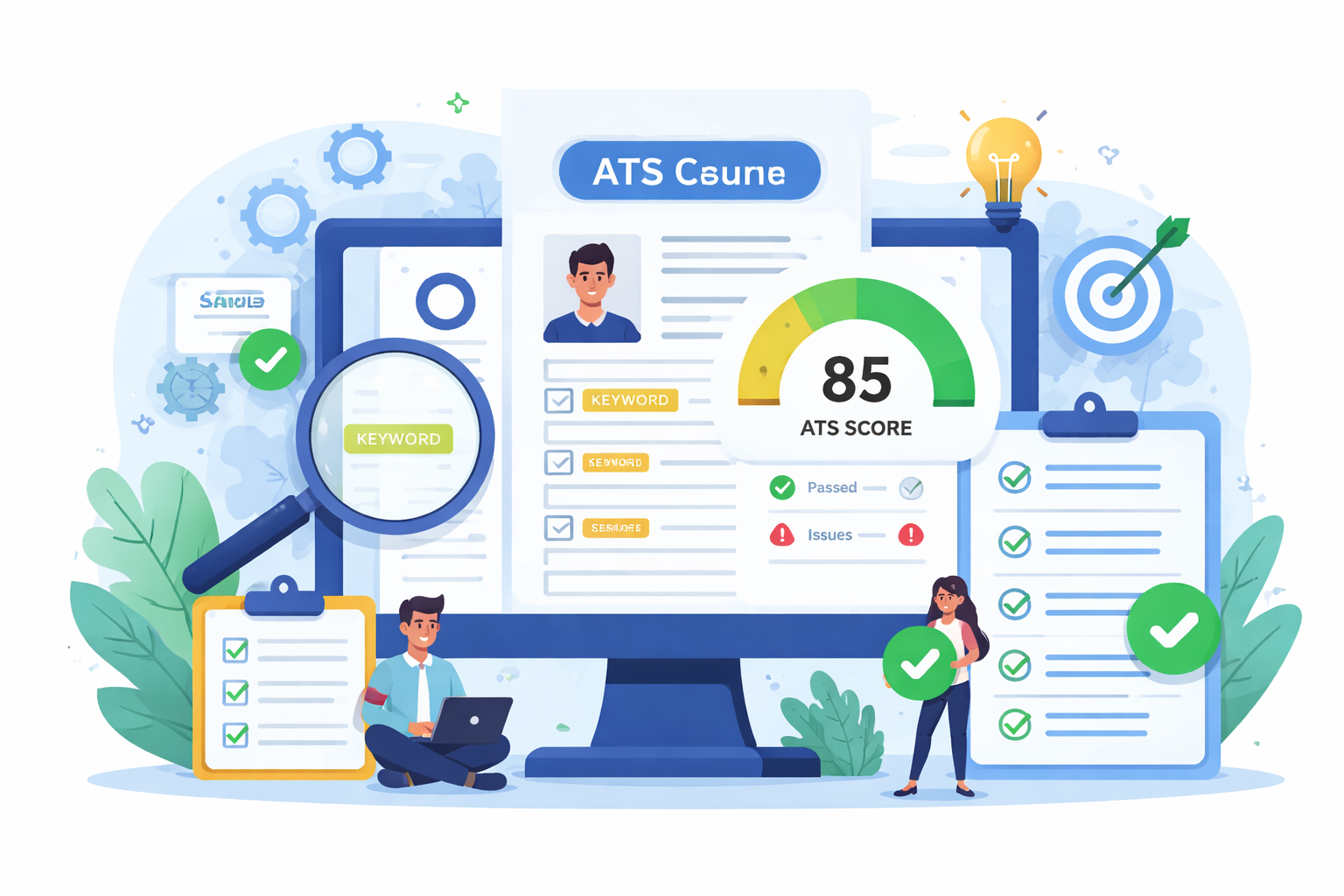
Check Your Resume with ATS
Make sure your resume passes Applicant Tracking Systems before recruiters see it.
- 📄 Upload your resume and get instant ATS feedback
- 🎯 Improve keyword matching for your target job
- ⚡ Boost your chances of getting shortlisted
Entry-level full sample resume
Candidate Name
Diego Morales
Target Position
Entry-Level Data Scientist
Location
Austin, TX
Professional Summary
Recent MS in Data Science with internship experience deploying an inference microservice. Strong in Python, SQL, and exploratory data analysis. Built projects in recommendation and time series forecasting with reproducible notebooks.
Grouped Skills
- Python, SQL, pandas, scikit-learn
- TensorFlow, PyTorch (basic)
- Jupyter, Docker
- Basic AWS (S3) and Docker for deployment
Professional Experience:
Data Science Intern, RetailX
2025
- Implemented a demand-forecasting prototype using Prophet and light gradient boosting, reducing weekly stockouts by 12% in pilot stores.
- Packaged the forecasting script in Docker for handoff to engineering.
- Created Looker dashboards to visualize forecast accuracy and seasonal patterns.
Projects:
- Recommendation demo: built collaborative filtering pipeline and small Flask app demonstrating personalized product lists.
- Sentiment analysis: fine-tuned BERT on product reviews achieving 88% F1; notebook documents preprocessing and evaluation.
Education
- MS Data Science, University of Texas, 2025
- BSc Computer Science, Universidad de Chile, 2022
Certifications
- Coursera Applied Data Science Professional Certificate (optional realistic)
Industry-tailored micro-examples (FinTech, Healthcare, Retail, SaaS)
FinTech
- Deployed XGBoost credit risk model scoring 300k applications monthly, reducing default rate by 1.6 percentage points and cutting manual underwriting by 42%.
Healthcare
- Implemented LSTM forecasting for hospital bed occupancy with 7-day horizon, improving staffing forecasts and lowering overtime costs by 11%.
Retail
- Built basket-affinity model and integrated with email campaigns, increasing targeted campaign conversion by 9% and incremental revenue by $220k in Q4.
SaaS
- Created churn propensity model and integrated predictions into CRM, enabling targeted retention flows that lifted retention by 6% among high-value cohorts.
Advertising / Marketing
- Optimized bidding model using causal uplift to raise ad-attributed conversions by 14% while keeping CPA stable.
MLOps, quality standards, and compliance
MLOps practices hiring teams expect:
- CI/CD for model training and deployment pipelines.
- Experiment tracking and model registry (MLflow, model cards).
- Automated tests for preprocessing and model performance.
Quality standards and metrics:
- Performance: AUC, precision, recall, F1, RMSE, calibration.
- Operational: latency, throughput, resource cost, error rate.
- Business: conversion uplift, revenue impact, cost savings, retention improvements.
Compliance and privacy considerations:
- For healthcare and finance, mention HIPAA or PCI awareness and avoid posting proprietary data.
- Use synthetic or public datasets for portfolio demos and state when real data was redacted.
- Note experience with secure model serving and access controls where relevant.
Career levels, specializations, and transition playbook
Career level signals to emphasize:
- Entry: projects, internships, coursework, reproducibility.
- Mid: ownership of model components, cross-functional delivery, measurable outcomes.
- Senior: team/tech leadership, system-level design, MLOps governance, strategic impact.
Specializations to call out depending on role:
- NLP, Computer Vision, Time Series & Forecasting, Recommenders, Causal Inference, Genomics, MLOps.
Transition tips for career changers:
- Translate engineering or analytics work into ML-relevant bullets (latency, data volume, API ownership).
- Ship a small production demo or Dockerized model and include it in the portfolio.
- Emphasize product collaboration, testing, and deployment experience when present.
How hiring managers evaluate data scientist resumes
Evaluation criteria with practical signals:
- Fit for role: Does the resume highlight the model types and domain experience the job asks for?
- Production readiness: Mentions of deployment, monitoring, retraining, and CI/CD.
- Measurable impact: Business KPIs linked to model outcomes.
- Technical depth: Clear artifacts showing reproducibility and code quality.
- Collaboration: Evidence of working with engineers, product managers, or researchers.
Avoid these red flags:
- Research-only descriptions with no deployment story.
- Tool-list-only resumes without context.
- Claims with vague metrics or no timescale.
FAQs for data scientist resume searches in 2026
What should a Data Scientist put on a resume in 2026?
- Emphasize production experience, MLOps signals, and one or two measurable business outcomes. Include a concise skills block for ATS parsing.
How do I show production machine learning experience on my resume?
- State the deployment method, scale (users or QPS), monitoring approach, and a measurable impact (reduction in latency, cost savings, KPI improvement).
What are the best keywords for a data scientist resume to pass ATS?
- Include role words and tool names naturally: machine learning, model deployment, Python, SQL, TensorFlow, PyTorch, Docker, Kubernetes, feature engineering, MLOps.
How to write a data science resume for healthcare roles?
- Highlight clinical or operational KPIs, privacy-aware deployment, experience with health data formats, and any HIPAA-aware practices. Use redacted or synthetic data in portfolio examples.
How to convert academic research into resume bullets for data science roles?
- Focus on reproducibility, code artifacts, evaluation metrics, and how the method could be productized or generalized—avoid purely theoretical descriptions.
What MLOps skills should be on a senior data scientist resume?
- CI/CD for models, model registries, automated retraining, monitoring and alerting, container orchestration, and cost/performance tuning.
Related careers to consider
Jobs that often overlap or are adjacent to data science:
- Machine Learning Engineer
- Data Analyst
- Data Engineer
- Research Scientist
- Product Analyst
When to consider each:
- Move toward ML engineering if you prefer system design and production reliability.
- Move toward data engineering if you enjoy data pipelines and scale.
- Consider product analytics for closer work with experimentation and business metrics.
Conclusion, checklist, and next actions
Practical closing and checklist
- ATS checks:
- Put core keywords in a skills block and mirror keywords from the job description where they match your experience.
- Use standard section headings so ATS parsers find your skills and experience.
- Top 8 keywords to verify on your resume:
- Python, SQL, machine learning, model deployment, MLOps, TensorFlow or PyTorch, Docker, feature engineering.
- Portfolio readiness:
- Have one landing README with short project summaries and links.
- Ensure at least one reproducible, Dockerized demo or notebook that runs with minimal setup.
- Redact proprietary details or use synthetic/public datasets when necessary.
30/60/90-day interview prep plan for data scientists
- Day 30: Polish headline, update skills block, and add 2-3 production-focused bullets. Prepare one end-to-end project walkthrough.
- Day 60: Rehearse two STAR-style stories that show deployment and cross-functional impact. Prepare technical clarifying questions for interviews.
- Day 90: Build a short demo or notebook you can screen-share, finalize portfolio README, and collect references who can vouch for production work.
Next action
- Download editable resume samples and a portfolio README template from the platform resources page and adapt them to your role and industry.
Final note
- Redact sensitive data, document reproducibility, and lead with measurable outcomes to shift your resume from technical listing to clear business impact.
seoTitle
Data Scientist Resume (2026): Stand Out with Production ML Impact and Clear Business Metrics
metaDescription
Data Scientist resume 2026 guide to show production ML impact, ATS-friendly keywords, and portfolio tips that turn projects into interviews.
Why job seekers choose selfcv
Thousands of professionals use selfcv to build modern, ATS-friendly resumes, customize templates, and apply for jobs with confidence.
Thanks to SelfCV, I now have a professional and polished resume that I'm confident in sending to potential employers. I will definitely be recommending your service to other job seekers. Keep up the great work!
SelfCV offers an intuitive interface that makes creating a professional CV straightforward. Whether you're a student, a fresh graduate, or an experienced professional, the step-by-step process ensures that users of all levels can craft an impressive CV.
Easy to use resume builder. They have very intuitive ui for customizing and keeping multiple versions of resume.
The right tool for creating CVs. As a student I was looking for a tool that could help me quickly create a CV for internship applications. This was just the right tool. I am very satisfied!
This is one of the best tools I’ve ever used - I was able to build my CV in seconds with high quality template. Highly recommended!
Amazing app with easy user experience. Loved it. Its intuitive and easy to navigate, designs are very nice.
