
Full-Stack Developer Resume 2026: Show Production Impact, Cloud & API Skills
Full-Stack Developer Resume 2026: Show Production Impact, Cloud & API Skills
Written by Armen Mkhitaryan
Why this guide matters
Hiring teams often reject resumes that list libraries without production evidence, miss ATS keyword parity, or fail to quantify impact. This article fixes those problems with role-specific bullets, keyword playbooks, and portfolio-first templates for 2026.
Quick-scan checklist
- One-line title tuned to the role and level
- Top 6 tech keywords in the summary and at least once in experience
- 3 measurable bullets per recent role with context, action, tech, metric
- Portfolio links (deployed demo, GitHub, architecture diagram) in contact area
- ATS-friendly filename and metadata
What hiring managers look for by level and industry
General patterns
- Entry-level: tangible projects, deployed demos, clear ownership within projects, basic CI/CD and testing awareness
- Mid-level: feature ownership across frontend and backend, measurable improvements, regular production deploys
- Senior: system design, architecture trade-offs, incident response ownership, mentoring, cross-team influence
- Lead/Principal: platform strategy, measurable org-level improvements (MTTR, deploy frequency, cost efficiency)
Industry differences
- SaaS and startups value shipping speed, API design, and product metrics
- Fintech needs authentication, compliance awareness, and secure data handling
- Healthtech focuses on privacy, audit trails, and regulated data handling
- Enterprise emphasizes integrations, backward compatibility, and scalability
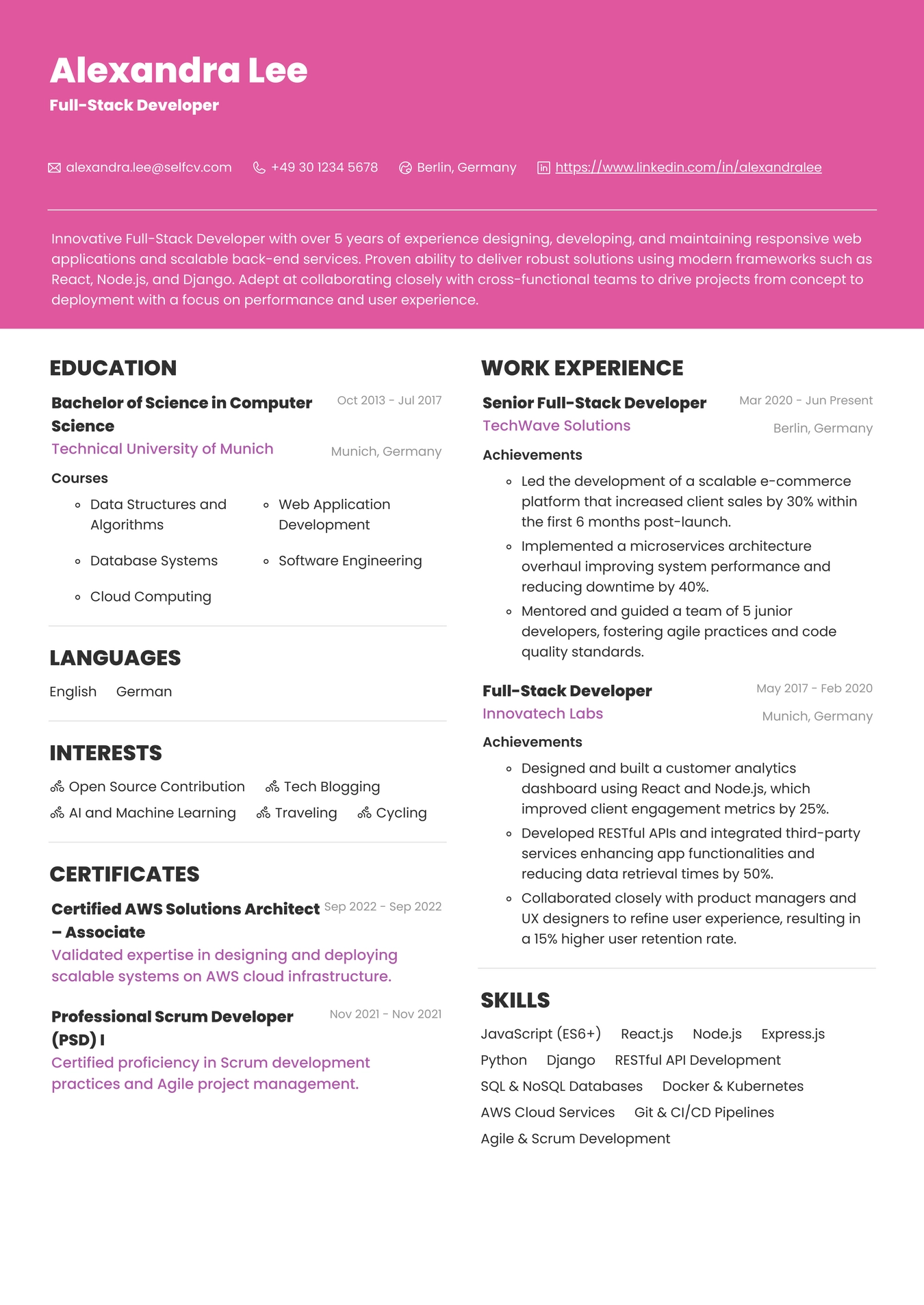
Resume Example for Full-Stack Developer
Resume blueprint - sections and order
Recommended order for global English market
- Header: name, title variant, location, email, phone, portfolio/GitHub links
- One-line target title (match job title) and 1-2 sentence summary with top stack keywords
- Technical skills grouped by category (frontend, backend, infra, testing, data stores)
- Professional experience with measurable bullets
- Selected projects or portfolio items when relevant
- Education and certifications
Formatting rules
- Keep to one or two pages depending on level
- Use plain text bullets for ATS parsing
- Avoid images, charts, and columns for core resume file
ATS and keyword playbook
Primary keywords to include where true
- Full-Stack Developer resume, full stack engineer, React, Next.js, Angular, Node.js, Django, Flask, Spring, Go, PostgreSQL, MongoDB, REST, GraphQL, Kubernetes, Docker, AWS, GCP, Azure, CI/CD, GitHub Actions, Jenkins, Terraform, Prometheus, Grafana
Long-tail keyword phrases to sprinkle naturally
- React developer resume full stack
- node.js developer resume production microservices
- full stack developer ATS keywords 2026
- kubernetes resume for developers
ATS pitfalls specific to full-stack devs
- Avoid images, diagrams, or badges embedded in the resume body
- Do not rely on screenshots for evidence
- Spell out abbreviations at least once (e.g., REST API, Kubernetes) before using acronyms
- Put portfolio links in the header or a simple URL list so parsing picks them up
File naming and metadata
- filename example: JaneDoe_Full-Stack-Developer_2026.pdf
- Add title metadata matching the visible job title if your PDF editor allows it
How to write technical accomplishment bullets
Rule: Context -> Action -> Tech -> Metric
- Context: short project or problem statement
- Action: what you did or owned
- Tech: primary stack used
- Metric: measurable outcome tied to product, performance, reliability, or cost
Three inline examples
- Front-end feature
- Reduced time-to-first-paint for critical checkout flow by 35% after migrating to Next.js incremental static regeneration, improving conversion by 4 percentage points
- Back-end microservice
- Rewrote payment reconciliation microservice in Go, added bulk processing and batching, cut average job runtime from 12 minutes to 90 seconds and reduced cloud compute cost by 40%
- Infra/CI improvement
- Implemented GitHub Actions CI with container scanning and parallel test runners, reduced PR feedback loop from 45 minutes to 9 minutes and increased merge throughput by 30%
Complete resume example
The candidate, companies, and career history shown are fictional examples created for illustration and any resemblance to a real person or organization is coincidental.
Caspar Nguyen
Target Position: Senior Full-Stack Developer
Location: Remote (GMT+1)
Professional Summary
- Senior Full-Stack Developer with 6 years building customer-facing web apps and internal platforms. Strong in React, Node.js, PostgreSQL, and Kubernetes. Focused on API design, observability, and reducing latency in production services.
Grouped Skills
- Frontend: React, Next.js, TypeScript, CSS-in-JS, Web Vitals optimization
- Backend: Node.js, Express, Python, Django, REST, GraphQL, microservices
- Data Stores: PostgreSQL, Redis, MongoDB
- Infra: AWS (ECS, RDS, S3), Kubernetes, Docker, Terraform
- CI/CD & Observability: GitHub Actions, Jenkins, Prometheus, Grafana, Sentry
- Testing: Jest, Cypress, Pytest
Professional Experience
Senior Full-Stack Developer, BrightCart (SaaS commerce startup)
May 2021 - Present
- Led redesign of cart and checkout API, introduced GraphQL gateway and per-user caching, lowering cart API latency p95 from 480ms to 180ms and increasing checkout completion by 6%
- Owned migration of monolith to microservices for orders and inventory, built Node.js services, CI pipelines, and Kubernetes manifests, reducing release cycle time from weekly to daily
- Established production alerting and SLA reporting using Prometheus and Grafana dashboards, reduced mean time to detect (MTTD) by 55%
Full-Stack Engineer, Atlas Health (Healthtech scaleup)
Jan 2019 - Apr 2021
- Built patient-facing portal using React and Django REST Framework, designed secure APIs with OAuth2 and field-level encryption for PHI
- Implemented data partitioning and read replicas on PostgreSQL, improving query throughput for analytics jobs by 3x
- Led post-incident root cause reviews and introduced database failover runbooks, cutting MTTR from 4 hours to 45 minutes
Software Engineer, OpenShop (E-commerce)
Aug 2016 - Dec 2018
- Implemented server-side rendering for storefront with Next.js, improving SEO crawlability and organic traffic by 18%
- Wrote end-to-end tests with Cypress reducing regressions in checkout flow by 60%
Education / Training
- BSc Computer Science, University of Toronto
- Immersive workshops: Advanced Kubernetes Workshop, 2023
Certifications
- AWS Certified Developer - Associate (optional)
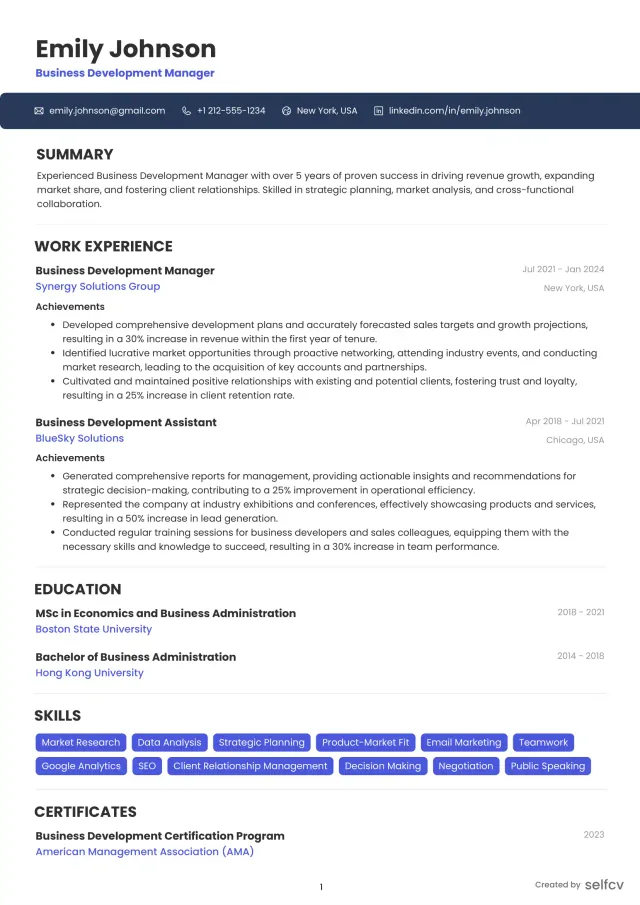
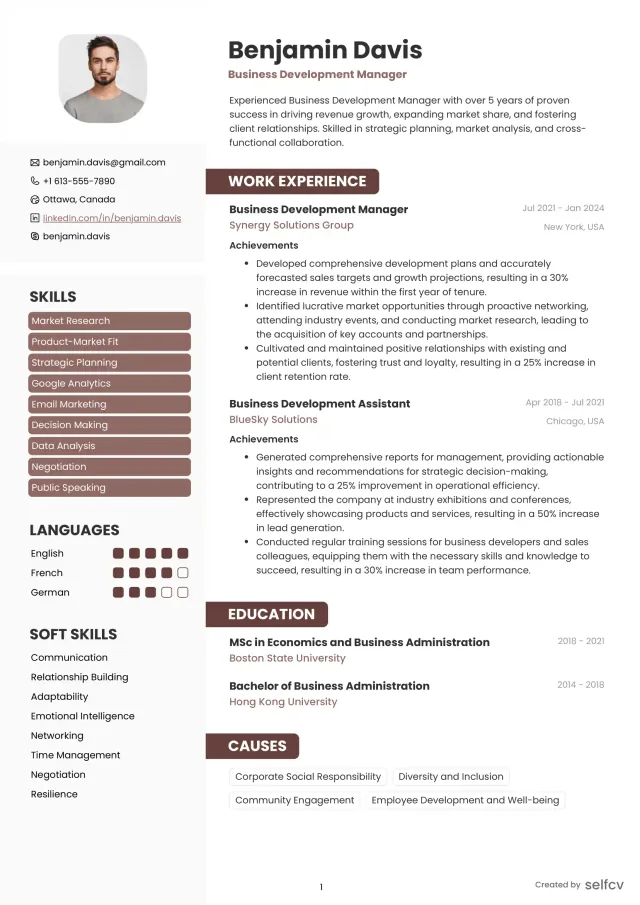
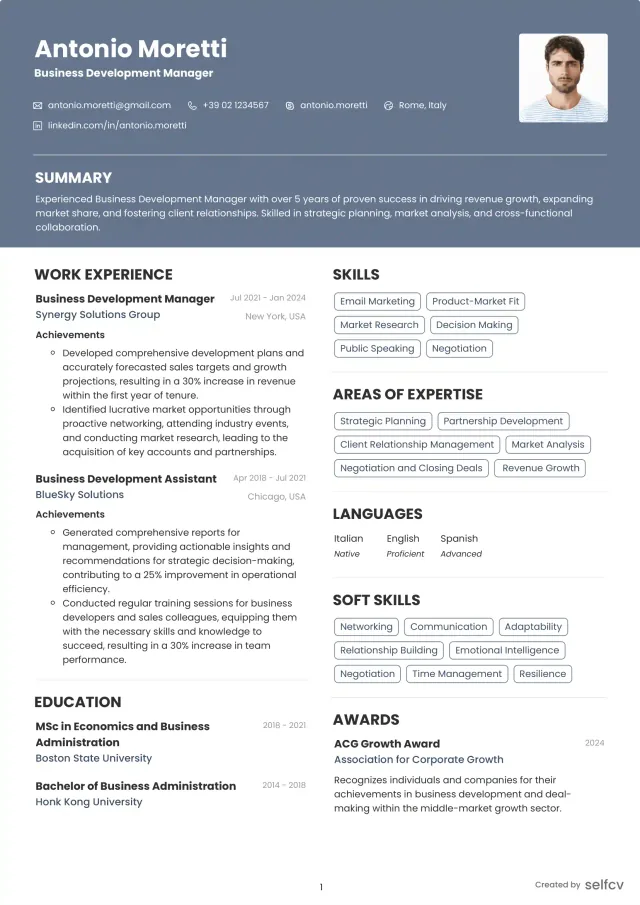
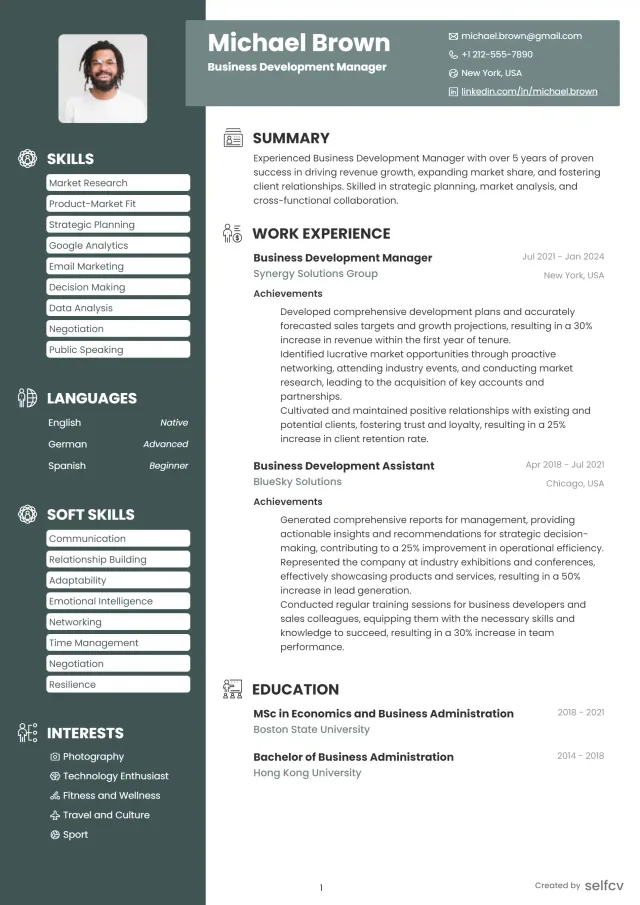
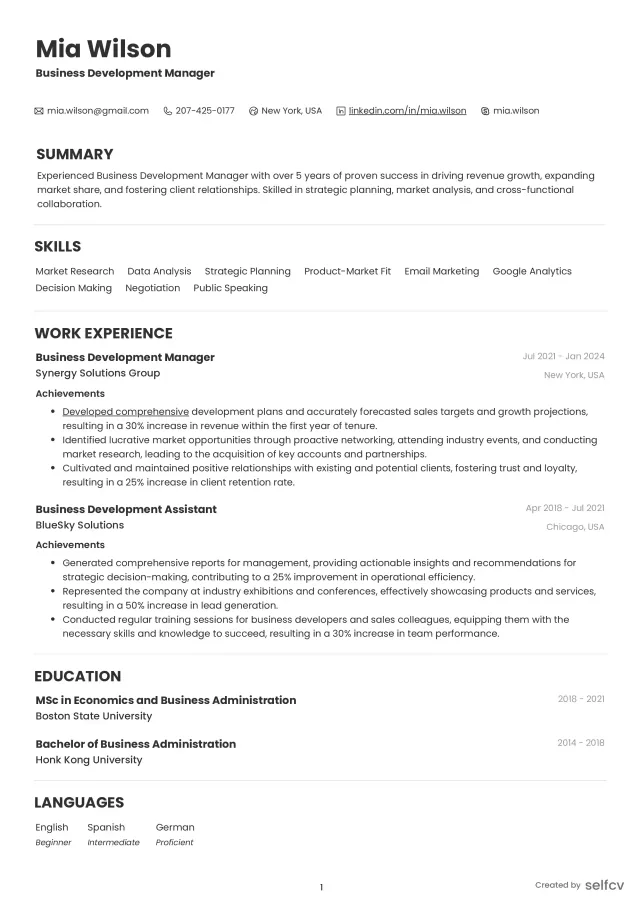
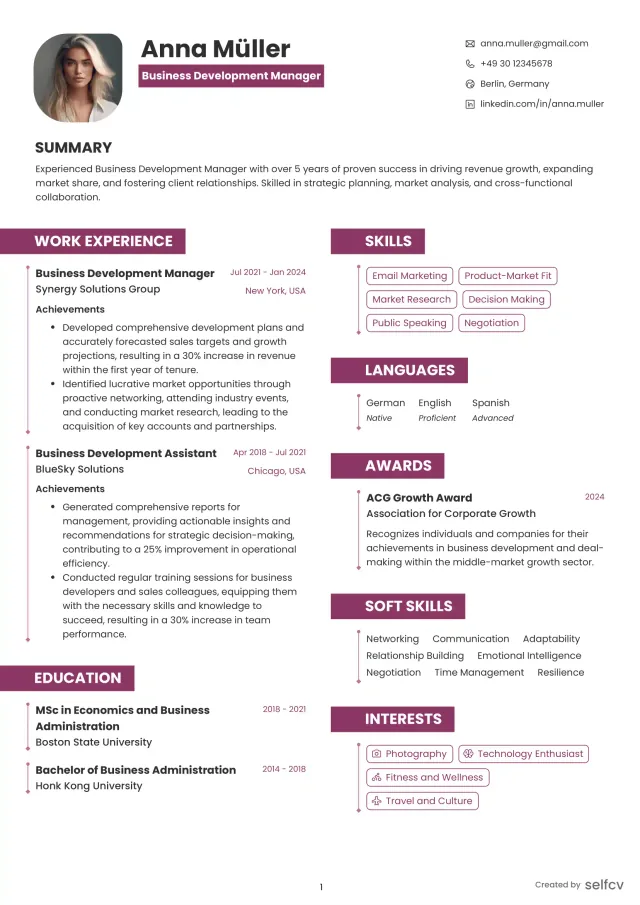
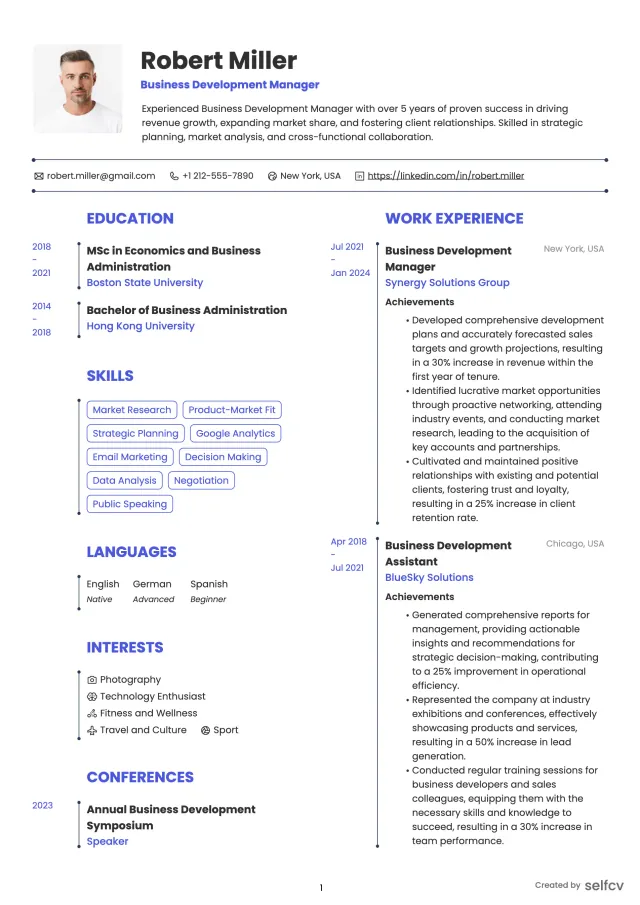
Find the template that’s right for you
No need to build anything from scratch. Using our templates or upload feature, you’ll get started easily and have a powerful resume in a few clicks.
Weak-to-strong achievement examples
Example 1:
Weak: Improved API performance.
Strong: Reduced user-facing API p95 from 480ms to 180ms by introducing per-request caching and optimizing DB queries in Node.js, increasing checkout conversion by 6%.
Why it works: The strong version states baseline, action, tech, and measurable user-level outcome.
Example 2:
Weak: Migrated services to Kubernetes.
Strong: Migrated three backend services to Kubernetes with Helm charts and resource quotas, enabling safe autoscaling and reducing cloud spend by 22% while keeping 99.95% uptime.
Why it works: Adds scope, tools, and business/operational metrics.
Example 3:
Weak: Wrote unit tests for app.
Strong: Designed and implemented Jest unit and integration suites covering 85% of payment service logic, catching regression bugs before release and decreasing post-release defects by 47%.
Why it works: Quantifies coverage, scope, and impact on defects.
Career-level summary and objective examples
Entry-level (0-2 years) summary/objective
- Objective: Bootcamp graduate with React and Node.js projects deployed on Vercel and Heroku. Seeking entry-level full-stack role to contribute to feature development and learn production CI/CD.
Mid-level (2-5 years)
- Summary: Full-Stack Engineer with 3 years building customer web apps, experienced in React, TypeScript, Node.js, and PostgreSQL. Owns features end-to-end and improves deployment velocity with CI automation.
Senior (5+ years)
- Summary: Senior Full-Stack Developer specializing in scalable microservices and frontend performance. Led architecture for high-throughput APIs and mentored engineering teams to improve MTTR and deploy frequency.
Career changer (transitioning to full-stack from adjacent role)
- Objective: Backend engineer transitioning to full-stack roles, with 4 years building APIs in Python and recent projects in React and TypeScript. Seeking roles that pair backend expertise with customer-facing UI ownership.
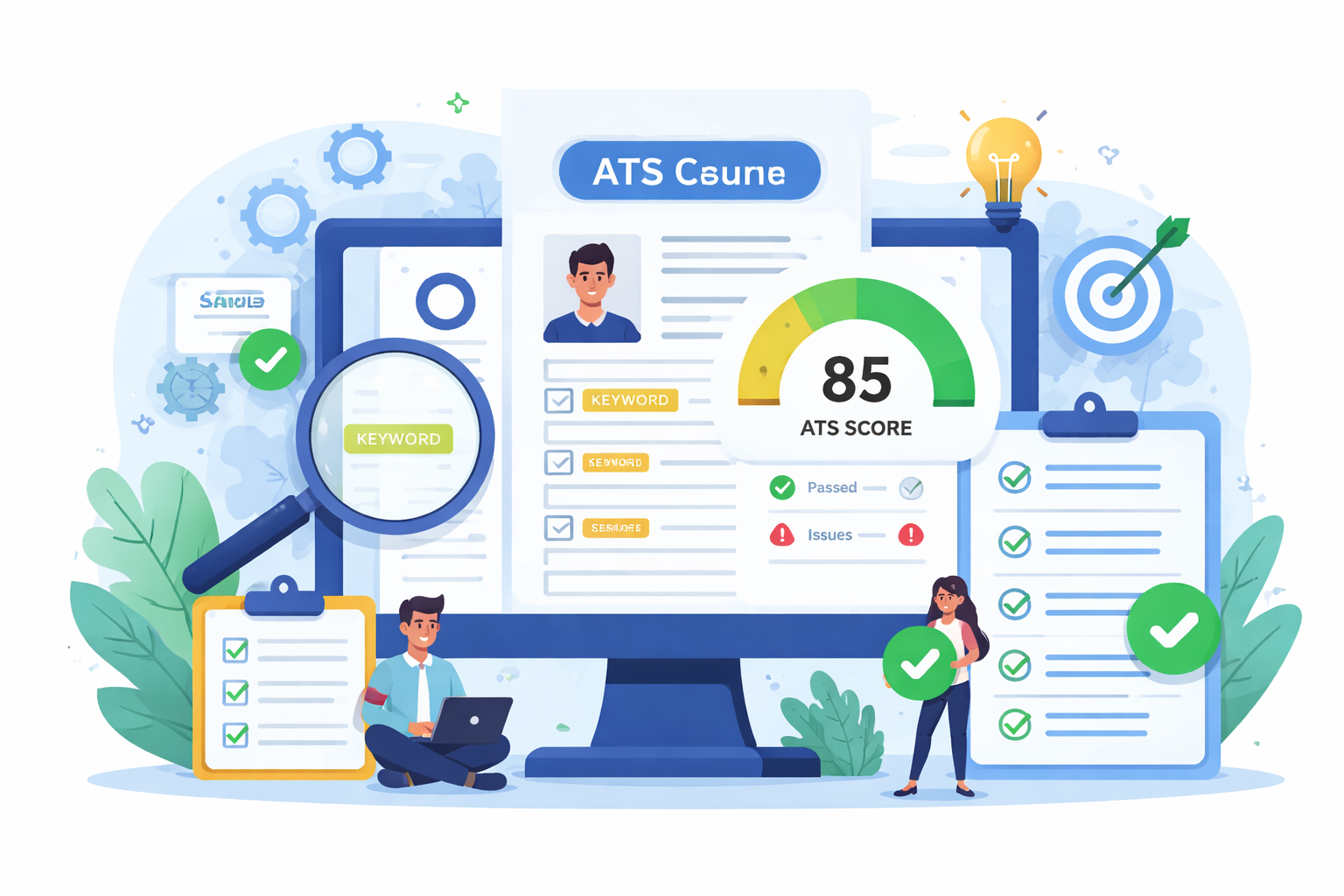
Check Your Resume with ATS
Make sure your resume passes Applicant Tracking Systems before recruiters see it.
- 📄 Upload your resume and get instant ATS feedback
- 🎯 Improve keyword matching for your target job
- ⚡ Boost your chances of getting shortlisted
Portfolio item templates and README snippets
Structure for a portfolio entry
- Title and one-line purpose
- Tech stack list
- Short architecture summary (one paragraph)
- What you built and owned
- Measurable outcomes or usage stats
- Demo link, GitHub link, CI badges if public
Example README excerpt
- Title: Order Reconciliation Service
- Purpose: Asynchronous reconciliation of third-party payment feeds
- Stack: Go, PostgreSQL, Redis, Kubernetes, GitHub Actions
- Summary: This service reduces duplicate charges by batching and idempotent handling. Handles 5k reconciliation jobs/day.
- Outcome: Job runtime dropped from 12 minutes to 90 seconds, cloud cost down 40%.
- Demo: deployed example on staging, architecture diagram hosted in repo
Industry and stack variants - how to tailor
SaaS and startups
- Emphasize product metrics, feature ownership, and rapid iterations
- Keywords: GraphQL, feature flags, A/B testing, observability
Fintech
- Highlight security, encryption, regulatory controls, and auditability
- Keywords: PCI, OAuth2, tokenization, secure key management
Healthtech
- Note PHI handling, HIPAA awareness, secure data stores
- Keywords: field-level encryption, audit logs, secure APIs
Enterprise
- Show integrations, backward compatibility, large-scale migrations
- Keywords: SOAP/REST integrations, on-prem connectors, SSO
Stack focus examples
- Frontend-first: lead with React/Next.js, performance metrics, UX testing
- Backend-first: emphasize microservices, API contracts, database scaling
- Platform/infra: showcase Kubernetes, Terraform, cost optimization, observability
How to adapt the same resume for front-end-heavy, back-end-heavy, or platform roles
Single-core resume, multiple job-specific tweaks
- Front-end-heavy tweak: Move frontend section above backend, expand performance and accessibility bullets, add Web Vitals metrics
- Back-end-heavy tweak: Emphasize API design, database scaling, and job throughput metrics; mention languages like Go, Java, or Python prominently
- Platform/infra tweak: Add a short "Platform Projects" section with Kubernetes, Terraform, and incident metrics; include runbooks and cost savings
Practical tip
- Maintain a master resume with complete history. For each application, swap the order of skill groups and pick 4-6 bullets most relevant to the role.
Evidence, public links, and IP caution
What to include publicly
- Deployed demos, GitHub repos, architecture diagrams, CI badges, and README usage docs
How to present them
- Use short URLs in the header
- Label items as demo, repo, or diagram and note which environment they run on
IP and NDA checks
- Do not publish company code or screenshots with proprietary data
- When in doubt, extract an anonymized architecture diagram or write a small repro that captures the idea without company data
Verifier signals recruiters like
- Clear repo README
- CI passing badge
- Live demo with fake data and a short usage guide
Common red flags and ATS traps for full-stack resumes
Recruiter red flags
- Vague contributions like "worked on checkout" without specifics
- No public evidence for claimed frontend or infra skills
- Overly long list of unproven technologies
ATS traps
- Using images for skill charts or badges
- Mixing languages in one section without categories
- Hidden text or excessive use of tables
Fixes
- Replace vague lines with measurable bullets
- Group skills and make sure key stack words appear in summary and experience
- Keep formatting plain and linear
FAQs (real search intent questions)
Q1: What should a Full-Stack Developer include on a resume in 2026?
- Include a clear target title, top stack keywords, measurable production achievements, and portfolio links. Mention CI/CD, cloud, and observability if you worked with them.
Q2: How to format a Full-Stack Developer resume for ATS?
- Use plain bullets, grouped skills, spelled-out acronyms once, and a simple single-column layout. Include long-tail job phrases naturally.
Q3: What keywords do recruiters search for when hiring Full-Stack Developers?
- React, Next.js, Node.js, Django, Spring, Go, REST, GraphQL, Kubernetes, AWS, CI/CD, PostgreSQL, microservices, API design.
Q4: Examples of measurable accomplishments for Full-Stack Developers?
- Reduced API p95 by X%, decreased deployment time from Y to Z minutes, cut cloud spend by X%, improved conversion by Y percentage points.
Q5: How to present GitHub and portfolio links on a developer resume?
- Put them in the header as short labeled URLs, ensure README explains your contribution, and include a demo or architecture diagram for major projects.
Q6: How to showcase CI/CD, Kubernetes, and cloud experience on a resume?
- Show ownership of pipelines, list concrete tooling (GitHub Actions, Jenkins), give metrics like reduced deploy time or cost savings, and cite incident reductions or increased deploy frequency.
Related careers
- Front-End Developer
- Back-End Developer
- DevOps Engineer
- Site Reliability Engineer
- Software Engineer
- Mobile Developer
- Data Engineer
Conclusion and prioritized 7-step action checklist
Final advice
A full-stack resume works when it maps clear production evidence to claimed skills, includes ATS-friendly keywords, and links to public proof you can legally share.
7-step prioritized checklist
1. Run an ATS scan and add missing top 6 keywords that you genuinely have
2. Rewrite 3 recent bullets using Context -> Action -> Tech -> Metric
3. Add portfolio links in header and verify READMEs and demos
4. Filename: FirstLast_Full-Stack-Developer_2026.pdf and set PDF title metadata
5. Tailor the skill order for each application (frontend-first or backend-first)
6. Remove images and tables, keep plain text bullets
7. Prepare 3 short production stories for interviews: one frontend performance, one API design, one incident response
Next action
- Pick one recent role and convert three bullets into measurable statements this week. Use those as the centerpiece of cover notes and interview stories.
Why job seekers choose selfcv
Thousands of professionals use selfcv to build modern, ATS-friendly resumes, customize templates, and apply for jobs with confidence.
Thanks to SelfCV, I now have a professional and polished resume that I'm confident in sending to potential employers. I will definitely be recommending your service to other job seekers. Keep up the great work!
SelfCV offers an intuitive interface that makes creating a professional CV straightforward. Whether you're a student, a fresh graduate, or an experienced professional, the step-by-step process ensures that users of all levels can craft an impressive CV.
Easy to use resume builder. They have very intuitive ui for customizing and keeping multiple versions of resume.
The right tool for creating CVs. As a student I was looking for a tool that could help me quickly create a CV for internship applications. This was just the right tool. I am very satisfied!
This is one of the best tools I’ve ever used - I was able to build my CV in seconds with high quality template. Highly recommended!
Amazing app with easy user experience. Loved it. Its intuitive and easy to navigate, designs are very nice.
