
Golang Developer Resume for 2026: Concurrency, Cloud-native Systems and Performance Results
Golang Developer Resume for 2026: Concurrency, Cloud-native Systems and Performance Results
Written by Armen Mkhitaryan
Recruiter TL;DR
- Focus on production impact: latency, throughput, error-rate reduction, and cost savings measured with numbers.
- Signal runtime expertise: Goroutines, channels, race detection, pprof profiles, and memory tuning.
- Show cloud-native experience: containers, Kubernetes, CI/CD pipelines, observability stacks and API design.
One-line resume checklist
- One-line summary with role, scale, and top metric
- 5-10 grouped technical skills, prioritized by the job description
- 2-4 project bullets with metric, technical approach, and result
- Links to 1-2 portfolio items or GitHub modules referenced by name
How hiring teams evaluate Golang developer resumes in 2026
High-level hiring patterns
- Hiring managers often look for evidence of production ownership and measurable improvements.
- Early-stage teams prioritize broad system-level skills and autonomy.
- Platform and scale teams prioritize deep runtime, profiling, and memory expertise.
- Enterprise roles often require cloud compliance awareness (security scanning, dependency management).
Signals that matter beyond keywords
- Measured outcomes rather than vague verbs.
- Clear mention of concurrency patterns used and the reason (worker pools, fan-in/fan-out, actor-like models).
- Evidence of performance tuning: before/after pprof or benchmark numbers.
- Open-source modules or reproducible microbenchmarks that hiring teams can inspect.
Role and level resume blueprints (entry to architect)
Blueprint for entry-level (0-2 years)
- Objective or short summary focused on learning and hands-on projects.
- Grouped skills: Go basics, standard library, basic concurrency, testing.
- 2-3 project bullets with measurable outcomes if possible (reduced test runtime, simplified deploy).
Blueprint for mid-level (2-5 years)
- Summary stating production ownership, service scope, and typical scale (requests/sec or data volume).
- Grouped skills: concurrency, networking, profiling, Docker/K8s, CI/CD, observability.
- 3-4 recent role bullets with metrics and technical approach.
Blueprint for senior (5+ years)
- Summary emphasizing system design, team mentorship, and measurable system improvements.
- Grouped skills: performance tuning, architecture (microservices/monolith decomposition), distributed tracing.
- 3-5 achievement bullets per recent role with clear technical decisions and outcomes.
Blueprint for staff/principal/architect
- Summary that highlights cross-team impact, cross-cutting tools (platforms, libraries), and large savings or latency wins.
- Include examples of API contracts, platform libraries, or standards you introduced.
- Emphasize technical leadership and measurable platform metrics.
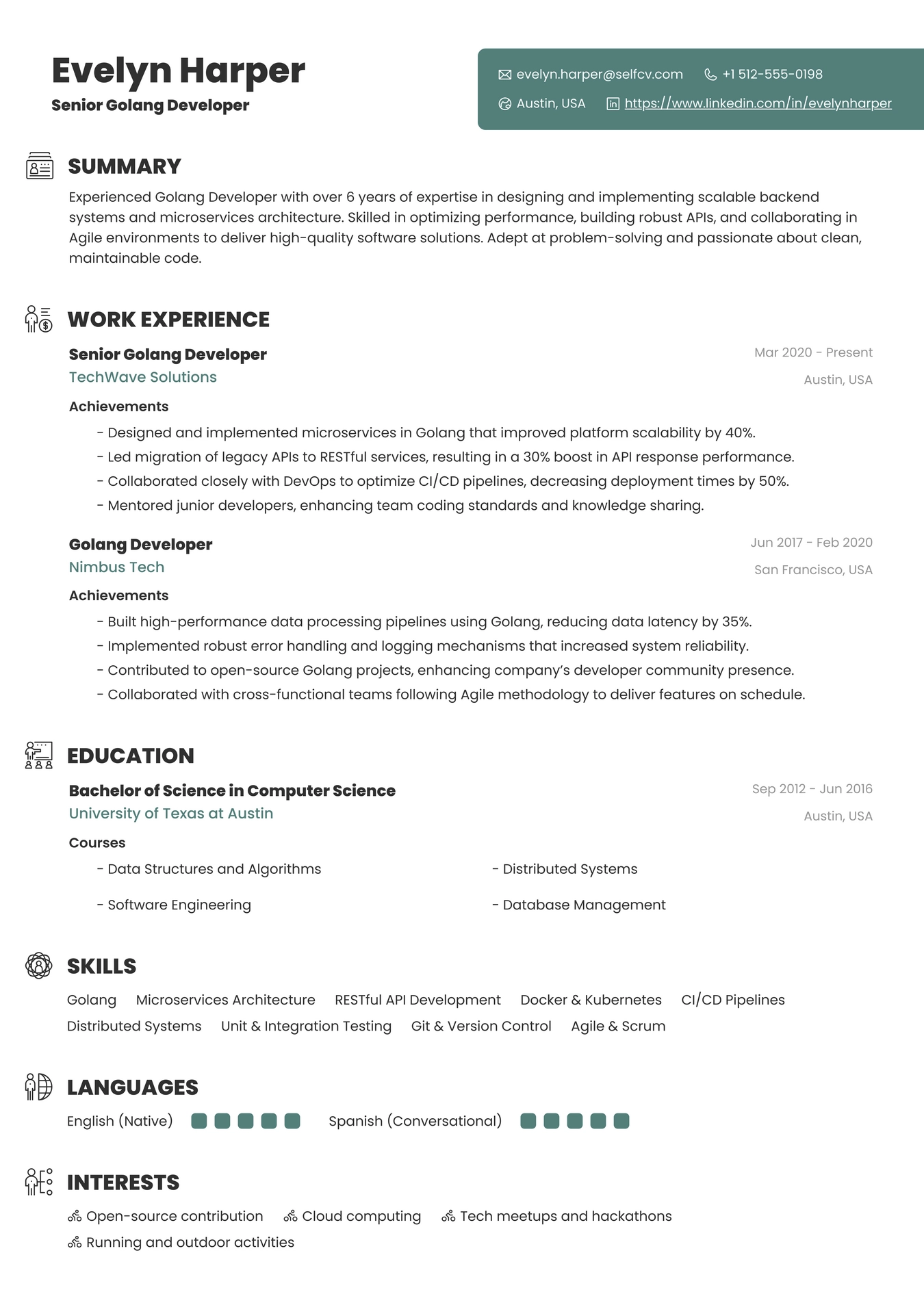
Resume Example for Golang Developer
Annotated project case studies next to core Go skills
Concurrency example
- Metric: reduced request latency 40% at 10k RPS.
- Technical approach: replaced synchronous handlers with worker pool and non-blocking channel patterns, bounded Goroutine pools, context cancellation.
- One-line result: sustained 10k RPS with 40% lower p95 latency; added backpressure handling.
- Portfolio reference: named service repository or handler snippet for reviewers.
Profiling and memory tuning example
- Metric: decreased heap by 55% and GC pause 3x faster.
- Technical approach: pprof analysis, identified large allocations in JSON marshaling, switched to streaming encoder and object pooling, added unit benchmarks.
- One-line result: 55% less memory, GC pauses reduced, 20% throughput gain.
- Portfolio reference: pprof before/after and benchmark repo.
Microservices and API design example
- Metric: cut cross-service latency 30% and reduced error rate 2x.
- Technical approach: moved from chatty RPC to well-typed gRPC with protobuf, added client-side retries and circuit breaking.
- One-line result: simpler contract, lower latency, and clearer ownership boundaries.
- Portfolio reference: proto definitions and client stub examples.
CI/CD and deployment example
- Metric: deploy mean time decreased from 45 minutes to 6 minutes.
- Technical approach: introduced containerized builds, multi-stage Dockerfiles, GitOps pipeline with automated canary rollout and health checks.
- One-line result: faster, safer deployments and rollback automation.
Observability and debugging example
- Metric: mean time to identify root cause reduced by 60%.
- Technical approach: OpenTelemetry instrumentation, structured logs, Prometheus metrics and Grafana dashboards, distributed tracing with Jaeger.
- One-line result: faster incident response and clearer SLA reporting.
ATS keyword mapping and placement
Primary keyword placement
- Header/title: Golang Developer or Go Engineer
- Summary: include "Golang", "Go", and one top specialization (microservices, performance, cloud-native)
- Skills section: list core libraries, tools, and patterns (Goroutines, channels, pprof, gRPC, Kubernetes)
Where to put secondary keywords
- Professional experience bullets: mention specific tech where used (Prometheus, OpenTelemetry, protobuf, Docker)
- Projects or portfolio entries: module names or GitHub repos
- Certifications and training: Cloud or Kubernetes certs if relevant
Common ATS keywords for Go roles to consider
- Golang, Go, pprof, Goroutine, channels, concurrency, gRPC, protobuf, REST, Kubernetes, Docker, CI/CD, Prometheus, OpenTelemetry, memory profiling, benchmarking, unit testing, integration testing, modules, go.mod
Tools, deliverables, environments, stakeholders and metrics employers expect
Tools and software commonly referenced
- Go toolchain: go test, go vet, gofmt, go run, go build, modules (go.mod)
- Profiling and debugging: pprof, Delve, runtime/pprof, race detector, benchstat
- Networking and APIs: net/http, gRPC, protobuf, JSON, REST frameworks
- Cloud and infra: Docker, Kubernetes, Helm, cloud providers (AWS, GCP, Azure), Terraform
- Observability: Prometheus, Grafana, OpenTelemetry, Jaeger, Loki
- CI/CD: GitHub Actions, GitLab CI, Jenkins, ArgoCD
Deliverables and work environment
- Service ownership for one or more microservices
- Library or middleware packages with semver and module releases
- Documentation, API contracts, and integration tests
- Work environment: remote or hybrid teams, cross-functional collaboration with SREs and product
Stakeholders you will interact with
- Product managers for feature scope
- SRE/Platform teams for deployment and reliability
- QA for testing strategy and flaky test reduction
- Security and compliance teams for dependency and vulnerability scans
Metrics and quality standards
- Latency percentiles (p50, p95, p99), throughput, error rate, resource cost per request
- Test coverage targets, CI pipeline pass rates, code review SLAs
- Compliance: dependency scanning, SBOM awareness, secure coding practices
Specializations and career levels
- Backend APIs, streaming data pipelines, telemetry/observability, embedded Go (less common), edge services
- Career levels map to ownership scope and impact metrics: entry to principal roles
Complete resume example (fictional)
The candidate, companies, and career history shown are fictional and for illustration.
Jordan Blake
Golang Backend Engineer
Seattle, WA (Open to remote)
Professional Summary
- Senior Golang developer with 6 years building high-throughput microservices and platform libraries. Owned product search backend serving 15k RPS. Expertise in Goroutines, pprof profiling, gRPC, and Kubernetes. Delivered 3 major latency and cost reduction projects with measurable outcomes.
Grouped Skills
- Languages and runtime: Go, Goroutines, channels, context, runtime/pprof
- APIs & comms: gRPC, protobuf, REST, net/http
- Infrastructure: Docker, Kubernetes, Helm, Terraform, AWS
- Observability & testing: OpenTelemetry, Prometheus, Grafana, Jaeger, go test, benchstat
- CI/CD & tooling: GitHub Actions, ArgoCD, goreleaser
Professional Experience
Senior Backend Engineer, Search Systems
Acme Cloud, Seattle, WA
2022-2026
- Re-architected search query service to use bounded Goroutine pools and streaming protobufs, reducing median latency 38% and p99 latency 50% at peak traffic.
- Conducted pprof-driven memory audit, replaced heavy allocations with pooling and streaming encoders, lowering heap usage 60% and reducing GC pauses.
- Implemented distributed tracing and dashboards, cutting mean time to diagnose incidents by 65% and lowering error budget burn.
- Introduced canary deployments via ArgoCD and automated rollout conditions, decreasing rollback time from 20m to 3m.
Backend Engineer
FinTech Payments Inc., Remote
2019-2022
- Built payment reconciliation microservice in Go, integrating with Kafka and external partners via gRPC; reduced batch processing time from 90m to 18m.
- Improved test suite runtimes with parallelized integration tests, dropping CI time by 40% and improving developer feedback loop.
- Published internal Go utility package for idempotent retries used across 6 services.
Junior Software Engineer
Platform Startups, Remote
2017-2019
- Maintained core API gateways and contributed to go.mod module stabilization.
- Automated container builds and basic health checks, enabling hourly deployments.
Education / Training
- B.S. Computer Science, University of Washington (2017)
- Go Immersion course, Practical Go Training (2020)
Certifications
- Certified Kubernetes Application Developer (CKAD)
- AWS Certified Developer - Associate (optional realistic cert)
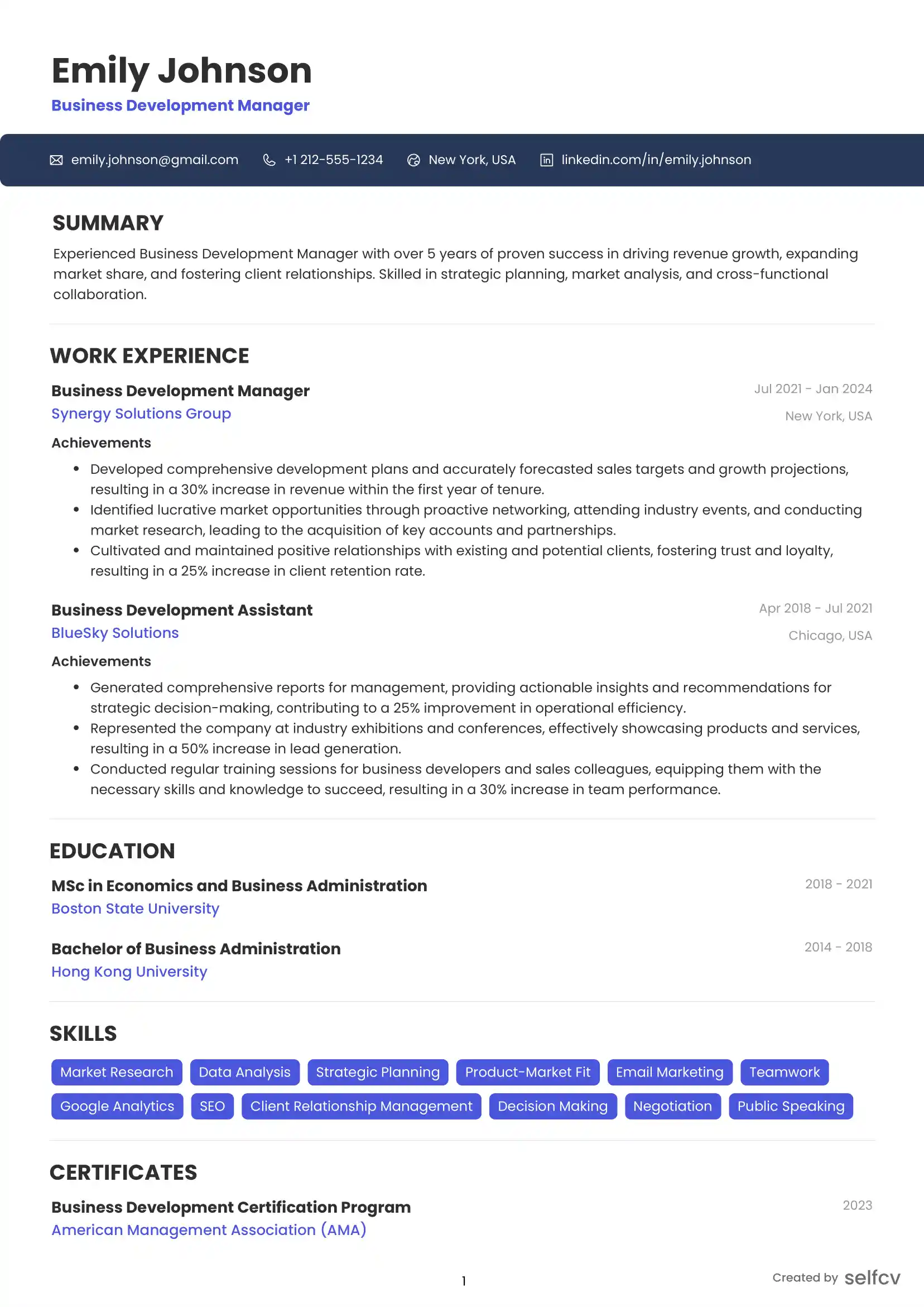
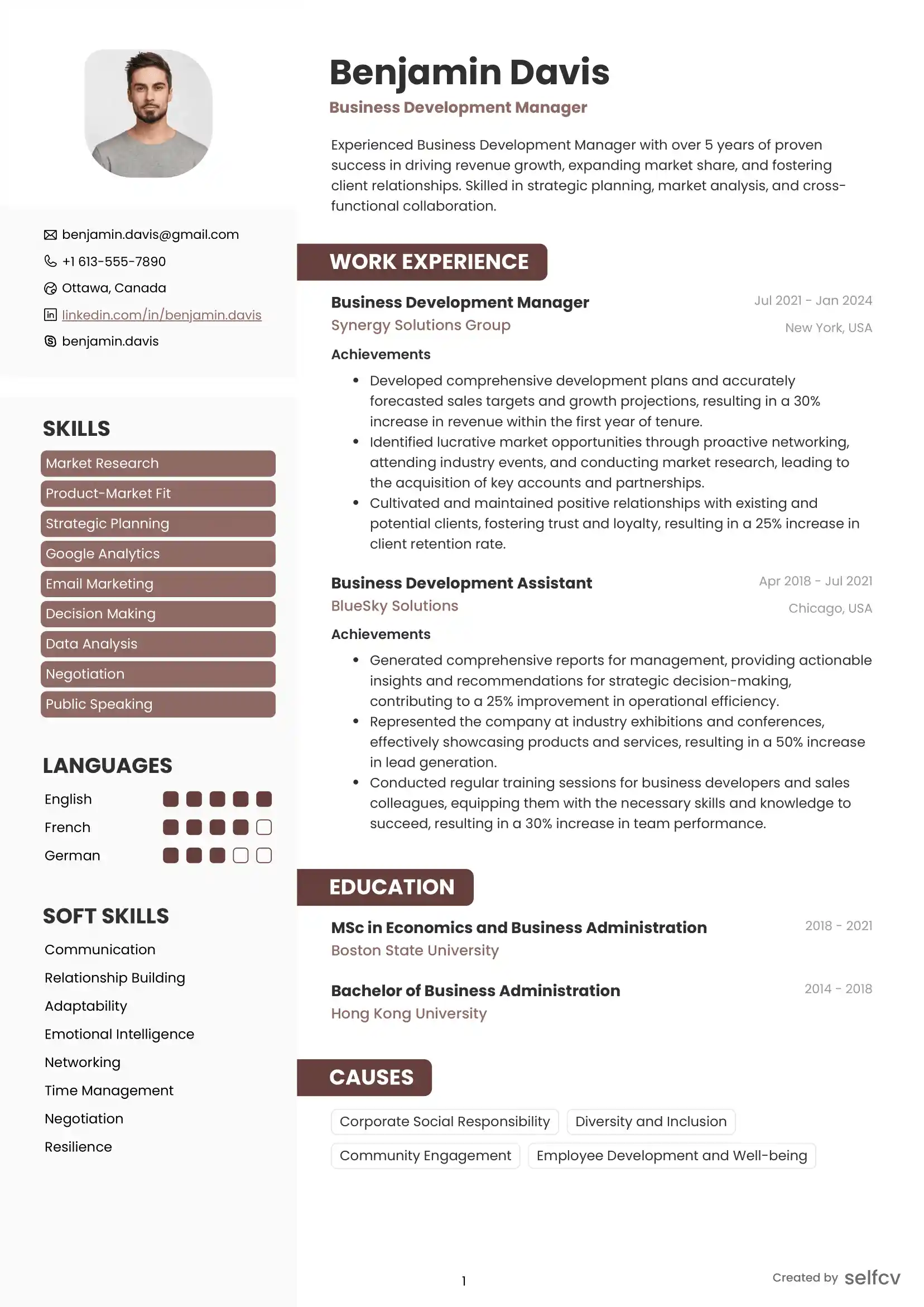
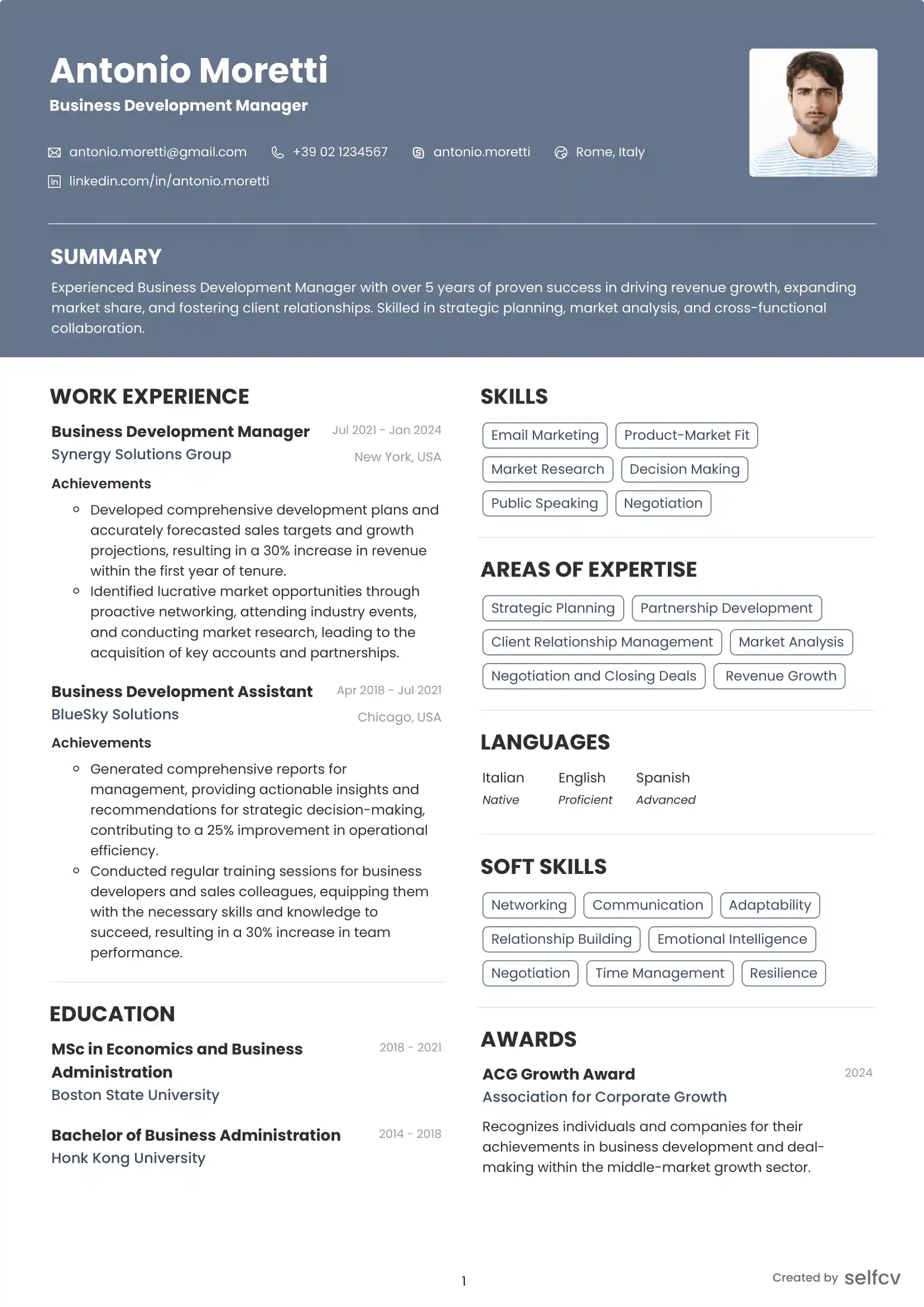
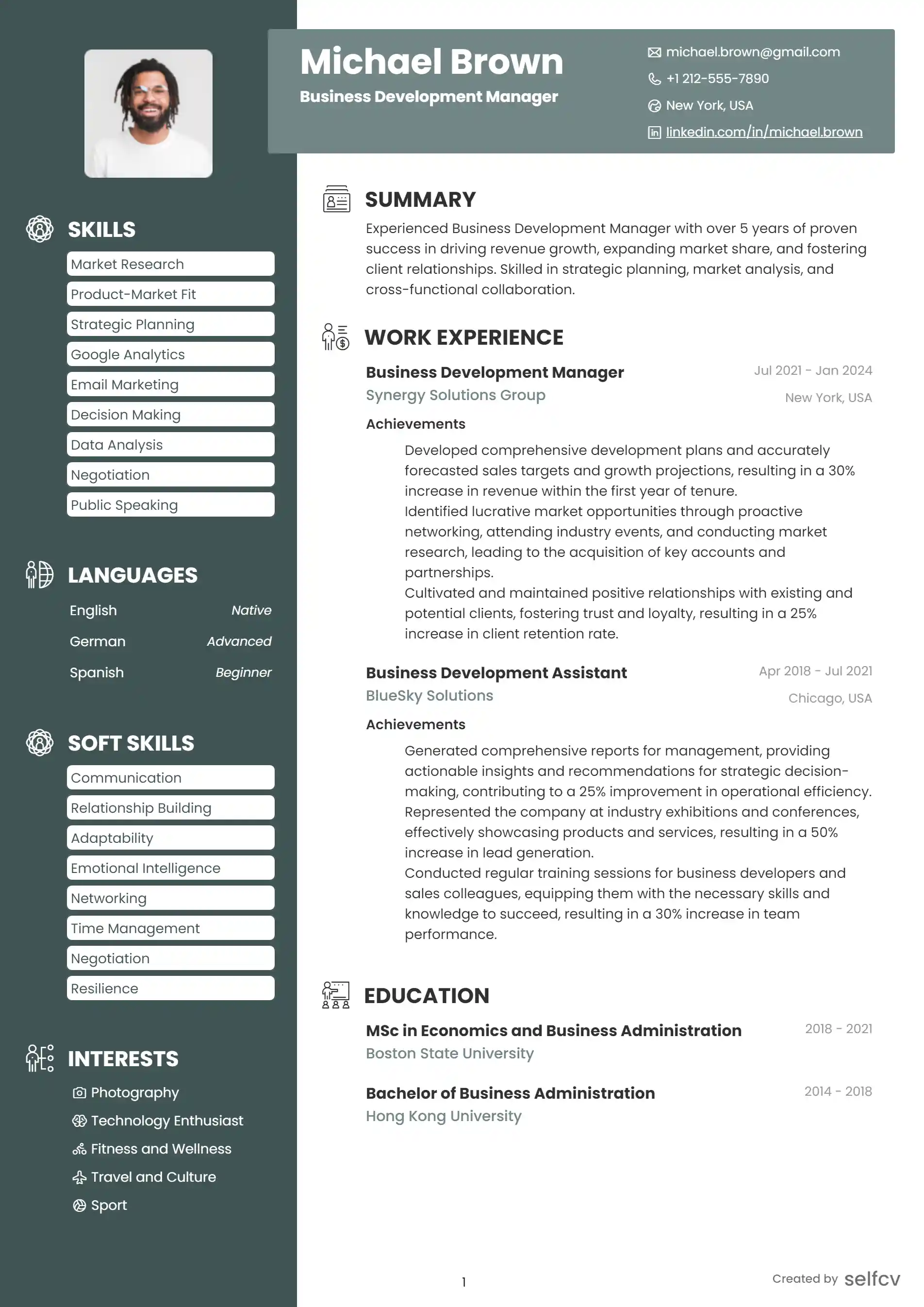
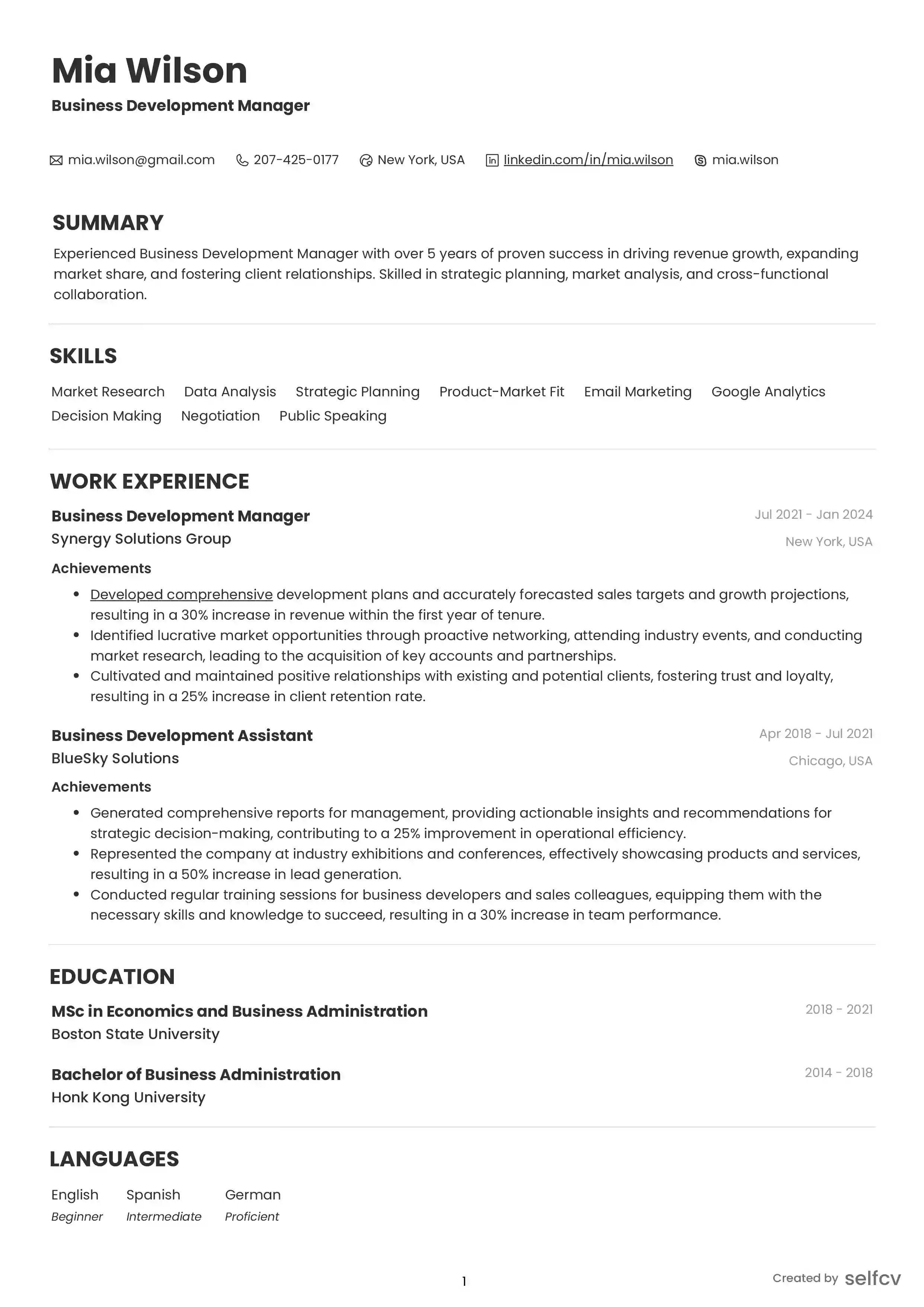
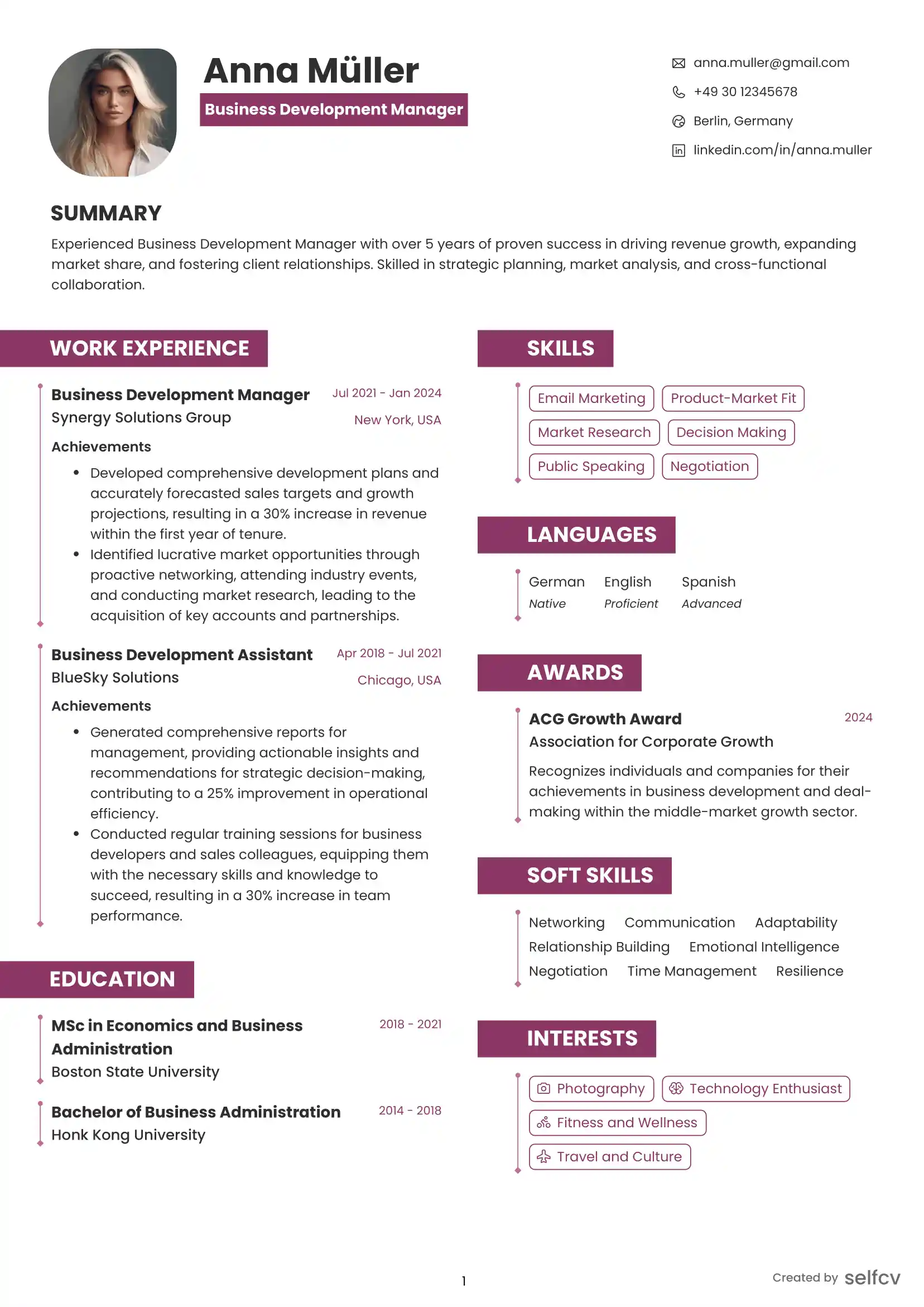
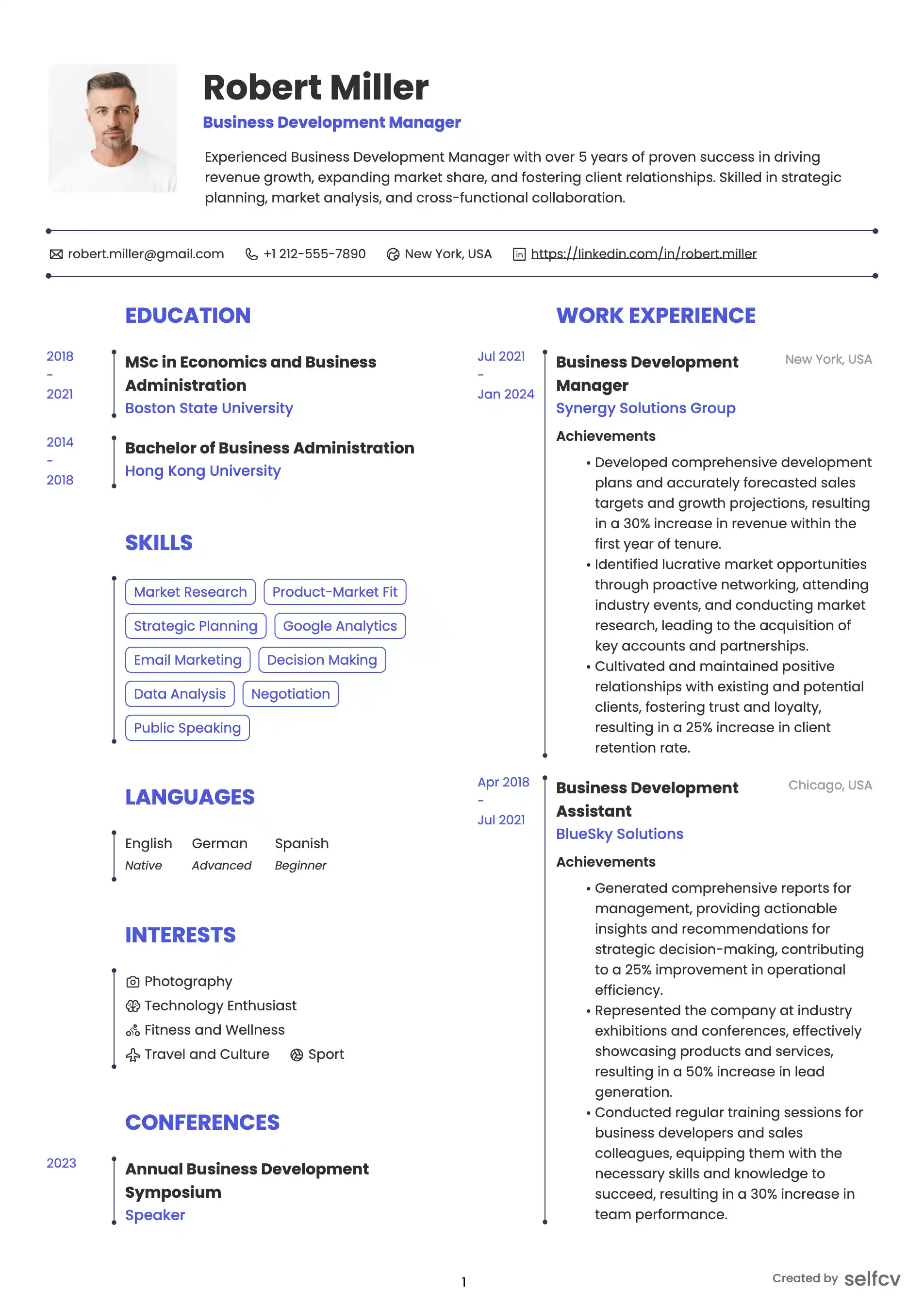
Find the template that’s right for you
No need to build anything from scratch. Using our templates or upload feature, you’ll get started easily and have a powerful resume in a few clicks.
Achievement examples: weak-to-strong, profession-specific
Example 1:
Weak:
- Improved service performance.
Strong:
- Reduced API p95 latency from 220ms to 130ms by introducing worker pool patterns and optimizing JSON marshaling.
Why it works:
- The strong version provides a measurable before/after metric, the technical approach, and the specific area of improvement.
Example 2:
Weak:
- Worked on profiling.
Strong:
- Identified 40% CPU hotspot using pprof, replaced reflection-heavy code with generated protobuf serializers, yielding a 28% throughput increase under load.
Why it works:
- Shows tools used, the root cause, the code-level fix, and the quantifiable outcome.
Example 3:
Weak:
- Helped deploy services to Kubernetes.
Strong:
- Designed GitOps pipeline with ArgoCD and health-based canaries, cutting mean deploy time from 45 minutes to 7 minutes and reducing rollback incidents by 80%.
Why it works:
- Connects process change to measurable deployment and reliability outcomes.
Resume summary and objective examples by career level
Entry-level objective (0-2 years)
- Recent CS graduate with Go internship experience, familiar with Goroutines, net/http, and basic Docker. Seeking a junior Golang developer role to contribute to backend APIs and learn production-grade observability.
Mid-level summary (2-5 years)
- Golang developer with 3 years of production experience building microservices and APIs. Proven record improving latency and reliability using pprof, gRPC, and Kubernetes. Seeking backend role owning critical services.
Senior-level summary (5+ years)
- Senior Golang engineer focused on performance and platform reliability. Led profiling initiatives and created shared Go libraries for internal use. Looking to drive system-level improvements and mentor engineers.
Career changer objective
- Experienced Java backend developer transitioning to Go after contributing to two open-source Go modules and completing performance-focused projects. Seeking Go backend role to apply concurrent programming and profiling experience.
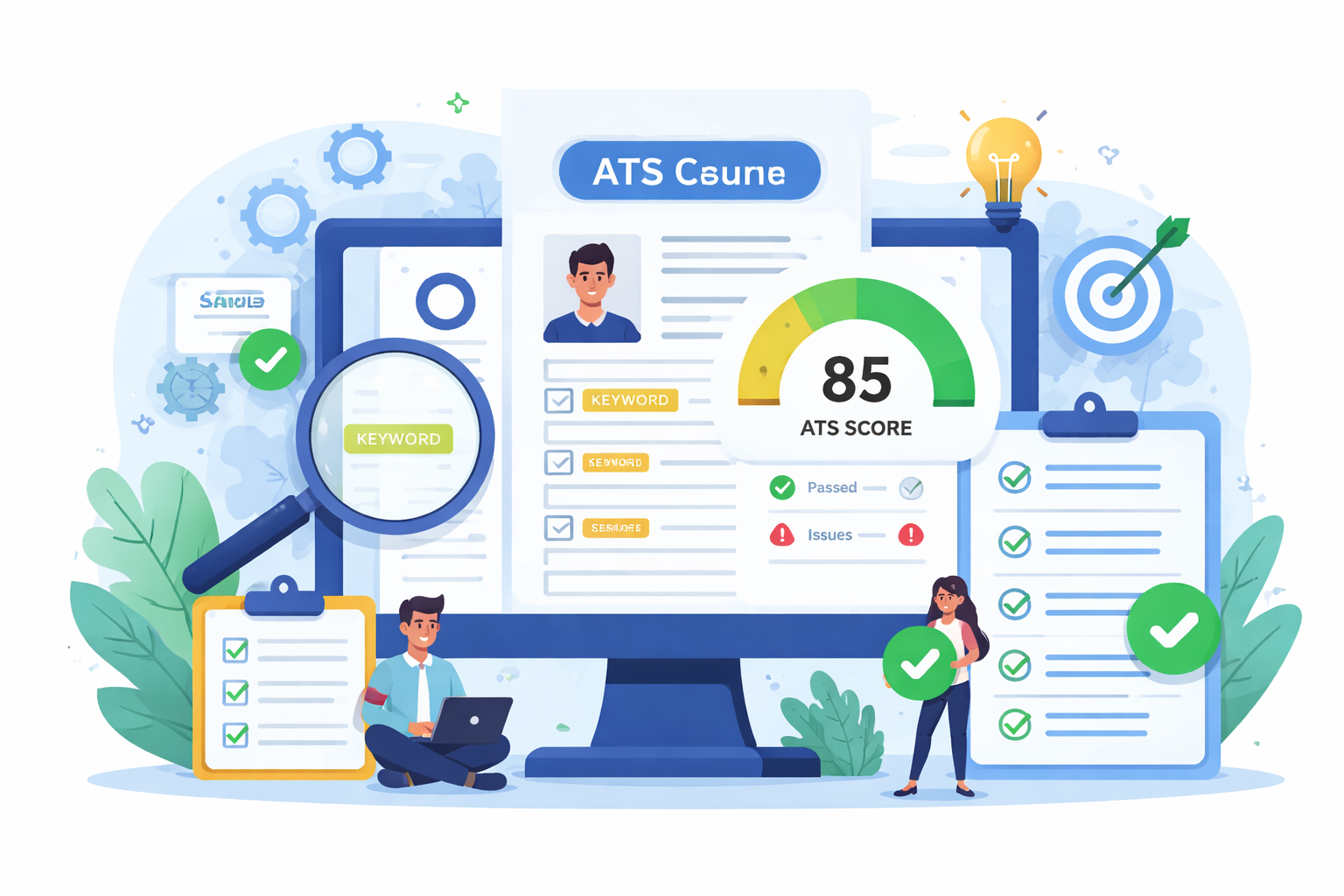
Check Your Resume with ATS
Make sure your resume passes Applicant Tracking Systems before recruiters see it.
- 📄 Upload your resume and get instant ATS feedback
- 🎯 Improve keyword matching for your target job
- ⚡ Boost your chances of getting shortlisted
Portfolio items and how to present them on a resume
What to include for each portfolio item
- One-line purpose: what the service or library does.
- Technical approach: key Go patterns or libraries used.
- Measured outcomes: latency, throughput, memory, or cost improvements.
- Reproducible artifact: a named GitHub repo, module path, or small benchmark file.
How to reference on the resume
- Use clear labels: ExampleRepoName (GitHub) - pprof before/after and benchmark results.
- Make it easy to scan: include one-line result next to the repo name.
Ideas for strong portfolio pieces
- Microbenchmark showing concurrency throughput with benchstat.
- pprof snapshots with brief notes and a small optimizing patch.
- A reusable middleware or library published as a Go module with semantic version.
Interview talking points and tailoring checklist
Talking points tied to examples in this article
- Concurrency project: explain trade-offs of Goroutine per request vs worker pool, how you measured saturation, and how you handled context cancellation.
- Profiling case: walk through pprof flamegraphs, how you isolated allocations, and the benchmarks you used to validate changes.
- Microservices case: describe API contract decisions, choice of gRPC vs REST, and client-side resiliency patterns.
Tailoring checklist before applying
- Map 6-8 skills from the job description to your top skills and place them in the summary and first experience bullets.
- Add 2-3 measurable outcomes relevant to the role (latency, cost, throughput).
- Link to 1-2 portfolio pieces that demonstrate the most relevant technical signals.
- Remove unrelated language and replace with domain-specific terms the employer uses (payments, search, streaming, telemetry).
Frequently asked questions for Golang developer resumes
How do I write a Golang developer resume for cloud-native roles?
- Emphasize containerization, Kubernetes experience, CI/CD, and observability. Include specific artifacts like Helm charts, ArgoCD pipelines, or Terraform modules and measurable deployment or reliability improvements.
What Go skills should I list on my resume to pass ATS?
- Include explicit terms: Golang, Go, Goroutines, channels, pprof, gRPC, protobuf, Kubernetes, Docker, Prometheus, OpenTelemetry, CI/CD. Place them in the summary, skills list, and experience bullets.
How do I show concurrency and performance improvements on a Go resume?
- Use before/after metrics (p95 latency, CPU, heap allocations), name the tools (pprof, benchstat), and state the code-level change (pooling, streaming encoder, avoiding reflection).
How do I tailor a Go engineer resume for microservices vs embedded systems roles?
- For microservices: stress networking, API design, gRPC, Kubernetes, observability. For embedded or systems-level Go: emphasize low-level memory usage, cgo, cross-compilation, and small binary size optimizations.
What keywords do recruiters look for in a Go developer resume?
- See ATS keyword mapping above. Prioritize "Golang", "Goroutines", "pprof", "gRPC", "Kubernetes", and specific observability tools.
How should I present open-source Go contributions and modules on my CV?
- List the module path and version, summarize purpose, and a one-line result or adoption metric. Note tests, CI status, and any upstream usage.
What measurable achievements matter most for senior Golang developers?
- System-level impact: latency percentiles, throughput, error-rate reduction, cost savings, platform adoption, reduced incident MTTR.
Related careers and adjacent roles
Related professions
- Backend Engineer (Go, Java, Python)
- Site Reliability Engineer (SRE)
- Platform Engineer
- Systems Programmer (low-level Go or C)
- API Architect
- DevOps Engineer
How they overlap with Go work
- SREs focus more on reliability, on-call, and capacity planning but need Go for tooling.
- Platform engineers build reusable libraries and CI/CD, similar to principal Go roles.
Conclusion, practical checklist and three next steps
Final notes specific to Golang developers in 2026
- Production signals beat buzzwords: showcase measurable runtime and delivery improvements.
- Small reproducible artifacts (benchmarks, pprof snapshots, module) provide high credibility and faster technical validation.
Practical checklist before you apply
- Put your top metric in the summary line.
- Include 5-10 grouped skills with Go-specific tools and patterns.
- Add 2-4 project bullets with before/after metrics and the technical change.
- Reference 1-2 portfolio or GitHub artifacts by name.
- Tailor keywords to the job description and remove unrelated items.
Level-specific templates to use
- Entry: objective, grouped skills, 2 projects
- Mid: summary with scope, 3 role bullets with metrics, 1 portfolio link
- Senior: concise impact summary, 3-5 bullets per recent role with technical decisions and metrics
Interview prep steps tied to article examples
- Prepare a 3-minute story for each annotated project: problem, instrumentation, code change, outcome.
- Have one pprof flamegraph and a benchstat result you can walk through.
- Be ready to discuss trade-offs for concurrency patterns and deployment strategies.
Three next steps
- Customize this resume draft for the role: map 6-8 explicit job keywords into summary and bullets.
- Add 2-3 measurable outcomes (latency, throughput, cost, MTTR) if missing.
- Publish or update a portfolio link with 1 reproducible artifact (pprof, benchmark, or module) and reference it in your resume.
Why job seekers choose selfcv
Thousands of professionals use selfcv to build modern, ATS-friendly resumes, customize templates, and apply for jobs with confidence.
Thanks to SelfCV, I now have a professional and polished resume that I'm confident in sending to potential employers. I will definitely be recommending your service to other job seekers. Keep up the great work!
SelfCV offers an intuitive interface that makes creating a professional CV straightforward. Whether you're a student, a fresh graduate, or an experienced professional, the step-by-step process ensures that users of all levels can craft an impressive CV.
Easy to use resume builder. They have very intuitive ui for customizing and keeping multiple versions of resume.
The right tool for creating CVs. As a student I was looking for a tool that could help me quickly create a CV for internship applications. This was just the right tool. I am very satisfied!
This is one of the best tools I’ve ever used - I was able to build my CV in seconds with high quality template. Highly recommended!
Amazing app with easy user experience. Loved it. Its intuitive and easy to navigate, designs are very nice.
