
Prompt Engineer Resume Guide 2026: Show Measurable Prompt Results, ATS Keywords and Portfolio Proof
Prompt Engineer Resume Guide 2026: Show Measurable Prompt Results, ATS Keywords and Portfolio Proof
Written by Armen Mkhitaryan
Applications often flood hiring teams with vague claims about prompt work and model improvements, while ATS filters and product stakeholders want compact evidence of impact. This guide shows what to put on a Prompt Engineer resume in 2026 so your experience reads as reproducible work, measurable outcomes, and product ownership.
What hiring teams actually want
Hiring managers often look for evidence of production ownership and measurable improvements.
What that means for a resume:
- Show the problem you solved, the experiment or design you used, and the measurable outcome.
- Name the tools, frameworks, and test suites you used so a technical screener can verify skills quickly.
- Show collaboration with product, ML engineers, data labeling, and evaluation teams rather than isolated experiments.
How to structure a Prompt Engineer resume
Resume length and sections:
- 1 page for entry to mid-level candidates, 1-2 pages for senior and principal roles with clear section headers.
Essential sections and order:
- Header and one-line recruiter summary
- Core skills grouped by category (prompt design, evaluation, orchestration, infra)
- Professional experience with 2-4 tight positions and 3-5 achievement bullets each
- Portfolio highlights and reproducible artifacts
- Education and relevant certifications
Formatting tips:
- Use short bullets that start with the contribution, then the method, then the metric.
- Avoid vague verbs like "worked with" without context and outcome.
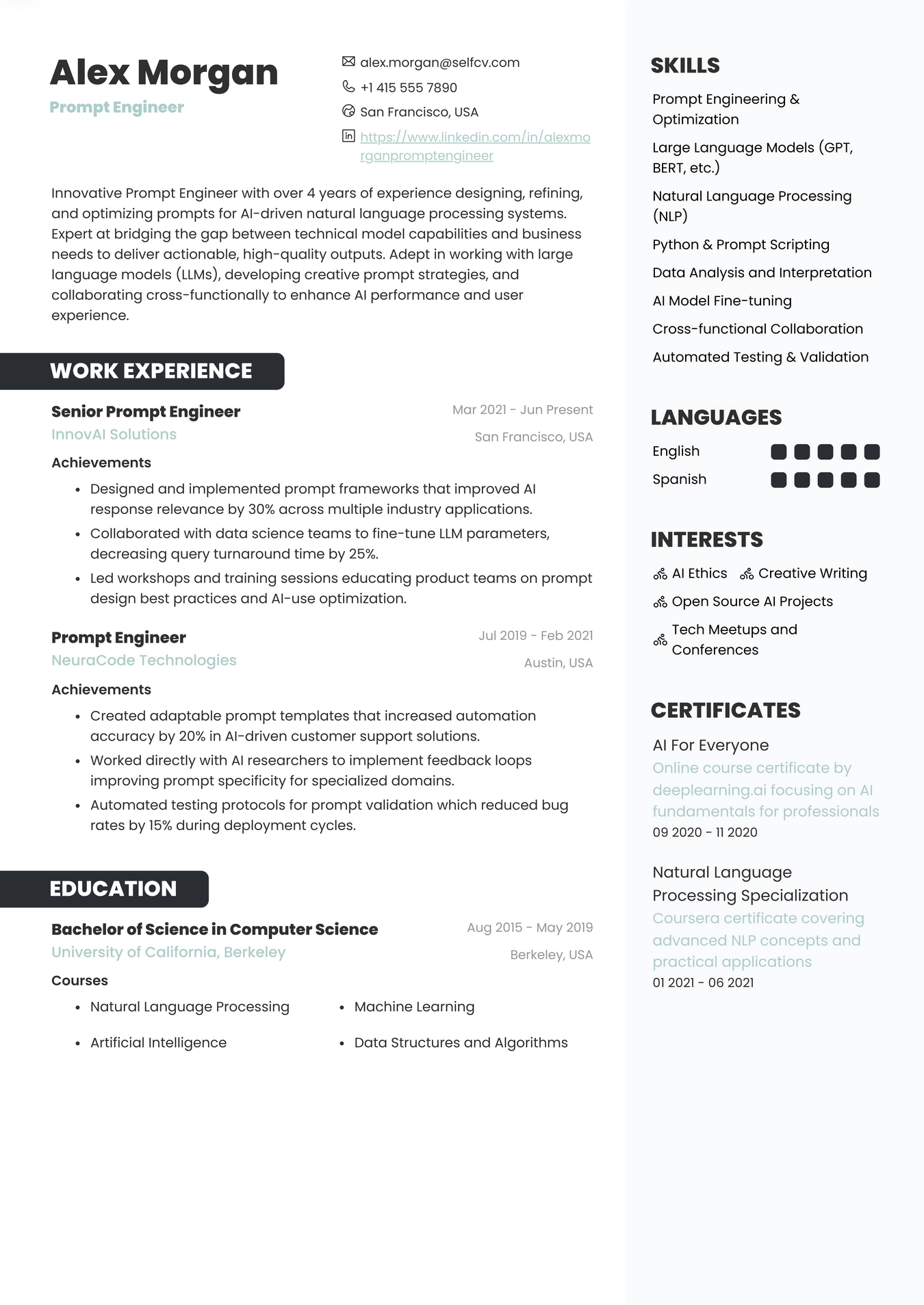
Resume Example for Prompt Engineer
ATS keywords and skill phrases to include
Core ATS-friendly keywords to weave naturally into experience and skills:
- Prompt Engineer resume
- prompt tuning, instruction tuning, few-shot prompting
- chain-of-thought, chain-of-thought prompting
- LangChain, PromptFlow, prompt orchestration
- prompt evaluation, prompt testing framework, evaluation metrics
- instruction design, prompt templates, prompt pipelines
- model hallucination reduction, response accuracy, F1/ROUGE proxies
- RLHF basics, prompt safety, content filtering
How to place them:
- Put primary and secondary keywords in your skills list and repeat in context inside experience bullets.
- Use role-specific phrases like "prompt pipeline" for MLOps-adjacent roles and "instruction tuning" for research-oriented roles.
Tools, frameworks and deliverables to list
Tools and frameworks hiring teams expect to see:
- LangChain, PromptFlow, LlamaIndex, Haystack
- Evaluation tools and metrics packages (custom test harnesses, rouge/f1 scripts, human eval setups)
- Notebook and CI tools (Jupyter, Colab, GitHub Actions, Airflow, MLflow)
- Annotation and labeling platforms used for test sets
Deliverables to call out on the resume:
- Reproducible notebooks with test harness
- Versioned prompt library and canonical prompt templates
- A/B test results and experiment logs
- Small demo app or screencast showing before/after responses
Which metrics to report and how to measure impact
Common, hireable metrics for prompt engineering:
- Accuracy, F1, ROUGE, BLEU used as proxies for task correctness
- Hallucination rate reduction measured on curated test sets
- Latency and cost per request improvements
- Increase in user task completion, reduction in manual review rate
How to present metrics:
- Use absolute and relative numbers: "reduced hallucination rate from 22% to 8% on a 2k-item test set".
- Clarify test size and test conditions to avoid unverifiable blanket claims.
How to describe your prompt engineering process on a resume
A concise process you can replicate in bullets:
- Problem framing and success criteria
- Prompt hypotheses and seed examples or instruction templates
- Test harness and evaluation metric selection
- Iterative tuning, A/B tests, and rollouts
- Monitoring and post-deployment evaluation
Example phrase to convert experiments into resume bullets:
- "Defined task rubric and 1,200-case test suite, iterated 15 prompt variants, and selected template that improved task accuracy by 18% while reducing inference cost by 12%."
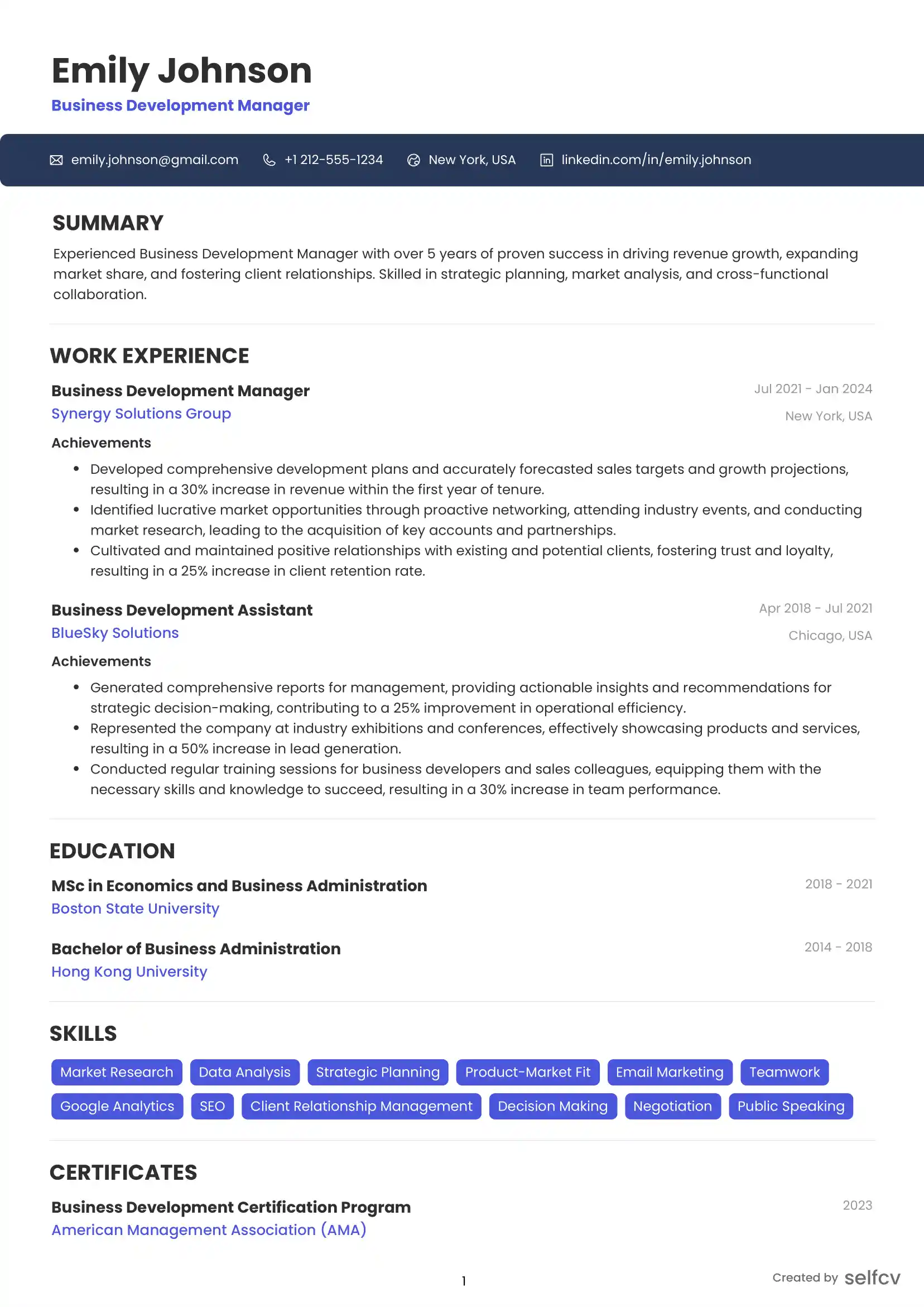
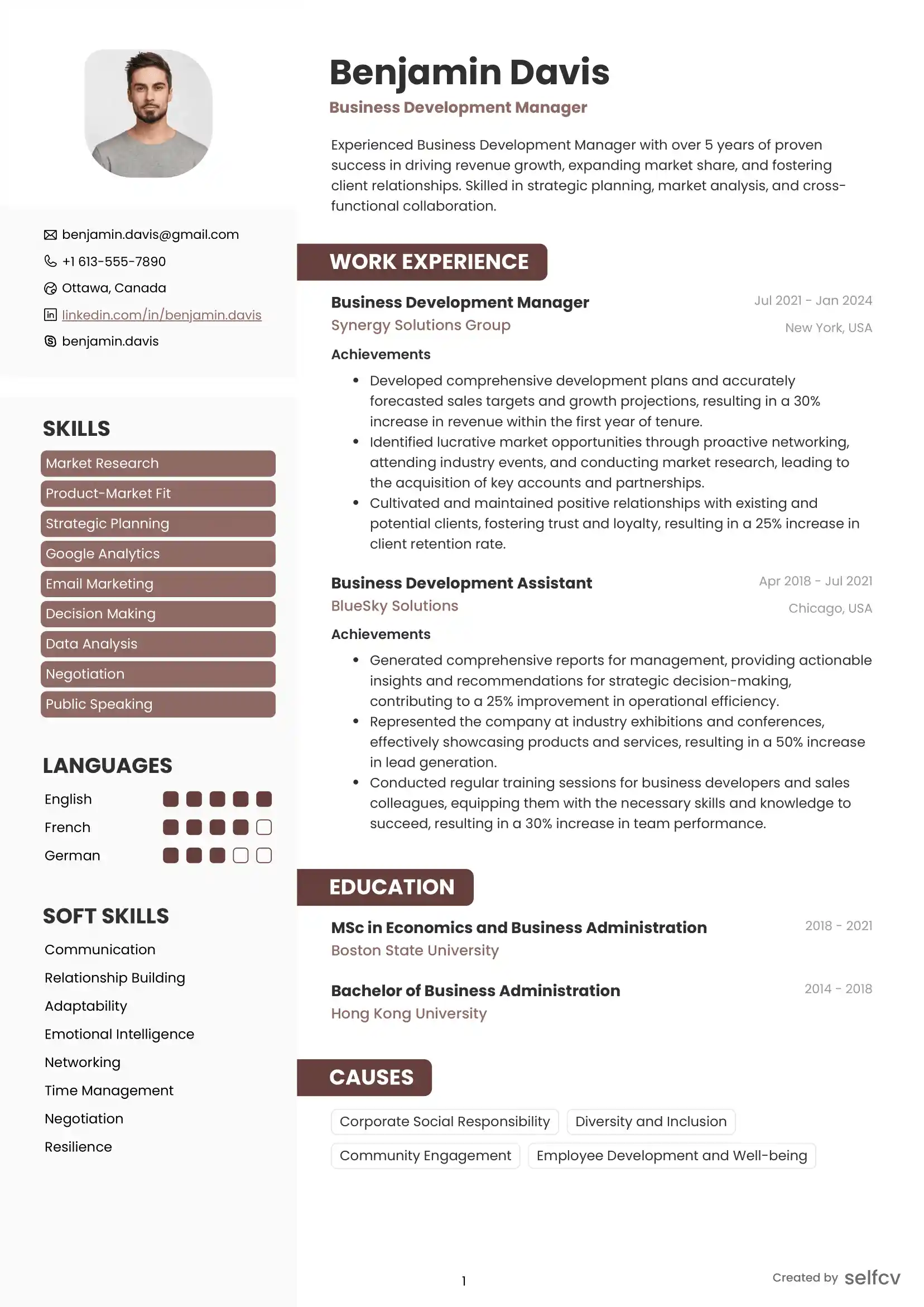
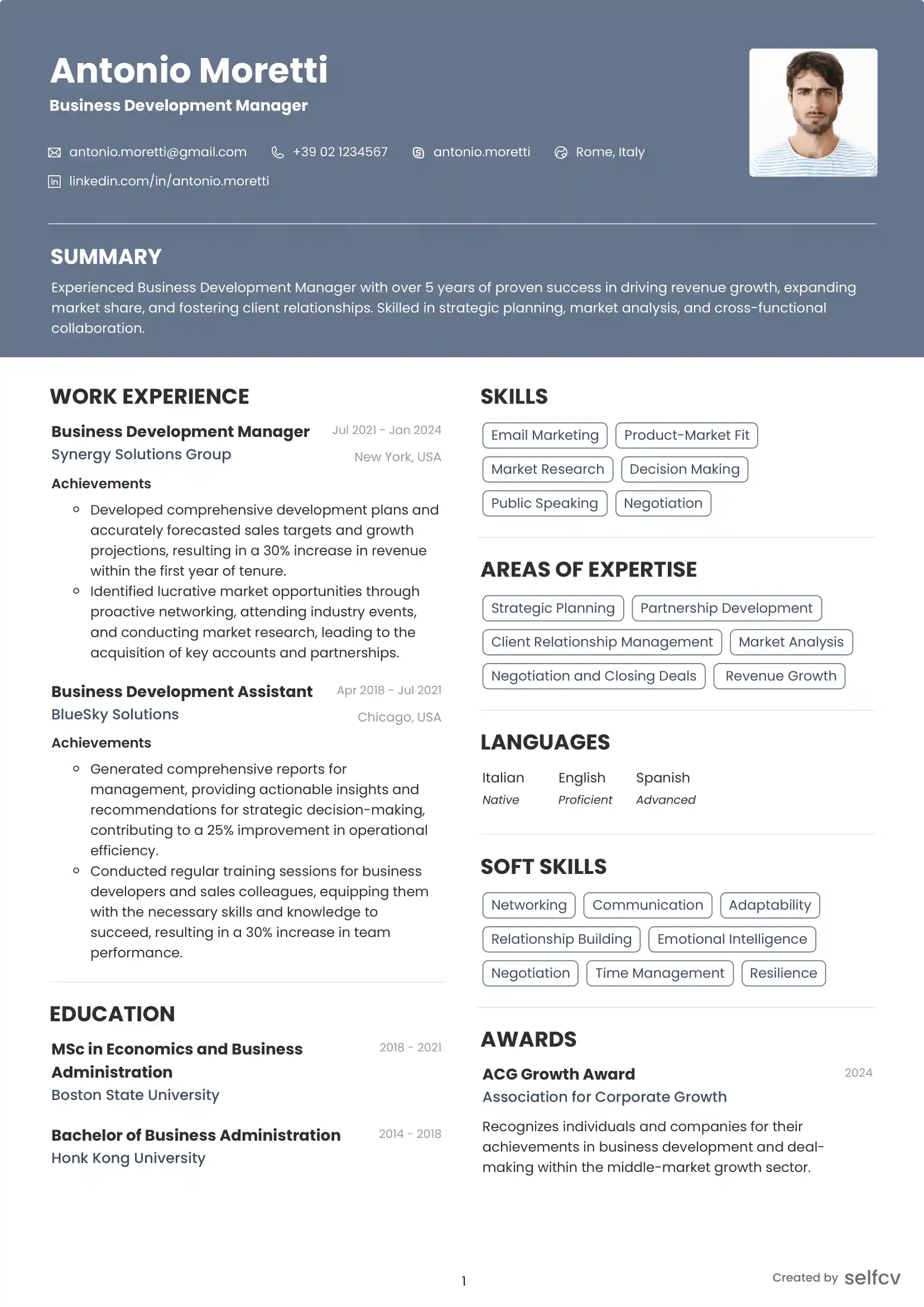
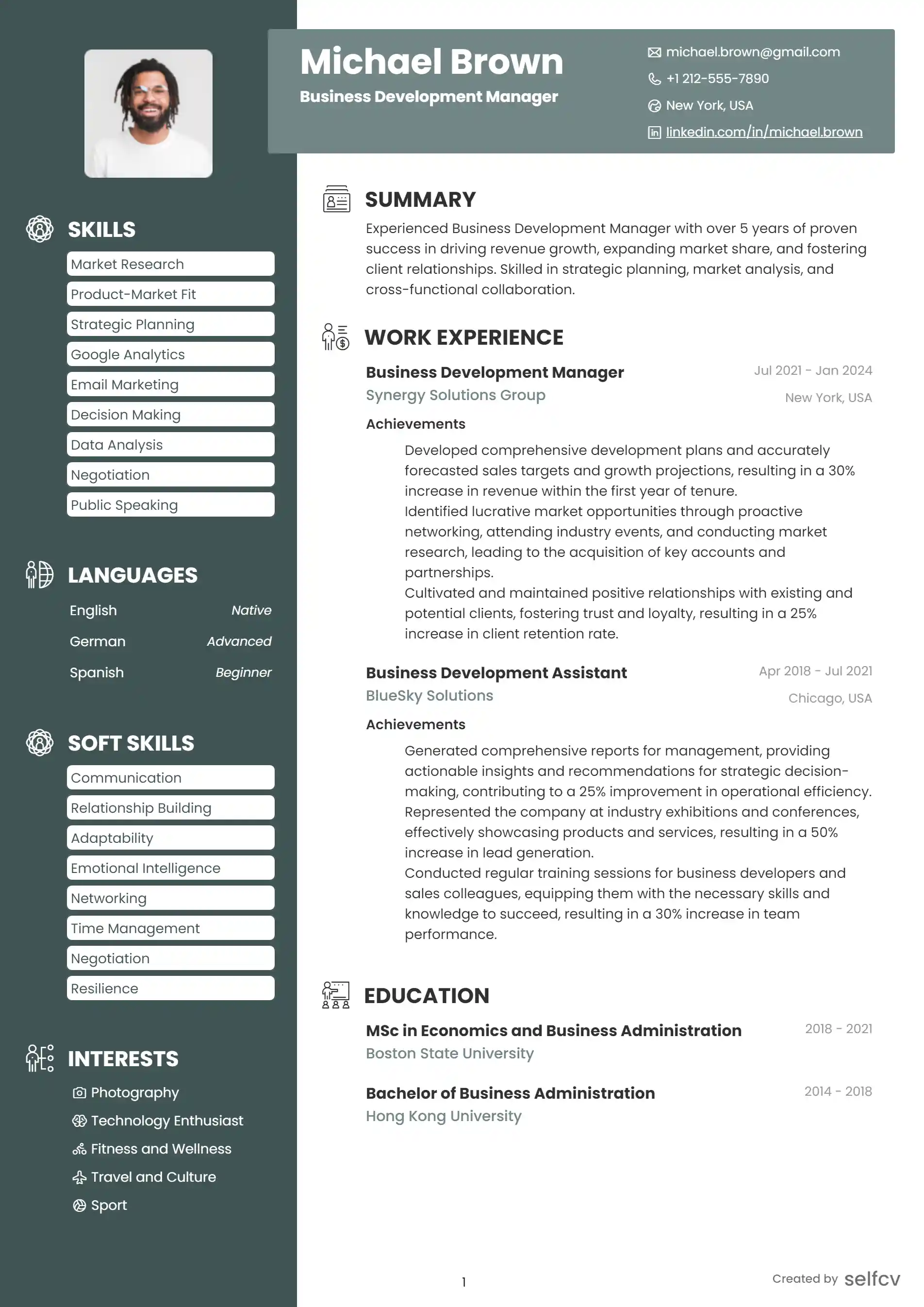
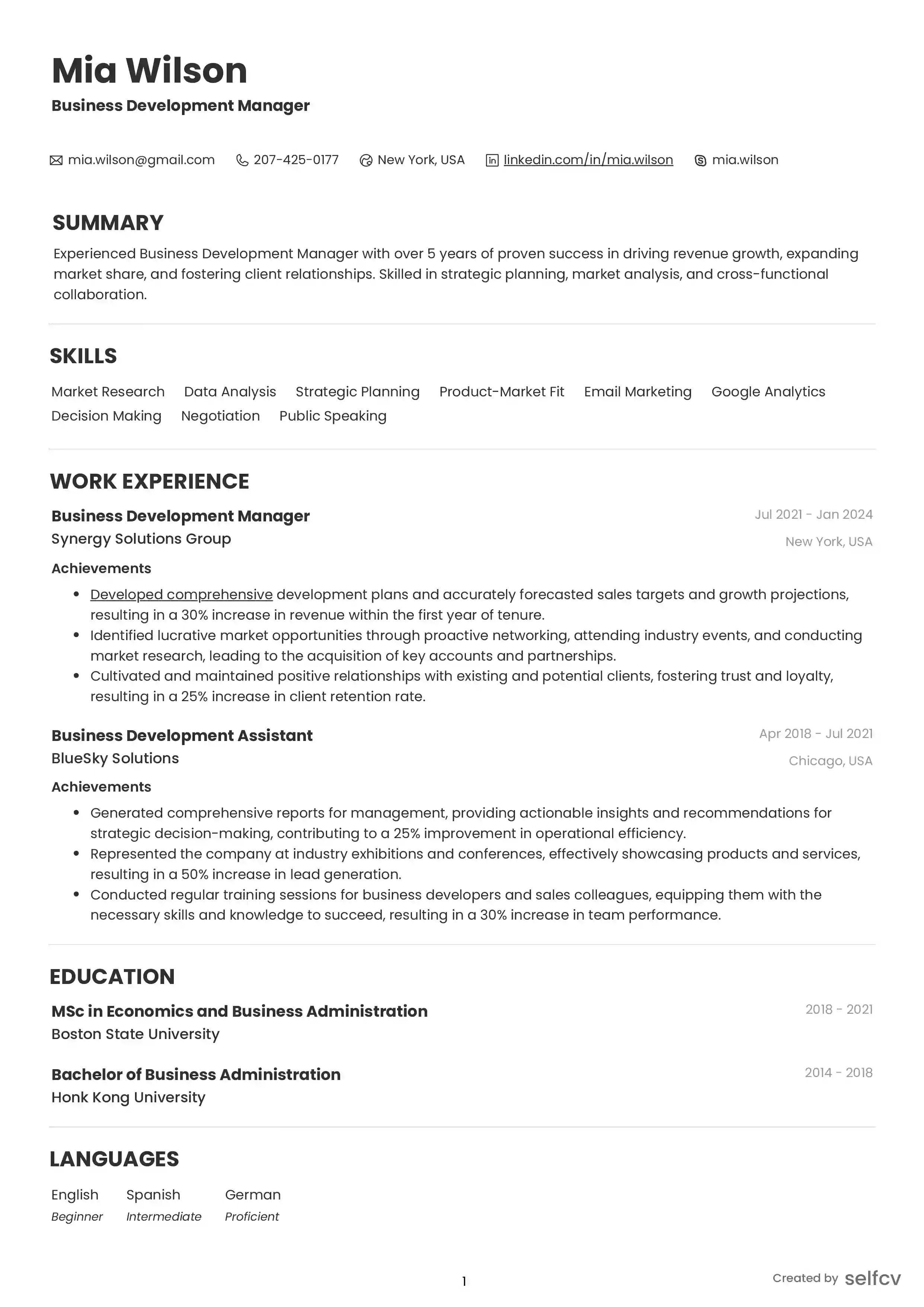
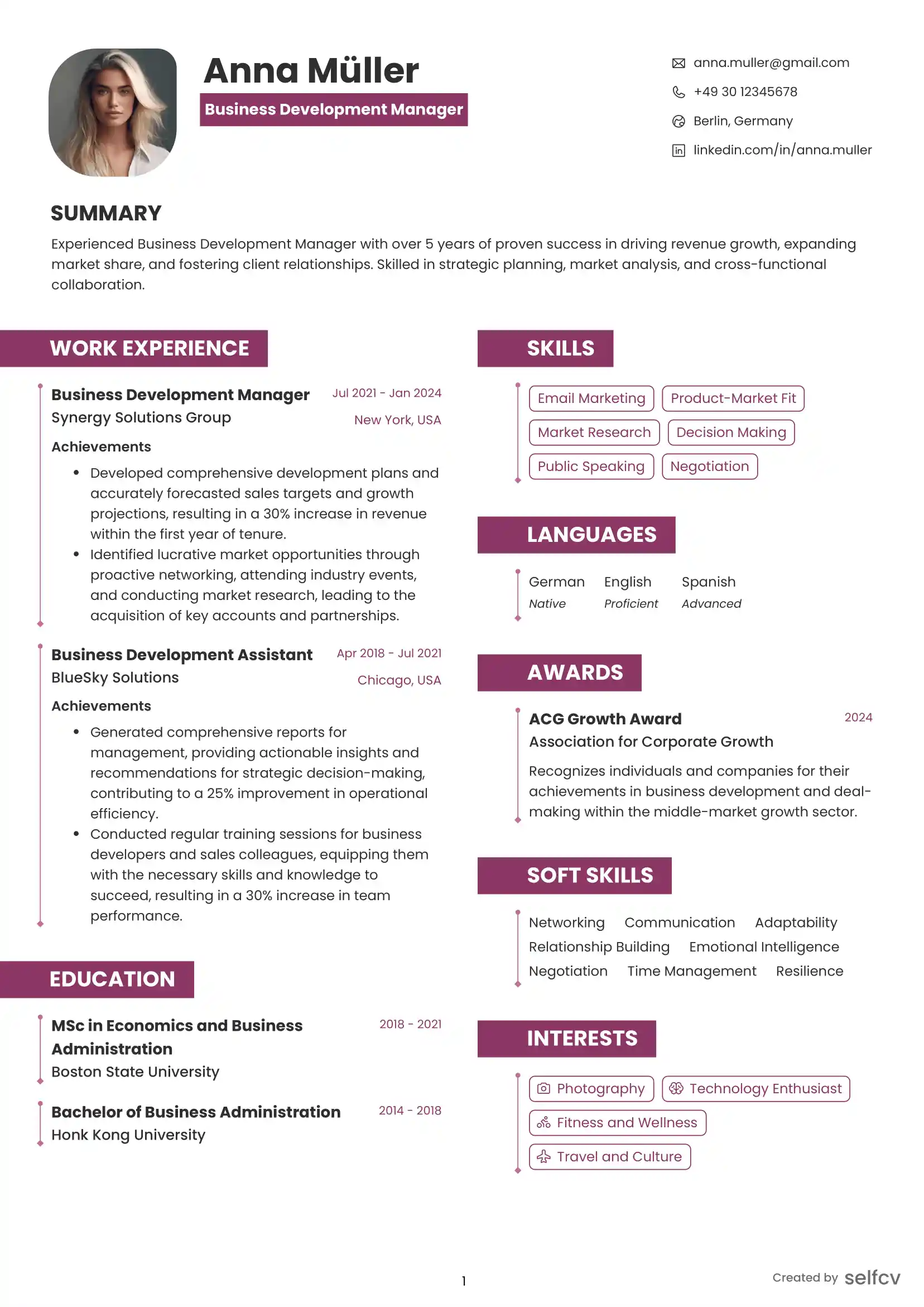
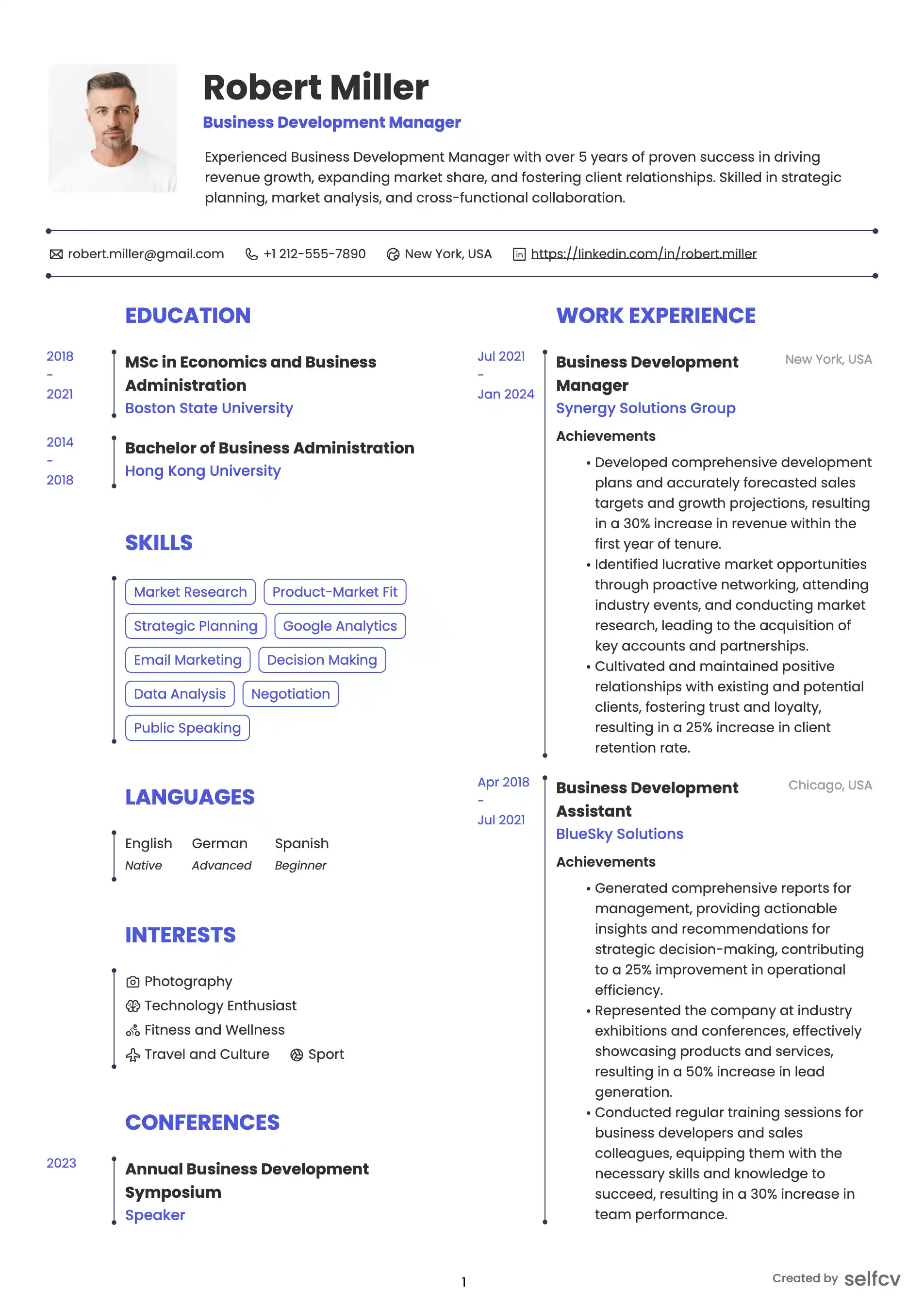
Find the template that’s right for you
No need to build anything from scratch. Using our templates or upload feature, you’ll get started easily and have a powerful resume in a few clicks.
Achievement examples: weak-to-strong
Example 1:
Weak: Improved prompts for customer support assistant.
Strong: Improved customer support answer accuracy from 64% to 82% on a 1,000-case benchmark by adding instruction constraints and targeted examples, reducing escalations by 27%.
Why it works: The strong version gives a baseline, method, test size, and a business outcome.
Example 2:
Weak: Tuned prompts to reduce hallucination.
Strong: Reduced hallucination rate from 19% to 6% on a labeled domain-specific test set by designing negative examples and confidence-based filtering, lowering manual fact-check cost by 40%.
Why it works: Quantifies both technical and cost impact and explains method.
Example 3:
Weak: Worked on LangChain integrations.
Strong: Built a LangChain prompt orchestration that routed 3 specialized templates per query, cutting average latency by 22% and improving first-pass answer accuracy by 10%.
Why it works: Shows the system-level deliverable, measurable improvements, and integration skill.
Resume summary and objective samples by career level
Entry-level summary:
- "Entry-level Prompt Engineer with internship experience designing instruction templates and building evaluation suites for classification tasks; familiar with LangChain and notebook-based testing. Seeking a role to apply reproducible prompt tests and product-focused metrics."
Mid-level summary:
- "Prompt Engineer with 2-4 years building production prompt pipelines, A/B testing prompt variants, and improving response accuracy in customer-facing assistants. Experience with PromptFlow, LangChain, and test harnesses."
Senior-level summary:
- "Senior Prompt Engineer leading cross-functional prompt tuning, evaluation, and rollout. Track record of reducing hallucination and operational costs through test-driven prompt design and automated monitoring. Experienced in scalable prompt orchestration and team mentoring."
Career changer objective (software engineer to prompt engineering):
- "Software engineer transitioning to prompt engineering; 3 years building APIs and distributed systems, completed prompt design projects and LangChain portfolio demonstrating measurable improvements in retrieval-augmented generation accuracy."
Check Your Resume with ATS
Make sure your resume passes Applicant Tracking Systems before recruiters see it.
- 📄 Upload your resume and get instant ATS feedback
- 🎯 Improve keyword matching for your target job
- ⚡ Boost your chances of getting shortlisted
Complete resume example
The candidate, companies, and career history shown are fictional examples created for illustration and any resemblance to a real person or organization is coincidental.
Maya Ortiz
Target Position: Prompt Engineer
Location: Remote, US time zones
Professional Summary
- Prompt Engineer with 4 years of applied LLM experience focused on instruction design, evaluation, and production prompt orchestration. Reduced hallucination rates and improved task accuracy in customer-facing and clinical triage assistants.
Grouped Skills
- Prompt design: instruction tuning, few-shot, chain-of-thought
- Evaluation: custom test harness, F1/ROUGE proxies, A/B tests
- Orchestration and infra: LangChain, PromptFlow, CI for prompts
- Data and tooling: Jupyter, GitHub Actions, annotation platforms
- Soft skills: cross-functional collaboration, product-facing experimentation
Professional Experience:
Senior Prompt Engineer, NeuraWrite (2024-2026)
- Led prompt tuning and rollout for an assistant that handles billing and policy questions; defined success metrics and a 2k-case test suite.
- Reduced hallucination rate from 21% to 7% on the benchmark through negative examples and confidence-based filtering, reducing escalations by 31%.
- Implemented a PromptFlow orchestration that tested 12 prompt variants per run and automated nightly regression checks.
- Mentored two junior engineers on test harness design and prompt safety checks.
Prompt Engineer, PulseHealth AI (2022-2024)
- Designed instruction templates and retrieval-augmented prompts for a symptom triage assistant used in clinical pilot, improving triage classification F1 from 0.68 to 0.79.
- Coordinated with labeling and compliance teams to create a redaction and safety layer for PHI, ensuring alignment with internal policies.
- Built reproducible notebooks and a demo app for product stakeholders to validate responses with side-by-side prompt versions.
Associate NLP Engineer, OpenRetail Labs (2021-2022)
- Developed evaluation scripts and small-scale A/B tests for FAQ generation use cases, improving first-pass answer relevance by 14%.
- Integrated prompt templates into a serverless pipeline reducing per-request compute cost by 9%.
Education / Training
- B.S. Computer Science, State University
- Short courses: prompt engineering workshops, LangChain developer bootcamp
Certifications
- Prompt Engineering for LLMs (online professional certificate)
- LangChain Developer Certificate (course completion)
Portfolio items that prove your resume claims
High-signal portfolio items:
- Reproducible notebook that shows before/after prompt versions with the test harness and metrics.
- Short screencast or GIF demonstrating the interaction and improvements.
- A small web demo or API endpoint with example payloads and expected outputs.
- A README that documents test size, evaluation metrics, and any safety constraints.
What to avoid sharing publicly:
- Proprietary prompts or data tied to regulated systems, patient data, or customer PII.
- Claims without test size or reproducibility.
Industry-tailored resume snippets
SaaS product snippet:
- "Optimized help center generator prompts, increasing suggested article match from 58% to 80% and cutting average customer wait time by 22%."
Healthcare snippet:
- "Built retrieval-augmented prompts with a curated clinical knowledge slice, raising triage classification F1 from 0.64 to 0.78 while maintaining documented safety checks for PHI."
Search/assistant snippet:
- "Implemented chain-of-thought templates for intent disambiguation, improving first-pass intent accuracy by 15% on a 5k query dataset."
Red flags, compliance and honest framing
Realistic red flags on resumes:
- One-line claims like "improved model" without test size, metric, or method.
- Listings of proprietary prompt text or sensitive examples tied to regulated data.
- Overclaiming model-level changes when role focused on prompt-level work.
Compliance reminders:
- Avoid including PHI or proprietary prompt text in public portfolios.
- Note when numbers derive from private datasets and explain the test harness rather than raw data.
How to translate experiments into 1-2 strong bullets
Make each bullet a compact narrative: problem, action, measurable result.
Template:
- Problem: one short phrase about target task or risk
- Action: the prompt design or orchestration you implemented
- Result: test metric and business or product impact
Example conversion:
- Raw experiment note: "Tried negative examples and confidence filter; better results."
- Resume bullet: "Reduced hallucination from 19% to 6% on a 1k curated test set by adding domain-specific negative examples and a confidence-based filter, lowering manual review by 40%."
Interview prep and 30/60/90 project roadmap
Interview practice prompts to prepare:
- Explain a prompt A/B test you ran and how you decided the winning variant.
- Walk through a time you reduced hallucination and how you measured it.
- Describe how you collaborated with labeling or product teams.
30/60/90 project roadmap for a new role:
- 30 days: run a reproducibility audit of current prompts and test suites.
- 60 days: propose 2-3 prioritized prompt experiments with clear success metrics.
- 90 days: implement monitored rollout and document the evaluation pipeline.
FAQs prompt-engineering job seekers search for
What should I include on a Prompt Engineer resume to get interviews?
- Focus on specific projects, test suite sizes, metrics, tools used, and cross-functional outcomes rather than generic LLM experience.
How do I show measurable impact from prompt engineering work on my resume?
- Use before/after metrics on a defined test set, include test size, method, and downstream product impact like reduced escalations or cost reductions.
Which keywords will pass ATS for prompt engineering roles?
- Include explicit phrases like prompt tuning, instruction tuning, LangChain, PromptFlow, prompt evaluation, and hallucination reduction in both skills and experience.
How do I structure a prompt engineering portfolio to support resume claims?
- Provide reproducible notebooks, a README with test setup and metrics, and short demos that show the change between variants.
What projects best demonstrate prompt engineering skills for entry-level candidates?
- Small tasks with a clear ground truth: classification, summarization with reference summaries, or retrieval-augmented QA with labeled test sets.
Related careers
Careers with shared skills and transition paths:
- Software Engineer
- Data Scientist
- UX Writer
- MLOps Engineer
- ML Researcher
- Product Manager
Conclusion, checklist and next actions
Conclusion
- A Prompt Engineer resume in 2026 wins interviews by showing reproducible prompt work, explicit evaluation, tool fluency, and clear product outcomes.
10-item resume and portfolio checklist
- Use a concise one-line professional summary that mentions measurable work.
- Group skills by category and include ATS keywords naturally.
- For each major project, include the problem, method, test size, and metric.
- Include specific tools like LangChain and PromptFlow where applicable.
- Add links to reproducible notebooks or short demos when allowed.
- Provide before/after prompt examples with metrics in your portfolio.
- Avoid sharing PHI or proprietary prompts publicly.
- Show collaboration with labeling, ML, and product teams.
- Keep entry and mid-level resumes to 1 page; senior may use 2 pages with clear headings.
- Practice explaining experiments end-to-end for interviews.
Next action
- Pick one recent prompt experiment, write two resume bullets from it using the problem-action-result template, and add a short reproducible notebook or test summary to your portfolio.
SEO and on-page linking ideas for your resume page
Internal page ideas to support discoverability and hiring intent:
- Sample prompt-engineer portfolio templates
- ATS-optimization checklist with exact keyword groupings
- Transition guide from data science to prompt engineering with project seeds
- Industry-specific resume snippets for SaaS, healthcare, finance, search
Use these as supporting pages to show depth and provide downloadable notebook examples for recruiters to review.
Final note on ethics and verification
When you report improvements, be ready to show the test harness and explain how numbers were measured.
Keep public artifacts ethical and compliant:
- Redact or exclude any sensitive data and document the precautions taken.
- Describe evaluation methods clearly so claims remain verifiable without proprietary data.
Why job seekers choose selfcv
Thousands of professionals use selfcv to build modern, ATS-friendly resumes, customize templates, and apply for jobs with confidence.
Thanks to SelfCV, I now have a professional and polished resume that I'm confident in sending to potential employers. I will definitely be recommending your service to other job seekers. Keep up the great work!
SelfCV offers an intuitive interface that makes creating a professional CV straightforward. Whether you're a student, a fresh graduate, or an experienced professional, the step-by-step process ensures that users of all levels can craft an impressive CV.
Easy to use resume builder. They have very intuitive ui for customizing and keeping multiple versions of resume.
The right tool for creating CVs. As a student I was looking for a tool that could help me quickly create a CV for internship applications. This was just the right tool. I am very satisfied!
This is one of the best tools I’ve ever used - I was able to build my CV in seconds with high quality template. Highly recommended!
Amazing app with easy user experience. Loved it. Its intuitive and easy to navigate, designs are very nice.
