
Python Developer Resume That Shows Real Code and Production Impact (2026)
Written by Armen Mkhitaryan
Quick take: make your resume show production ownership, test coverage, deployment outcomes, and 3-5 portfolio artifacts that prove your work.
30-Second Checklist
- Headline with role and 2-3 specializations (example: Python Developer, Web APIs · Data Engineering)
- Top 8-12 keywords pulled from the job description
- 3 selected projects with links and one measurable outcome each
- 5-8 experience bullets per recent role emphasizing measurable results
- Plain text headings, no images for vital info, labeled GitHub/Live demo links
- Export to PDF only after verifying ATS-friendly plain-text version
What Hiring Teams Look For in 2026
- Evidence of production ownership and measurable improvements
- Working tests, CI/CD pipelines, and deployment artifacts
- Clear statements about scale (requests/sec, batch throughput, cost savings)
- Domain-specific outcomes (ETL throughput, API latency, model latency/recall)
- Portfolio artifacts: documented repos, reproducible notebooks, PyPI packages, infra-as-code snippets
Hiring patterns: roles now prioritize engineers who show the tradeoffs they made, not just stacks listed. Recruiters scan for signals that map to interview tasks: a repo with tests and CI is faster to validate than a vague project description.
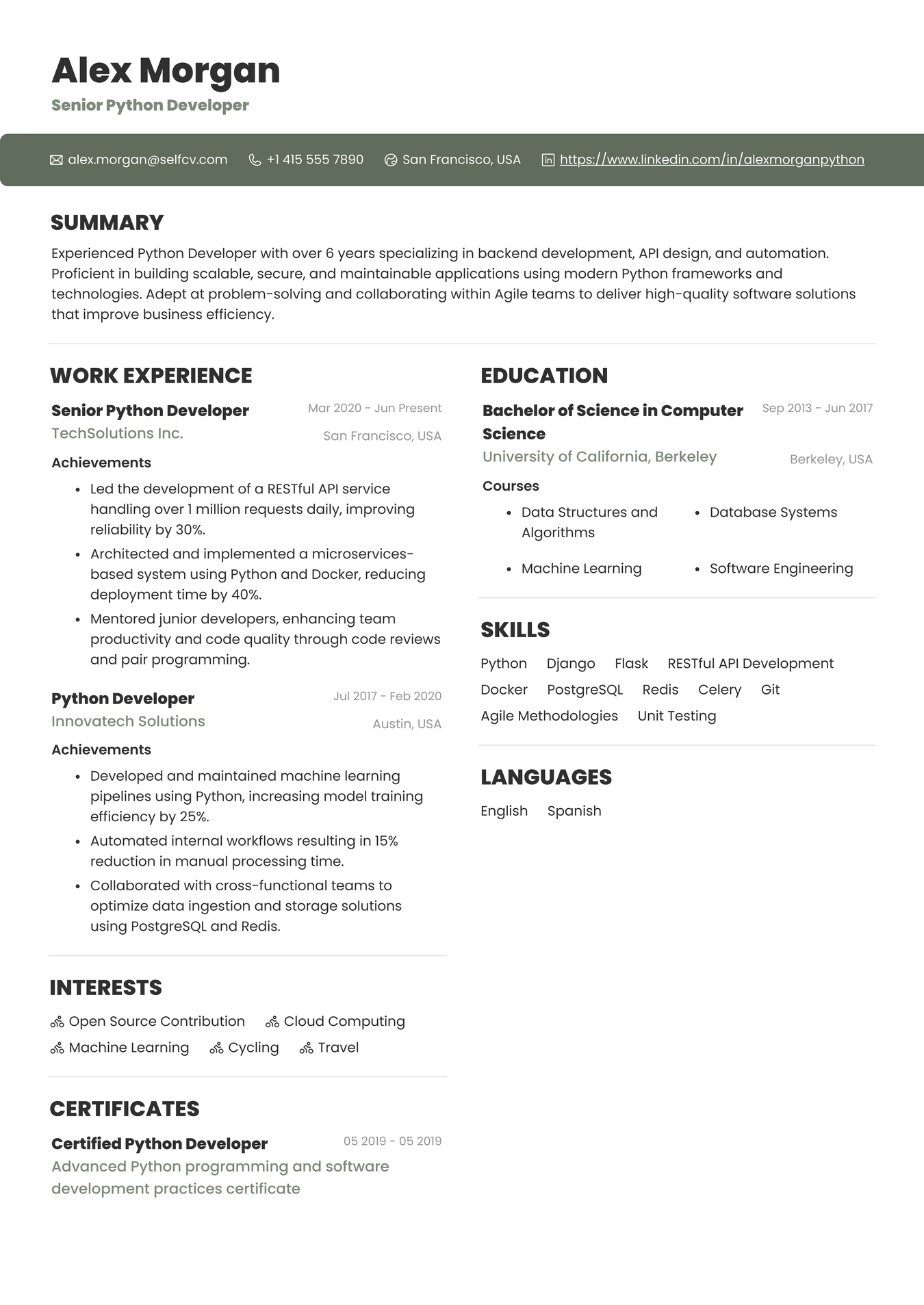
Resume Example for Python Developer
How to Use This Guide and Pick Your Specialization
- Start by choosing a target role: Backend APIs, Data Engineering, ML Production, Automation, or Platform
- Pick 3 projects that best match that role and one transferable project for cross-domain moves
- Tailor top keywords and the summary for each application
- Use the project deep-dive templates to write 3 project entries that include stack, role, action, and measurable result
- For freelancing or contracting, list client outcomes and duration, not full employer details
Resume Blueprint and Exact Ordering for ATS
- Headline / Technical Summary (1-2 lines): role + 2-3 specialization tags
- Contact info and links: email, phone, GitHub (label), portfolio (label)
- Top skills: 8-12 keywords (single-line, comma-separated)
- Selected Projects (3-5): title, stack, role, outcome, link
- Professional Experience: recent roles first, 3-8 bullets each, metric-driven
- Education / Training: degrees, bootcamps, relevant courses
- Certifications and public contributions
- Optional sections: Open-source, Talks, Patents
Formatting rules:
- Use standard headings: Professional Experience, Projects, Education
- Avoid images for key content
- Keep fonts simple and save a plain-text version for ATS checks
Master List of ATS-Friendly Keywords and How to Choose 8-12
- Core language and frameworks: Python, Django, Flask, FastAPI, aiohttp
- Data and analytics: Pandas, NumPy, PySpark, Dask, SQL
- Orchestration and pipelines: Airflow, Dagster, Luigi
- ML and infra: TensorFlow, PyTorch, scikit-learn, MLflow
- Cloud and deployment: AWS Lambda, ECS, EKS, GCP Cloud Run, Terraform
- Testing and CI/CD: pytest, tox, GitHub Actions, Jenkins, CircleCI
- Performance and async: asyncio, uvicorn, gunicorn, memcached, Redis
- Datastores: PostgreSQL, MySQL, ClickHouse, MongoDB
- Observability: Prometheus, Grafana, Sentry, OpenTelemetry
- Packaging and distribution: setuptools, pip, Docker, PyPI
How to select 8-12:
- Pull 3 role-specific framework/tools from the job description
- Add 3 cross-cutting skills (Python, testing, CI)
- Add 2 cloud or infra items relevant to the employer
- Add 1-2 specialty libraries (Pandas, FastAPI) that appear in multiple listings
Project Section Deep-Dive: 3 Python-Specific Examples
Django REST API - latency and throughput
- Context: public-facing payments API serving 200 RPS
- Role: backend lead, owned feature and deployment
- Action: refactored ORM queries, added index and connection pool tuning, introduced async workers for webhook processing
- Result: latency 95th percentile reduced 45%, error rate reduced 60%, cost per 1M requests down 18%
Airflow ETL refactor - cost and run-time reduction
- Context: nightly ETL for user events, 12-hour window
- Role: data engineer, rewrote DAGs and optimized parallelism
- Action: replaced single monolithic DAG with partitioned jobs, pushed heavy transforms into Spark, added incremental checkpoints
- Result: pipeline run-time reduced from 10 hours to 90 minutes, cluster cost down 55%
ML model productionization - MLOps pipeline and test coverage
- Context: recommendation model moved from research to production
- Role: ML engineer, built CI/CD for model packaging and deployment
- Action: containerized model server, created inference tests, integrated model metrics reporting to Grafana
- Result: deployment frequency increased 3x, prediction latency at 99th percentile under 200 ms, rollback time under 5 minutes
How to write the project entry
- Title, stack, short role
- One line describing the challenge
- One action line describing what you did (tools and approach)
- One result line with metrics and tradeoffs
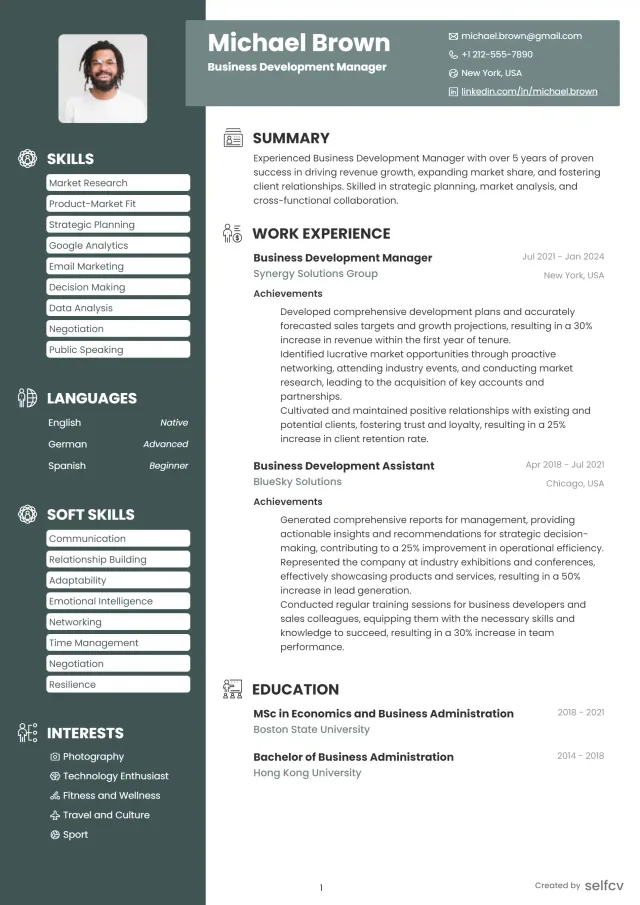
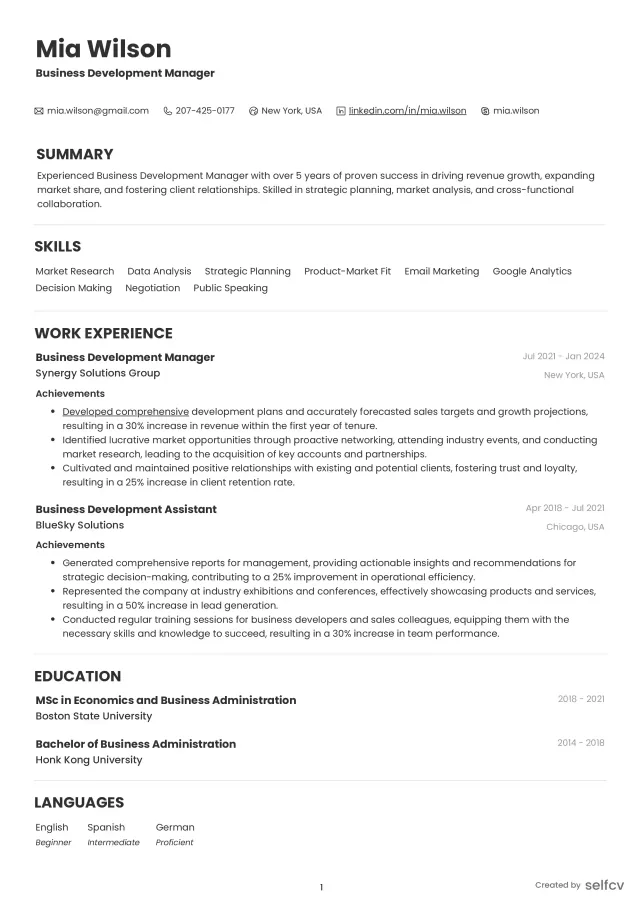
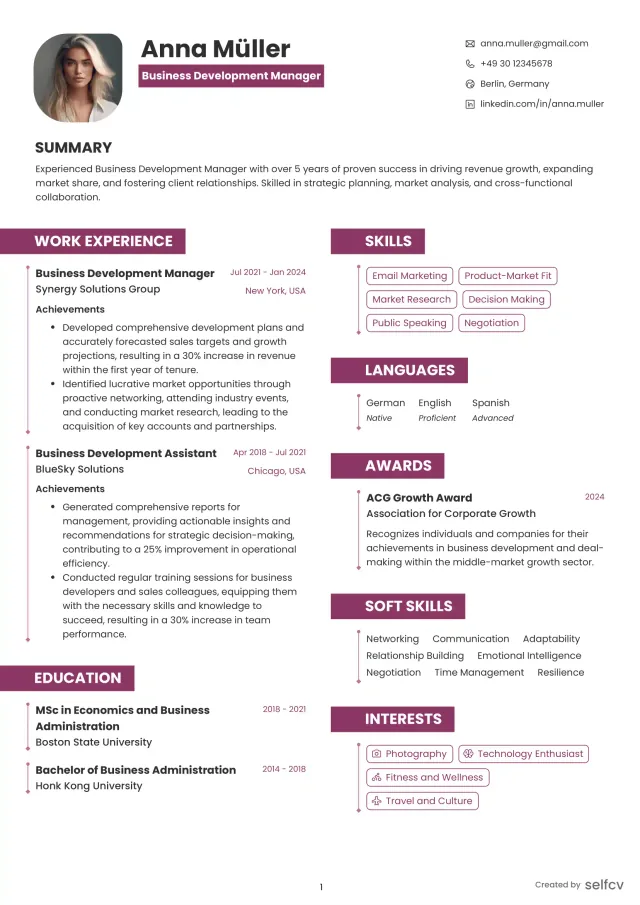
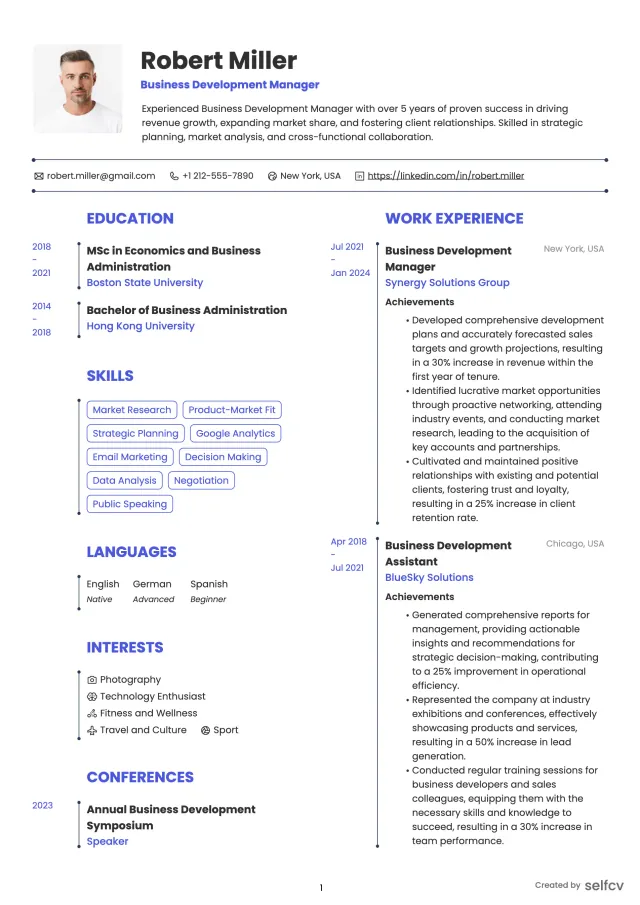
Find the template that’s right for you
No need to build anything from scratch. Using our templates or upload feature, you’ll get started easily and have a powerful resume in a few clicks.
Experience Bullets Library with Python-Focused Templates
Guiding rule: stack + action + outcome + metric when possible
Feature delivery
- Built FastAPI microservice to handle 1k concurrent users, implemented JWT auth and rate limiting, reduced login latency by 30%
Performance improvements
- Optimized Pandas-based transform, vectorized operations and reduced memory by 60%, speeding ETL job from 4 hours to 40 minutes
Migration and platform work
- Migrated monolith from EC2 to containerized EKS, introduced blue-green deployments and reduced deployment failures to near zero
Automation and scripting
- Created automated reconciliation scripts in Python, reduced manual processing time from 6 hours/day to 15 minutes/day
Testing and quality
- Added pytest suite and CI integration, increased test coverage from 12% to 68% and prevented release regressions
Mentorship and process
- Led code-review rubric adoption and paired with three junior devs, improving PR approval time by 25%
Security and compliance
- Implemented input validation and auditing for financial endpoints, aligned logs with compliance retention policies
Mapping bullets to interview tasks
- A bullet mentioning pytest and CI suggests an interviewer will ask about test design
- A bullet with latency reduction suggests a live debugging or optimization question
- A deployment bullet suggests a question about rollback and observability
Complete Resume Example
The candidate, companies, and career history shown are fictional examples created for illustration and any resemblance to a real person or organization is coincidental.
Maya Rodriguez
Target Position
Python Backend Developer (FastAPI, AWS, Payments)
Location
Austin, TX (remote-friendly)
Professional Summary
Python developer with 5 years building and operating payment APIs and data pipelines. Focused on API performance, test-driven development, and cost-efficient cloud deployments. Familiar with FastAPI, PostgreSQL, Airflow, and AWS.
Grouped Skills
Python, FastAPI, Django, SQL, PostgreSQL, Pandas, Airflow, AWS (Lambda, ECS), Docker, pytest, GitHub Actions, Redis, async
Professional Experience:
Senior Software Engineer, FinchPay (remote)
2022-2026
- Led backend for payments API handling 200 RPS, refactored critical endpoints to async FastAPI and reduced 95th percentile latency by 45%
- Built CI/CD pipelines with GitHub Actions and Docker image scanning, decreasing failed deploy rollbacks by 80%
- Reworked reconciliation ETL with Airflow and incremental loading, cutting run-time from 8 hours to 75 minutes
Software Engineer, DataOps Co. (Austin, TX)
2019-2022
- Implemented data transforms in Pandas and Spark, enabling daily customer insights and reducing data processing cost by 40%
- Created unit and integration tests for data pipelines with pytest and test fixtures
- Participated in on-call rotations and improved alerting to reduce mean time to resolution by 30%
Junior Python Developer, CloudStart (internship)
2018-2019
- Built internal automation scripts to provision test environments, saving 6 hours/week of manual setup
Education / Training
B.S. Computer Science, University of Texas, 2018
Airflow and Data Engineering bootcamp, 2020
Certifications
AWS Certified Developer - Associate (valid)
Certified Scrum Developer (course completion)
Public Projects
- GitHub: maya-rodriguez/payments-fastapi (includes README, tests, Dockerfile)
- Package: simple-etl-utils on PyPI
Notes
- References and deploy links available on request
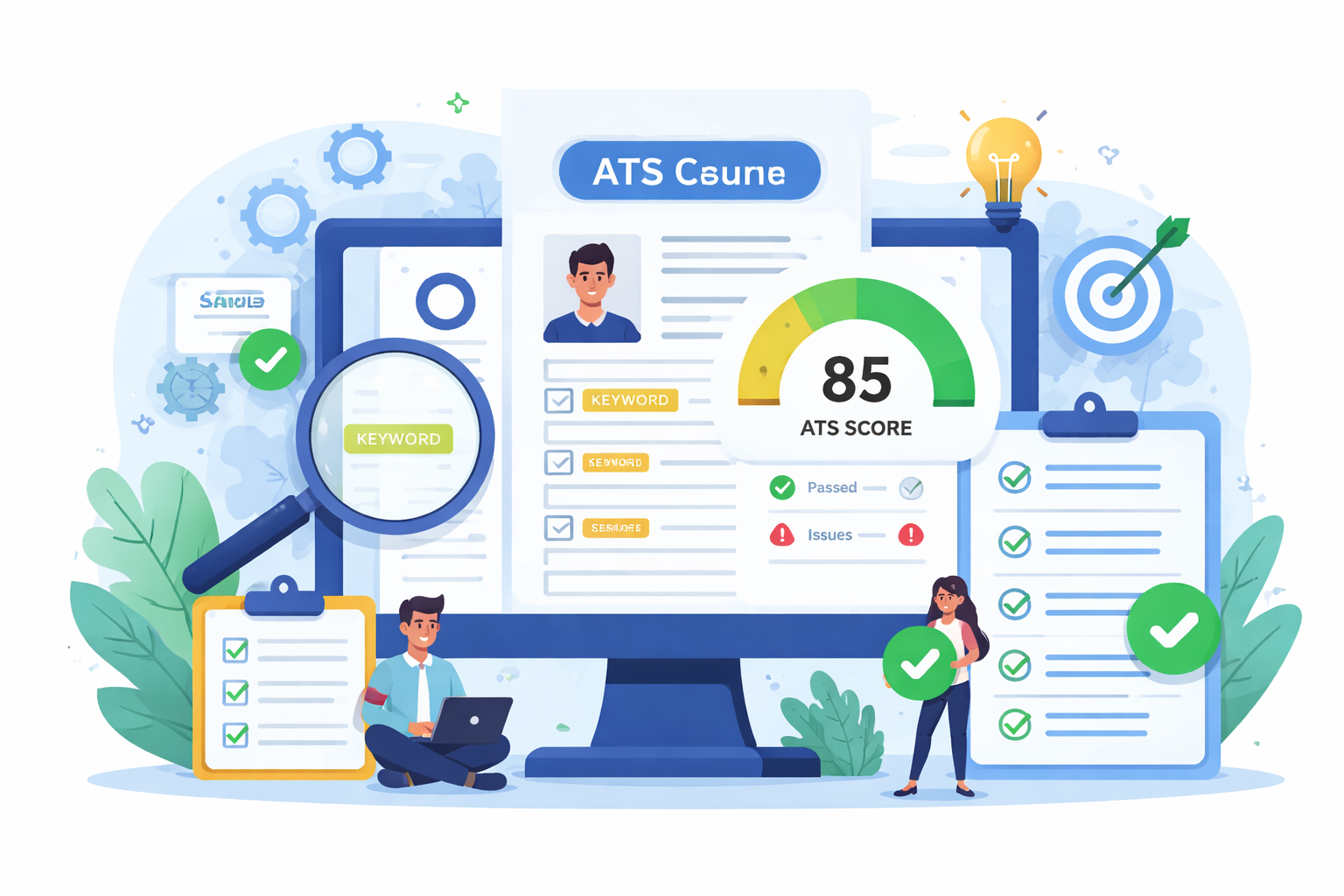
Check Your Resume with ATS
Make sure your resume passes Applicant Tracking Systems before recruiters see it.
- 📄 Upload your resume and get instant ATS feedback
- 🎯 Improve keyword matching for your target job
- ⚡ Boost your chances of getting shortlisted
Achievement Examples: Weak-to-Strong
Example 1:
Weak:
- Improved API performance.
Strong:
- Reduced API 95th percentile latency by 45% by replacing blocking DB calls with async queries and adding connection pooling.
Why it works:
- Adds scale metric, specific change, and measurable outcome.
Example 2:
Weak:
- Wrote data pipeline for event processing.
Strong:
- Rewrote event ETL to Spark, introduced partitioning and incremental checkpoints, lowering pipeline cost 55% and run-time from 10 hours to 90 minutes.
Why it works:
- States tools, tradeoffs, and concrete efficiency gains.
Example 3:
Weak:
- Added tests and CI.
Strong:
- Implemented pytest test suite and GitHub Actions CI, increasing coverage from 12% to 68% and catching regressions before production.
Why it works:
- Quantifies coverage improvement and links tests to fewer production issues.
Career-Level Summary and Objective Examples
Entry-level (0-2 years)
- Objective: Recent CS graduate with internship experience in Python and ETL seeking a junior backend role to contribute to API development, tests, and cloud deployments.
Mid-level (2-5 years)
- Summary: Python developer with 3 years building REST APIs and ETL pipelines. Experienced in FastAPI, Airflow, and AWS. Looking to own backend features and mentor junior engineers.
Senior (5+ years)
- Summary: Senior Python engineer specializing in high-throughput APIs and data platforms. Experience leading architecture, SLO-driven performance tuning, and cross-team coordination for on-call operations.
Career changer (bootcamp or QA to dev)
- Objective: Bootcamp graduate with 1 year of test automation and Python scripting experience, seeking an entry-level backend role. Demonstrated projects include a tested FastAPI service and automated CI pipeline.
Portfolio and GitHub Optimization Checklist
- Repo README: purpose, quick start, architecture diagram, sample requests, and license
- Tests: unit and integration examples, test data, test coverage badge where possible
- CI: visible GitHub Actions or CI config demonstrating build and test steps
- Dockerfile or deployment instructions for reproducibility
- Small dataset or synthetic generator to allow reviewers to run the project quickly
- Clear labels for primary language and technologies in repository description
- Demonstrate one performance benchmark or cost comparison in a repo
ATS and Formatting Practical Checklist
- Use clear section headings: Professional Experience, Projects, Education
- Avoid images and decorative elements containing important text
- Put important keywords in the Top Skills list and in job bullets
- Use standard date formats and avoid ranges like "2018-present" without exact months if possible
- Provide plain URLs for GitHub and portfolio; label them (GitHub: github.com/username)
- Generate a plain-text resume and scan it with an ATS parser to verify order and section detection
Industry-Specific Quick Inserts
Data Engineering
- Emphasize: Airflow, Spark, incremental loads, partitioning, throughput, cost per TB
- Project to show: ETL run-time and cost improvements with exact numbers
Backend Web / APIs
- Emphasize: FastAPI/Django, async, request/sec, latency percentiles, auth patterns
- Project to show: End-to-end latency optimization and deployment strategy
ML / Model Ops
- Emphasize: model packaging, inference latency, model metrics, MLflow, CI for models
- Project to show: productionized model with monitoring and rollback path
Automation / Scripting
- Emphasize: test automation, orchestration, time saved, error reductions
- Project to show: automation that replaced manual steps and measurable time savings
How to Present Short-Term Projects and Contract Work
- Use client neutral labels if contract NDA applies, e.g., "Contract client, fintech" with duration
- For short projects, focus bullets on deliverables and outcomes, not organizational structure
- Combine multiple very short contracts into a single "Freelance Python Developer" entry if overlapping work is similar
- Include links to code samples or sanitized snippets that demonstrate non-sensitive logic
Common Resume Mistakes and Quick Fixes
- Mistake: Listing too many skills without context.
- Fix: Group skills and show where you used them in bullets.
- Mistake: Vague project lines like "worked on data pipeline."
- Fix: Add role, tools, and metric: "Rewrote ETL in Spark, cutting runtime by 75%."
- Mistake: No links to code
- Fix: Add labeled GitHub and portfolio links and reference which project corresponds to which bullet
- Mistake: Overloading with keywords in a single paragraph
- Fix: Distribute keywords across Skills line, Project entries, and bullets
FAQs (Common Search Intent Questions)
What should a Python developer put on a resume in 2026?
- Key items: production artifacts, test and CI evidence, cloud deployments, measurable improvements, and 3-5 portfolio links.
How do I write a senior Python developer resume that highlights architecture and leadership?
- Focus on systems you designed, tradeoffs, mentoring outcomes, on-call ownership, and architecture diagrams in portfolio repos.
Which ATS keywords are most important for Python developer roles?
- Language (Python), frameworks (FastAPI, Django), testing (pytest), orchestration (Airflow), cloud (AWS), and database names like PostgreSQL.
How many projects should a Python developer include on their resume?
- Include 3-5 selected projects; pick ones that map to the role's primary responsibilities and demonstrate production readiness.
How to present GitHub links and code samples on a resume?
- Label links clearly, point to the specific repo and README, and note which bullet aligns with that repo.
How to craft resume bullets that show performance improvements in Python apps?
- Use before and after metrics, state the change you made, and mention tools or patterns used (async, vectorization, DB indexes).
Related Careers
- Backend Developer
- Data Engineer
- ML Engineer
- DevOps / Platform Engineer
- Automation Engineer
Conclusion, Practical Checklist, and Next Action
Conclusion
- A strong Python developer resume in 2026 centers on production evidence: working tests, CI/CD, deployments, and measurable outcomes that map to interview tasks.
Practical checklist to edit now
- Add or improve 3 project READMEs with run instructions and one performance or cost metric each
- Convert one vague bullet into a quantifiable result using the stack + action + outcome template
- Create a labeled GitHub link line and confirm all links are public
- Run a simple ATS parser on your plain-text resume and fix any misordered sections
Next action
- Pick one recent project and update its README with a short benchmark and a reproducible test. Then replace one generic resume bullet with the new quantified result.
Why job seekers choose selfcv
Thousands of professionals use selfcv to build modern, ATS-friendly resumes, customize templates, and apply for jobs with confidence.
Thanks to SelfCV, I now have a professional and polished resume that I'm confident in sending to potential employers. I will definitely be recommending your service to other job seekers. Keep up the great work!
SelfCV offers an intuitive interface that makes creating a professional CV straightforward. Whether you're a student, a fresh graduate, or an experienced professional, the step-by-step process ensures that users of all levels can craft an impressive CV.
Easy to use resume builder. They have very intuitive ui for customizing and keeping multiple versions of resume.
The right tool for creating CVs. As a student I was looking for a tool that could help me quickly create a CV for internship applications. This was just the right tool. I am very satisfied!
This is one of the best tools I’ve ever used - I was able to build my CV in seconds with high quality template. Highly recommended!
Amazing app with easy user experience. Loved it. Its intuitive and easy to navigate, designs are very nice.
