
Scientist Resume Example
What does a Scientist do?
A Scientist conducts research to advance knowledge in specific fields, performing experiments and analyzing data in laboratory or field settings. They use specialized tools and technologies such as microscopes, data analysis software, and scientific instruments. Scientists collaborate with research teams, stakeholders, and sometimes cross-disciplinary experts to share findings and develop new theories or applications.
What are some responsibilities of a Scientist?
Scientists design and conduct experiments to test hypotheses and gather data. They analyze results, interpret findings, and prepare reports or publications to communicate insights. They make informed decisions about research direction and contribute to problem-solving within their teams. Scientists ensure compliance with safety and regulatory standards, supporting overall project goals and advancing scientific knowledge.
Scientist Skills for a Resume
List the most relevant soft and hard skills for a Scientist. Include 5–10 total skills that reflect real employer expectations.
- Analytical Thinking
- Attention to Detail
- Communication
- Problem-Solving
- Collaboration
- Time Management
- Experimental Design
- Statistical Analysis
- Laboratory Techniques
- Technical proficiency in core tools or software used by a Scientist
- Data analysis and reporting
- Project management and task prioritization
- Industry-specific regulations and compliance knowledge
- Problem-solving and troubleshooting techniques
- Documentation and workflow optimization
- Use of collaboration and communication platforms
- Basic coding or scripting
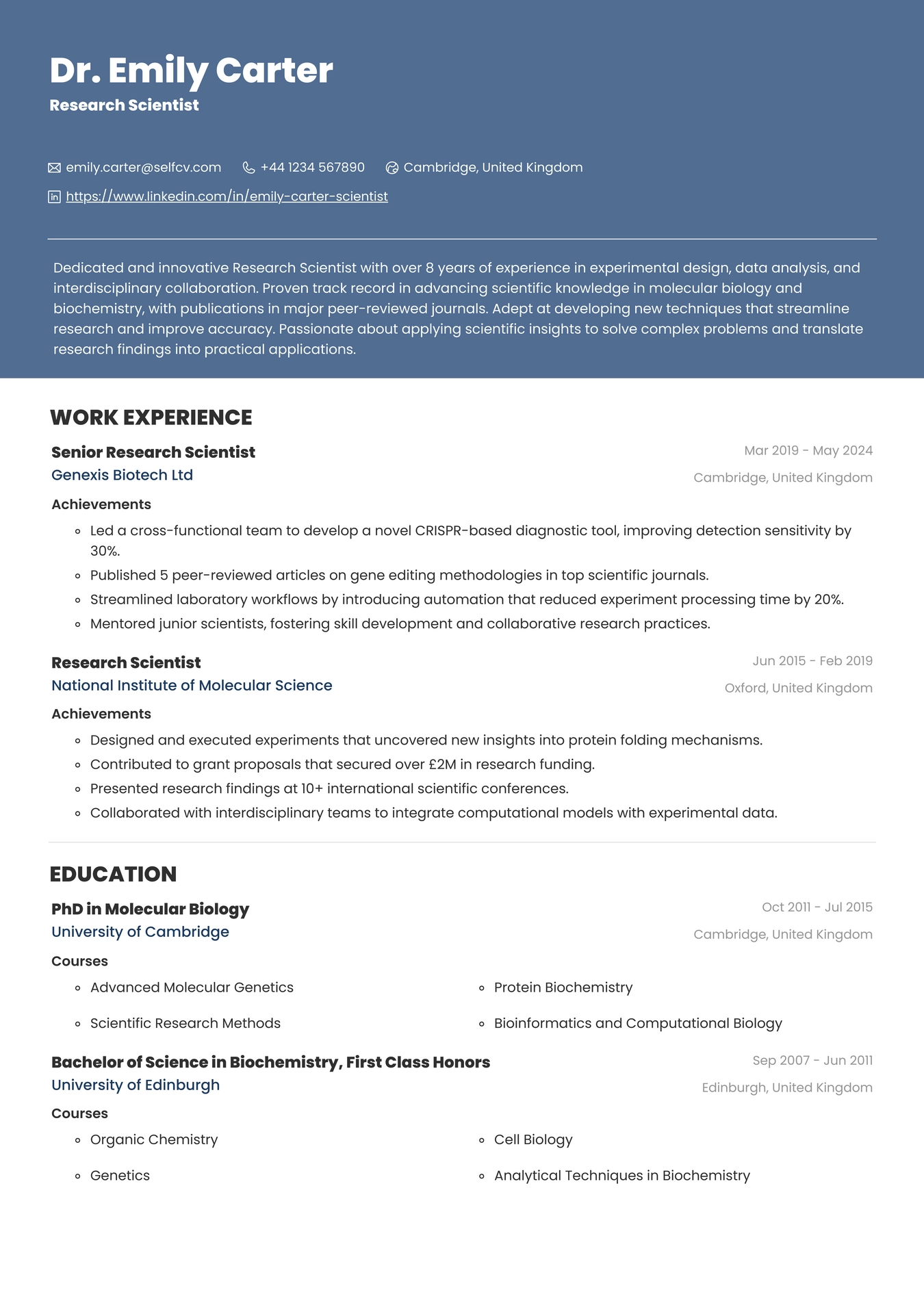
Example Resume for Scientist
Common Mistakes to Avoid When Writing a Scientist Resume
Common mistakes include listing outdated or irrelevant skills, using generic or vague job descriptions, neglecting to include measurable achievements, failing to tailor the resume to specific job postings, and omitting relevant certifications or training.
Key Takeaways for a Scientist Resume
A strong Scientist resume focuses on relevant hands-on experience, clear presentation of measurable results, and alignment with the target job's requirements. Including certifications and tailoring content for each job application enhances its impact.
- Highlight hands-on experience relevant to the Scientist role.
- Use measurable results to demonstrate achievements and impact.
- Add relevant certifications or completed courses related to Scientist.
- Tailor each resume to the specific job posting.
- Balance technical expertise with communication and teamwork skills.
More than a resume builder
Get startedFind the template that’s right for you
No need to build anything from scratch. Using our templates or upload feature, you’ll get started easily and have a powerful resume in a few clicks.


Check Your Resume with ATS
Make sure your resume passes Applicant Tracking Systems before recruiters see it.
- 📄 Upload your resume and get instant ATS feedback
- 🎯 Improve keyword matching for your target job
- ⚡ Boost your chances of getting shortlisted

