
Software Architect Resume Guide 2026: Turn System Design into ATS-Ready Impact
Written by Armen Mkhitaryan
What a hiring manager scans in 30 seconds
Hiring managers often look for evidence of production ownership, measurable system improvements, and clear scope of responsibility. Resumes that fail to show which problems you solved, which tradeoffs you chose, and what you delivered drop out of the top pile fast.
Five fatal resume mistakes that lose interviews
- Vague impact statements that read like duties rather than results
- Long technology lists without context or ownership
- No architecture artifacts or links to portfolio evidence
- Missing metrics for performance, cost, or reliability
- Overly generic titles that hide design responsibilities
Quick TL;DR
- Show ownership at component and system levels
- Lead with measurable outcomes and architecture deliverables
- Include an ADR, a system diagram, and a short portfolio excerpt
SEO and Title Strategy for 'software architect resume' in 2026
Primary focus
- Use "software architect resume" naturally in title, intro, and URL anchor text
- Target long-tail intents like "software architecture resume examples 2026" and "architecture decision record resume"
Five alternative title angles
- ATS-optimized software architect resume with achievement examples
- Senior software architect resume: measurable system design wins
- Cloud-focused software architect resume for migrations and cost reductions
- Transitioning from tech lead to software architect: resume and ADP samples
- Portfolio-first software architect resume with ADRs and diagrams
Forbidden patterns
- Do not use repetitive titles like "Software Architect Resume Example" only
- Avoid templates that are indistinguishable from others by swapping only the role name
Keywords and intent mapping
- Primary keyword: software architect resume
- Secondary and long-tail: software architect CV, principal software architect resume, architecture decision record resume, microservices architect resume, software architect portfolio
- Intent mapping: ATS optimization, measurable achievements, portfolio artifacts, role comparison (solution vs enterprise vs software architect)
What hiring teams expect from a software architect resume
High-level hiring patterns
- Recruiters triage for role fit and years/scope quickly, then pass selected resumes to hiring managers for technical depth
- Hiring managers want to see system-level ownership, tradeoff rationale, and measurable outcomes
Strong evidence recruiters look for
- End-to-end production ownership and service boundaries
- Architecture decision records (ADRs), diagrams, and brief tradeoff notes
- Metrics showing latency, throughput, availability, or cost changes
- Collaboration with product, SRE, security, and compliance teams
Typical stakeholders and environments to mention
- Product managers and engineering managers
- Site reliability engineering and operations
- Security and compliance teams (PCI, HIPAA, SOC2 where relevant)
- Cross-functional architecture review boards
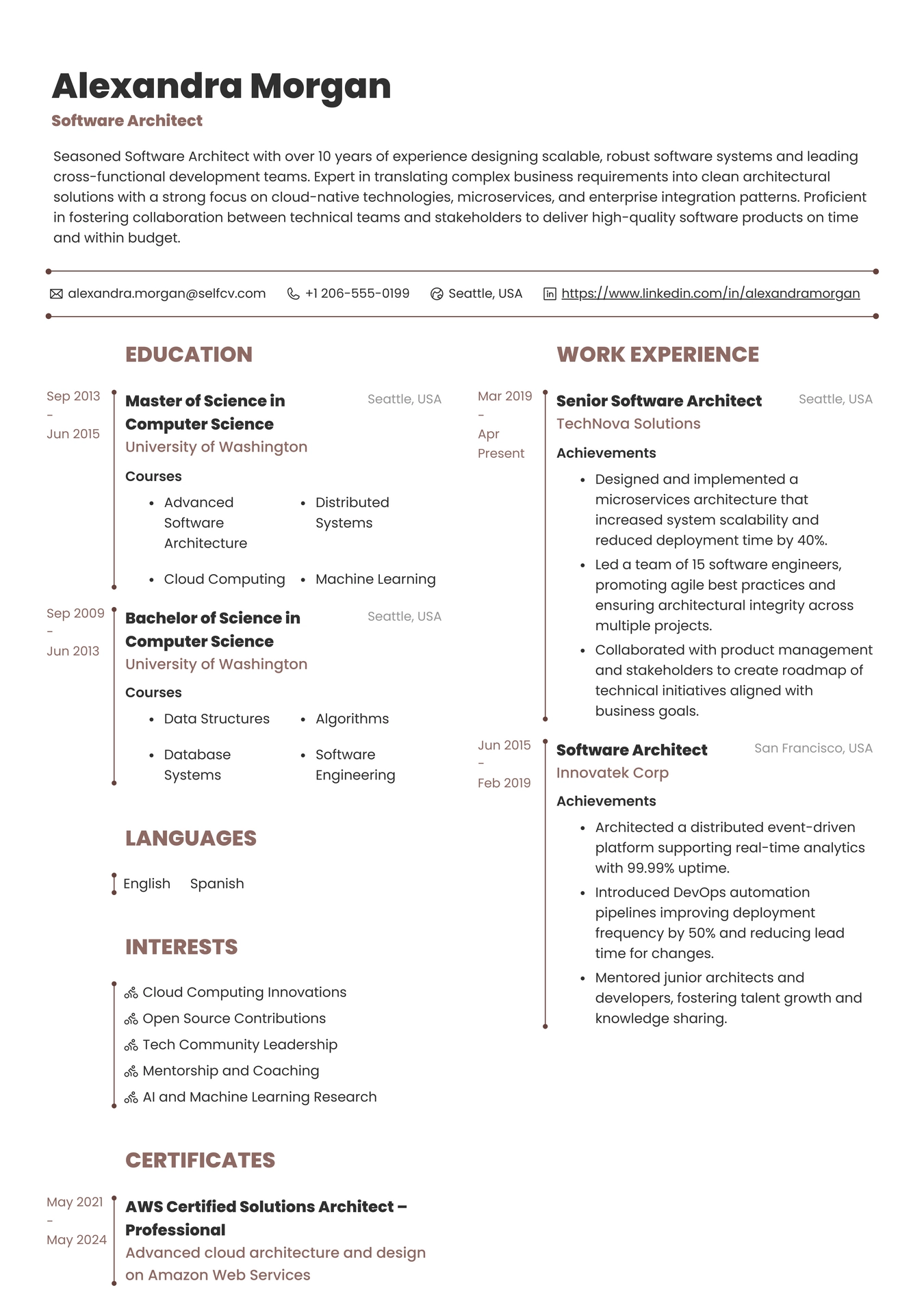
Resume Example for Software Architect
ATS optimization and an impact-first rewrite example
Quick checklist for ATS and hiring-manager signal
- Use clear role headings and consistent job title variants (software architect, solution architect, principal software architect)
- Put domain and tech scope in the first 1-2 lines of each role
- Include 6-10 role-specific ATS keywords naturally across summary, skills, and experience
- Prefer measurable bullets and deliverables over task lists
Three-line senior engineer to architect rewrite (impact-first)
Before
- Led backend development for payments service
- Implemented microservices with Kafka and PostgreSQL
- Improved payment processing
After
- Owned architecture and delivery of payments platform used by 12M monthly users, reducing payment failure rate from 1.8% to 0.2%
- Designed event-driven microservices with Kafka and PostgreSQL, enabling 5x throughput and 40% lower operational cost
- Authored ADRs for schema evolution and consumer contracts, reducing incidents from schema mismatches by 90%
Why this works
- The after version names scope, gives measurable outcomes, highlights architecture deliverables, and references ADRs
Complete fictional resume example for a software architect
The candidate, companies, and career history shown are fictional examples created for illustration and any resemblance to a real person or organization is coincidental.
Eden Park
Target Position
Senior Software Architect
Location
Berlin, Germany (open to remote, English speaking)
Professional Summary
- Senior software architect with 11 years building high-throughput distributed systems in fintech and adtech
- Led cross-functional architecture and migrations to cloud, achieved 60% cost reduction and sub-100ms median latency on core services
- Experience authoring ADRs, running architecture reviews, and mentoring architecture-minded engineers
Grouped Skills
- Architecture and design: distributed systems, event-driven architecture, domain-driven design, ADRs
- Cloud and infra: AWS (EKS, Lambda, RDS), Terraform, Kubernetes, Prometheus
- Data and messaging: Kafka, Cassandra, Redis, streaming ETL
- Non-functional: scalability, observability, reliability, cost optimization
Professional Experience
Principal Software Architect, FinPay Platform, 2021-2026
- Owned platform architecture for payments and settlement used by 150 enterprise clients
- Led migration from monolith to microservices with phased strangler pattern, reducing average downtime during deploys from 30 minutes to under 2 minutes
- Designed contract-first event model and consumer-driven schema validation, cutting production incidents by 75%
- Partnered with compliance and security teams to implement PCI-aligned encryption and audit logging
Senior Software Engineer (Lead), AdScale, 2017-2021
- Designed high-throughput bidding pipeline, increasing throughput 4x and lowering p95 latency from 250ms to 95ms
- Implemented circuit breakers, backpressure controls, and rate-limited ingress for third-party integrations
- Created architecture playbook and ADR templates used across three engineering teams
Software Engineer, Core Systems, 2013-2017
- Built resilient REST and streaming services for campaign management
- Implemented reliable retry patterns and idempotent handlers to reduce duplicate processing
Education / Training
- MSc Computer Science, Technical University of Munich, 2013
- Continuous training: System Design bootcamps, Cloud Architecture workshops
Certifications
- AWS Certified Solutions Architect - Professional (optional realistic certification)
- Certified Kubernetes Application Developer (CKAD)
Achievement examples: weak-to-strong and why they work
Example 1:
Weak:
- Improved service performance
Strong:
- Reduced service median latency from 180ms to 65ms by optimizing query paths and adding Redis caching, improving user checkout conversion by 8%
Why it works:
- Gives baseline and result, names interventions, links technical change to business outcome
Example 2:
Weak:
- Led cloud migration
Strong:
- Led phased migration of payment platform to AWS EKS, lowering infrastructure spend by 60% and improving deployment frequency from weekly to daily
Why it works:
- States scope, platform choices, and measurable cost and delivery improvements
Example 3:
Weak:
- Improved reliability of messaging system
Strong:
- Redesigned event flow and added idempotent consumers and schema validation, cutting P1 incidents related to messaging by 90% and decreasing mean time to recovery (MTTR) from 4 hours to 30 minutes
Why it works:
- Shows concrete tradeoffs and quantifies both incident reduction and MTTR
Tools, technical skills, and deliverables to include
ATS keywords and technical skill clusters to use naturally
- software architect resume
- distributed systems, microservices, event-driven, domain-driven design
- ADR, architecture decision record, system diagram
- latency, throughput, availability, MTTR, SLO, SLA
- AWS, Azure, GCP, Kubernetes, Terraform, Kafka, Redis, PostgreSQL, Cassandra
Deliverables that signal architecture ownership
- Architecture decision records (ADRs)
- System diagrams (component, sequence, deployment)
- Tradeoff summaries and performance benchmarks
- Migration plans and rollback strategies
- Cost models and capacity planning artifacts
Work environments and quality standards
- Cloud-native platforms, on-premise to cloud migrations, hybrid environments
- Observability and SLO-driven operations
- Security and compliance (PCI, HIPAA, SOC2) when applicable
Stakeholders to name when relevant
- Product managers, engineering leadership, SRE, security, legal/compliance, vendor partners
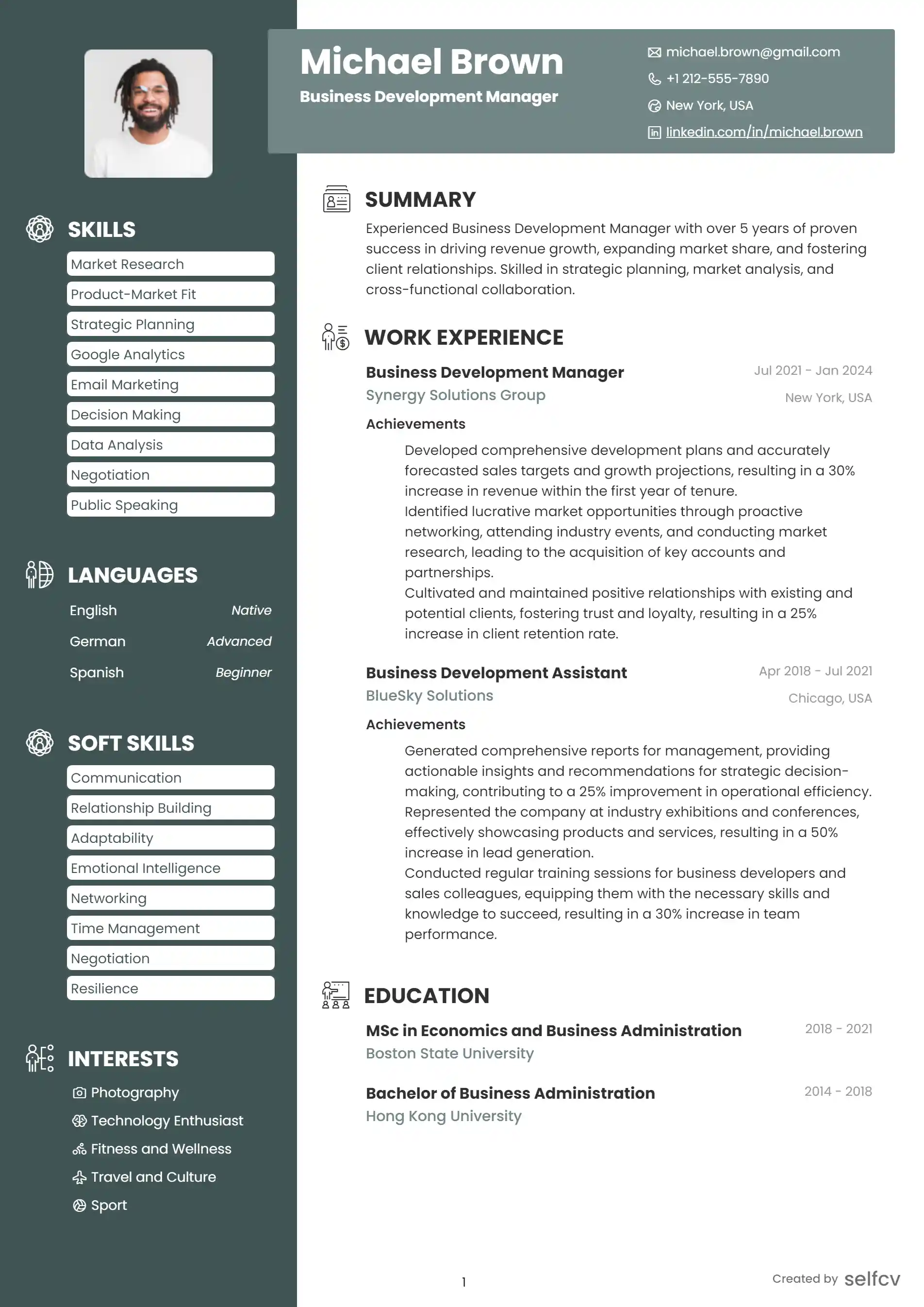
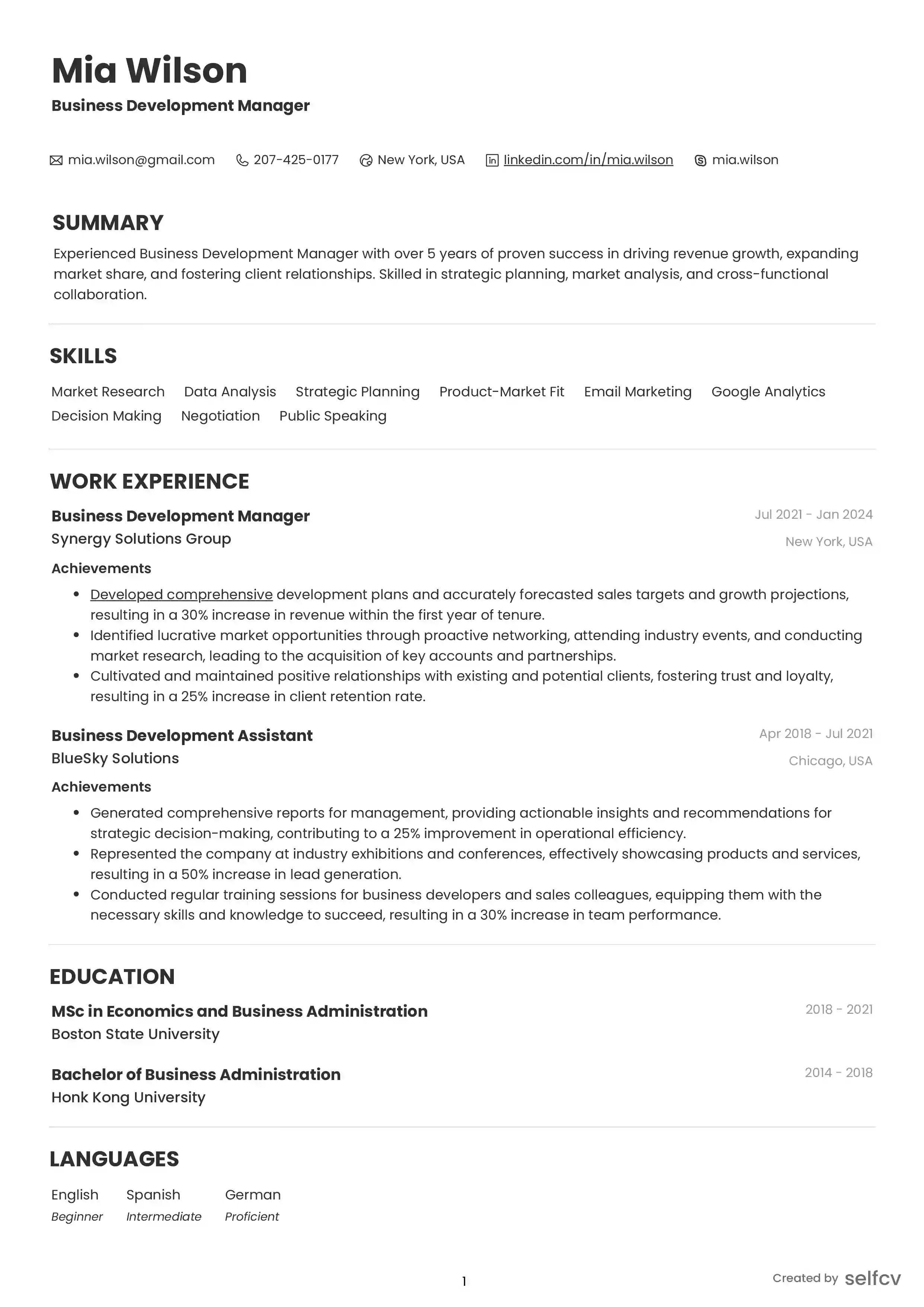
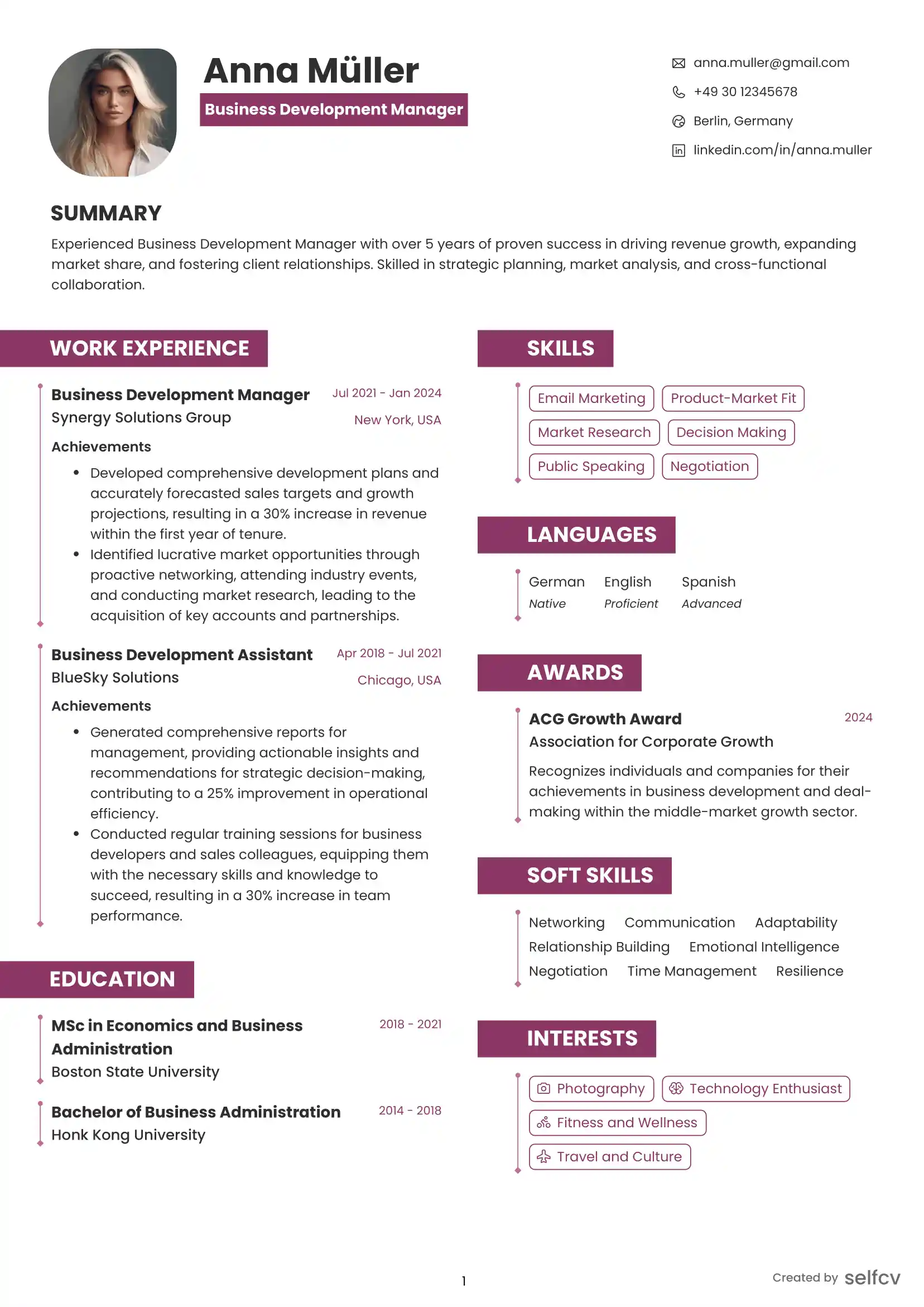
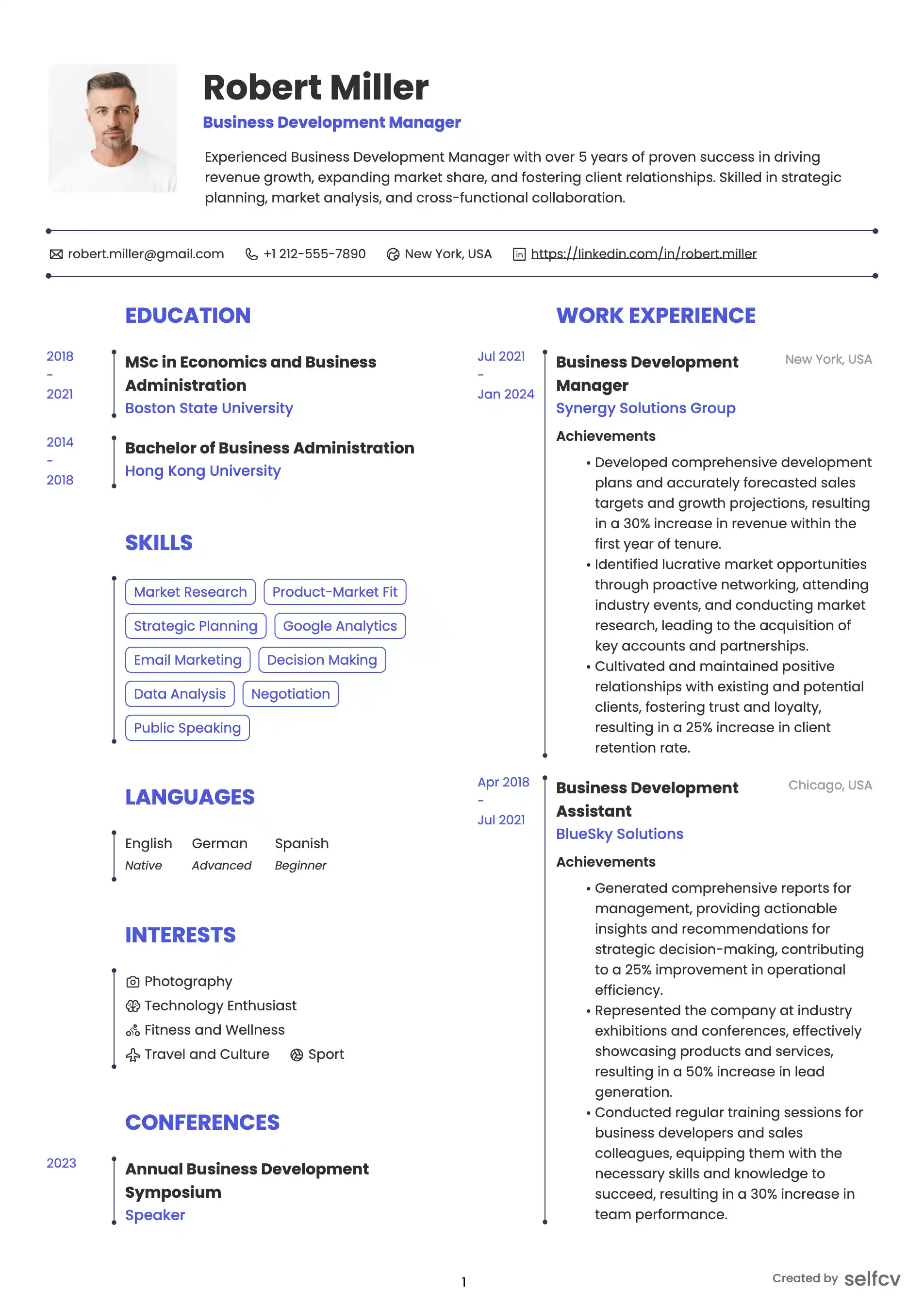
Find the template that’s right for you
No need to build anything from scratch. Using our templates or upload feature, you’ll get started easily and have a powerful resume in a few clicks.
Career-level resume summaries and objective examples
Use these short examples as starting points and adapt metrics
Entry level (transitioning to architect, 3-5 years)
- Software engineer with 4 years in backend systems seeking software architect role to apply system design and DDD experience toward building reliable, scalable services
Mid level (5-8 years, moving into architect responsibilities)
- Mid-level architect with 6 years designing microservices and event-driven systems, experienced in leading cross-team API contracts and improving throughput and reliability
Senior level (8+ years, owning product/platform architecture)
- Senior software architect with 10+ years in high-scale platforms, led cloud migrations and service decompositions that cut costs 40% while improving availability to 99.99%
Career changer (tech lead to architect)
- Tech lead with 7 years of backend ownership, ready to focus on architecture and cross-team design governance; skilled in ADRs, capacity planning, and mentor-level code review
Portfolio and architecture artifacts to include
High-impact portfolio items
- One-page architecture thumbnails for 2-3 projects showing context, constraints, decisions, and outcomes
- An accessible ADR sample with a short summary of the decision and its effect
- System diagrams: component, sequence, and deployment views for a single service or platform
Portfolio excerpt (thumbnail + short text)
- Thumbnail: event-driven payments platform diagram (component boundaries, message brokers, replay path)
- Excerpt: "Designed event sourcing with Kafka topics partitioned by merchant id, implemented schema evolution strategy and consumer-driven validation to enable safe deployments with zero downtime for 1M daily transactions."
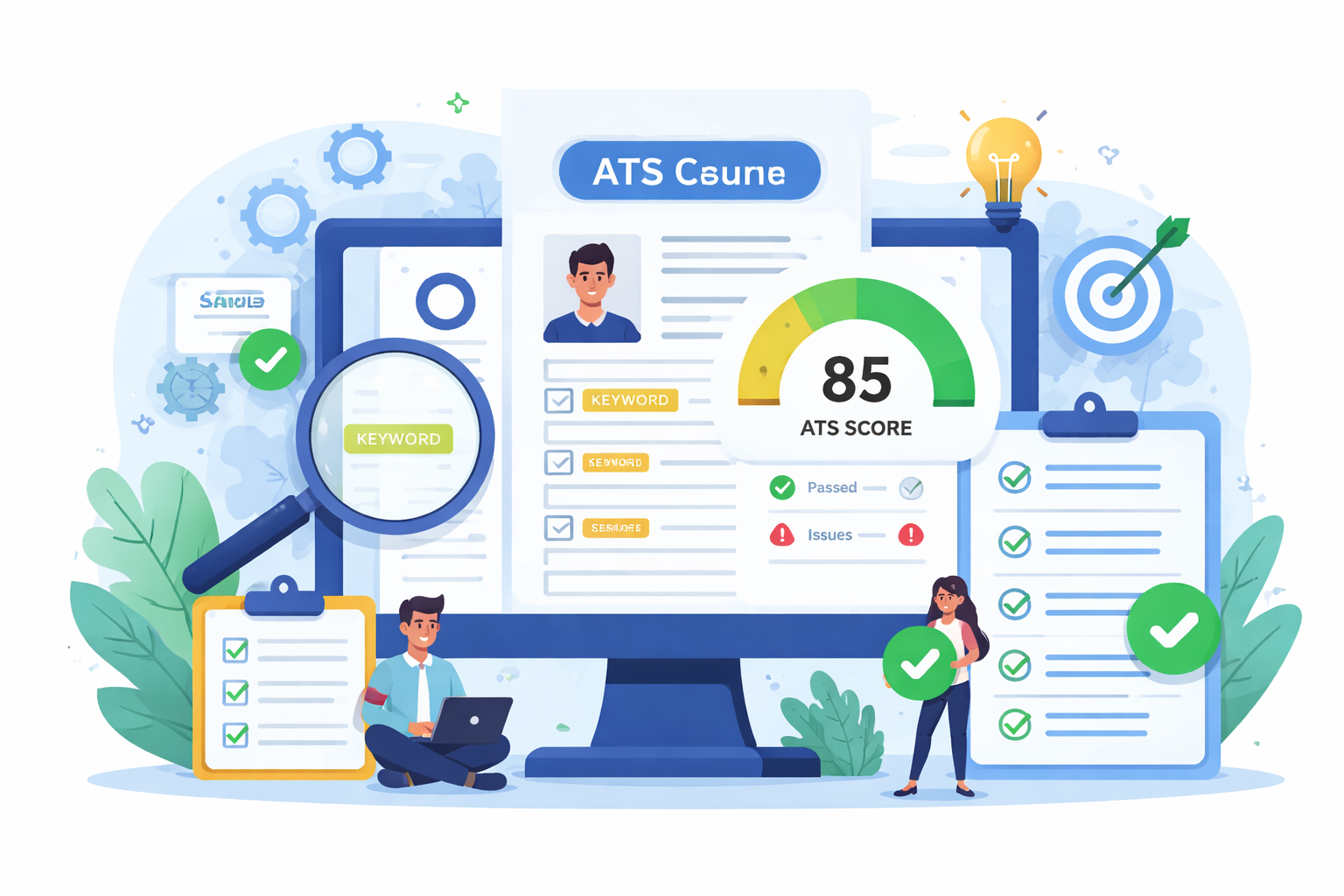
Check Your Resume with ATS
Make sure your resume passes Applicant Tracking Systems before recruiters see it.
- 📄 Upload your resume and get instant ATS feedback
- 🎯 Improve keyword matching for your target job
- ⚡ Boost your chances of getting shortlisted
Industry variants and one industry-adapted achievement
Cloud-native and SaaS
- Emphasize migrations, cost models, autoscaling, and multi-tenant isolation
Embedded and IoT
- Highlight real-time constraints, hardware interfaces, and constrained deployment strategies
Fintech and payments
- Stress compliance, auditability, reconciliation, and low-latency processing
Healthcare
- Show HIPAA-aware designs, data encryption, and audit logging strategies
Example: cloud migration and cost optimization (industry-adapted)
- Migrated billing platform to containerized services on AWS, introduced autoscaling and spot instance strategy, and reduced monthly infrastructure cost by 60% while improving average request latency from 220ms to 90ms
Resume formatting, length, and ATS-friendly structure
Formatting tips that pass ATS and support human scanning
- Prefer 1-2 pages for mid-level, 2 pages acceptable for senior/principal with clear sections
- Use consistent job titles and chronological order for recent roles
- Put key metrics and tech scope in the first bullet of each role
- Include a short skills cluster section with grouped technical terms
ATS specifics
- Avoid headers/footers for important info
- Keep table use to a minimum
- Use plain text job titles, company names, dates, and location fields
- Repeat key phrases (naturally) in summary, skills, and experience
Interview prep, common rebuttals, and follow-up template
What to prepare from the resume
- Be ready to explain ADRs and the tradeoffs you chose
- Prepare 2-3 short system-design stories with metrics and diagrams
- Expect questions about incidents, rollbacks, and postmortem learnings
Common interview rebuttals and how to answer
- "You didn't build that alone" - Explain the boundaries you owned and the decisions you led
- "How did you measure impact?" - Give specific metrics and timelines
- "Why this technology?" - Describe constraints and tradeoff analysis
Follow-up email template (short)
- Thank you and one-sentence reminder of the most relevant architecture win from your resume
- Offer to share an ADR or a short system diagram relevant to the discussion
Frequently asked questions
What should a software architect put on a resume in 2026?
- Role scope, measurable system outcomes, ADRs, system diagrams, and relevant compliance experience
How to write an ATS-friendly software architect resume?
- Use consistent titles, group technical keywords, put metrics early in bullets, and keep format simple
What keywords do recruiters look for in a software architect resume?
- Distributed systems, ADR, microservices, event-driven, SLO, scalability, AWS/GCP/Azure, Kubernetes, Kafka
How to show system design impact on a resume?
- Provide baseline and result, name the design change, and tie to business or operational metric
How to present architecture artifacts in a resume or portfolio?
- Include short thumbnails and link to 1-2 public artifacts or attach them to your application; describe the artifact in one sentence
How long should a software architect resume be for senior roles?
- 2 pages is acceptable for senior/principal roles when content is focused on system-level impact and architecture deliverables
Related careers
Roles closely related to software architect
- Solution architect
- Cloud architect
- Enterprise architect
- System architect
- Technical architect
When to use each label
- Use solution architect when focusing on customer-facing, cross-product solutions
- Use enterprise architect for strategy, governance, and organization-wide standards
- Use cloud architect when the role is primarily cloud and infrastructure-focused
Conclusion, practical checklist, and next actions
Final practical checklist (6 points)
- Include 6-10 role-specific ATS keywords distributed across summary, skills, and experience
- Add at least 3 measurable metrics (latency, cost, availability) with baselines and results
- Attach or link one ADR and one system diagram per major project in your portfolio
- Include portfolio items: component diagram, sequence diagram, deployment diagram
- Prepare three architecture interview stories that explain tradeoffs and incident learnings
- Use a one-sentence follow-up email that references a specific architecture win from your resume
Verify regulatory and compliance claims
- Confirm any compliance statements (PCI, HIPAA) with the legal or security team before listing them on a public resume
Next action
- Pick one recent project and write a single-page architecture thumbnail with an ADR and a short metric-focused bullet. Use that artifact in your next application or interview preparation.
seoTitle
Software Architect Resume Guide 2026: Turn System Design into ATS-Ready Impact
metaDescription
Software architect resume guide for 2026 that turns system design work into ATS-ready achievements, ADRs, diagrams, and portfolio items for hiring managers.
Why job seekers choose selfcv
Thousands of professionals use selfcv to build modern, ATS-friendly resumes, customize templates, and apply for jobs with confidence.
Thanks to SelfCV, I now have a professional and polished resume that I'm confident in sending to potential employers. I will definitely be recommending your service to other job seekers. Keep up the great work!
SelfCV offers an intuitive interface that makes creating a professional CV straightforward. Whether you're a student, a fresh graduate, or an experienced professional, the step-by-step process ensures that users of all levels can craft an impressive CV.
Easy to use resume builder. They have very intuitive ui for customizing and keeping multiple versions of resume.
The right tool for creating CVs. As a student I was looking for a tool that could help me quickly create a CV for internship applications. This was just the right tool. I am very satisfied!
This is one of the best tools I’ve ever used - I was able to build my CV in seconds with high quality template. Highly recommended!
Amazing app with easy user experience. Loved it. Its intuitive and easy to navigate, designs are very nice.
