
Technical Product Manager Resume 2026: Prove System-Level Ownership and Measurable Outcomes
Written by Armen Mkhitaryan
Recruiter snapshot
Role and seniority example
- Technical Product Manager, Mid to Senior level
One-line technical scope
- Owned platform APIs, data pipelines, and cloud services for 1M+ monthly active users, Node.js and Python backend, AWS/GCP, team of 6 engineers and 2 data scientists
Quantifiable impact highlight
- Reduced API latency 40% and increased paid conversion 12% in 9 months by prioritizing schema changes and introducing request-level caching
What makes TPM resumes distinct
- TPM resumes must show system-level tradeoffs, delivery at scale, and how technical decisions translated into business outcomes.
- They balance engineering fluency with product ownership language so hiring teams can quickly see both technical scope and measurable impact.
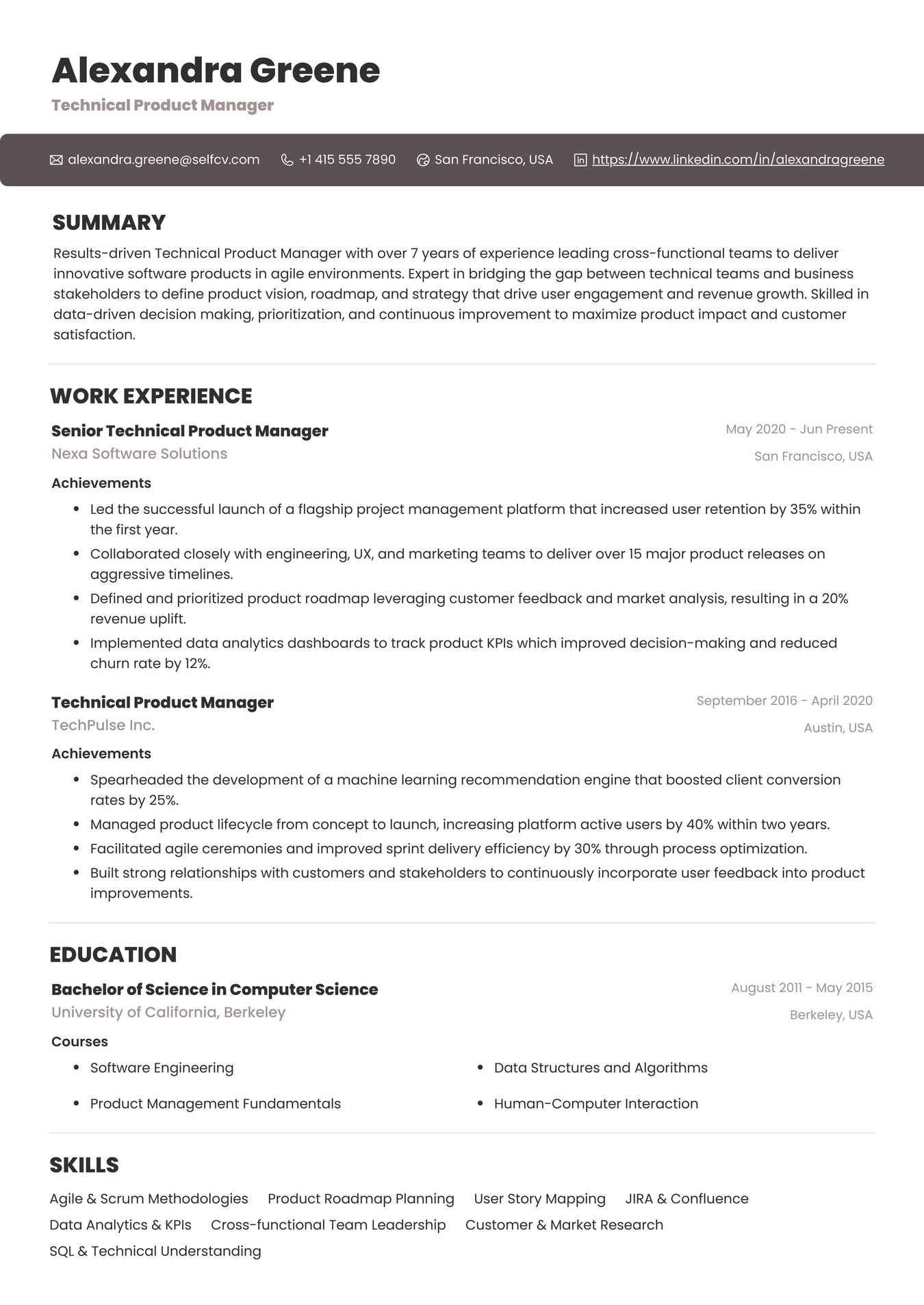
How hiring teams evaluate Technical Product Manager resumes
Key patterns hiring teams often follow
- Evidence of production ownership and measurable improvements.
- Clear technical scope: systems owned, stack, scale, and team size.
- Signals of cross-functional leadership: aligning engineers, data, design, security, and stakeholders.
- Concrete outcomes tied to metrics: latency, throughput, revenue, adoption, cost, retention.
What stands out in 2026
- Instrumentation and observability experience (distributed tracing, SLOs).
- Experience with API-first design, data contracts, and model monitoring for ML products.
- Cloud infra and cost optimization at scale, plus experience with platform or internal developer experience work.
Avoid vague claims
- Replace "owned roadmap" with specifics: feature area, time window, measurable result.
Career-level resume blueprints: what to include by experience level
Entry-level / Associate TPM
- Scope: small services, internal tools, 1-2 cross-functional teams.
- Focus: delivery execution, instrumentation basics, customer-facing bug fixes.
- Resume emphasis: clear technical internship or project experience, measurable small wins.
Mid-level Technical Product Manager
- Scope: multiple services or a product area, 3-8 engineers, OKR ownership.
- Focus: roadmap tradeoffs, API design, performance improvements, customer metrics.
- Resume emphasis: end-to-end launches, quantified outcomes, stakeholder management.
Senior Technical Product Manager
- Scope: platform or strategic product areas, cross-org projects, P&L influence.
- Focus: architecture decisions, technical debt prioritization, scaling systems, mentoring.
- Resume emphasis: system-level impact, orchestration of large programs, cost/reliability metrics.
Lead / Principal TPM
- Scope: organization-level platforms, developer experience, multiple teams and PLs.
- Focus: strategy, governance, SLOs, compliance, vendor and architecture choices.
- Resume emphasis: multi-quarter strategy outcomes, architectural tradeoffs, influence over roadmaps.
Resume Example for Technical Product Manager
Complete resume example
The candidate, companies, and career history shown are fictional examples created for illustration and any resemblance to a real person or organization is coincidental.
Candidate Name
- Arman Petrosian
Target Position
- Senior Technical Product Manager
Location
- San Francisco, CA (open to remote)
Professional Summary
- Technical Product Manager with 7 years of software engineering and product delivery experience. Led platform and API initiatives for consumer SaaS and fintech products. Expert at translating architectural tradeoffs into quantifiable outcomes: improved API latency by 40%, cut infra costs 22%, and drove 15% lift in activation over two quarters.
Grouped Skills
- Product and delivery: roadmap ownership, OKRs, stakeholder alignment
- Technical: REST/gRPC APIs, event-driven architecture, SQL, Python, Node.js
- Cloud and infra: AWS, GCP, Kubernetes, Terraform, CloudWatch, Prometheus
- Data and ML: data pipelines, model monitoring, A/B testing, feature stores
- Observability: distributed tracing, SLOs, synthetic monitoring
Professional Experience
Platform Product Manager, NovaEdge Inc.
- Jan 2022 - Present
- San Francisco, CA
Recent positions - achievements
- Led migration of internal API gateway to gRPC and HTTP/2, reducing 95th-percentile latency by 40% and lowering error amplification during peak by 60% in 6 months.
- Designed data contract system and automated schema validation, preventing 18 production incidents caused by schema drift in first year.
- Defined SLOs and implemented distributed tracing across 12 services, improving mean time to resolution by 2.5x and reducing escalations by 30%.
Technical Product Manager, PayRoute (fintech)
- Jun 2019 - Dec 2021
- Remote
Recent positions - achievements
- Owned payment API roadmap and launched high-availability endpoints with multi-region failover, increasing successful payments during peak 99.95% uptime.
- Partnered with security and compliance to implement PCI-scoped data flows, reducing scope of audits and cutting compliance remediation time by 40%.
Associate Software Engineer, CoreWorks
- Jul 2016 - May 2019
- Boston, MA
Recent positions - achievements
- Implemented eventing layer for user events, enabling real-time metrics and powering a 20% uplift in targeted onboarding messaging.
Education / Training
- MS, Computer Science, Northeastern University
- BS, Software Engineering, American University of Armenia
Certifications
- Certified Scrum Product Owner (CSPO)
- Google Cloud Professional Cloud Architect (optional realistic certification)
- AWS Certified Solutions Architect - Associate
Selected Technical Deliverables: full-case examples and bullet rewrites
Example A - API latency reduction
Context
- Product: public REST APIs used by mobile and web apps, growing traffic to 500k/month.
Action
- Introduced request-level caching, upgraded endpoint implementations to use async handlers, and rolled out schema changes with backward compatibility.
Outcome
- 95th-percentile latency reduced 40% in 9 months, error rate down 35%, and mobile conversion increased 8%.
Before bullet
- Improved API performance and worked with backend team.
After bullet
- Reduced 95th-percentile API latency 40% and error rate 35% in 9 months by adding request-level caching and async endpoint refactors; contributed to an 8% lift in mobile conversion.
Example B - Data pipeline reliability
Context
- Product: analytics pipeline that fed dashboards and model training data; frequent backfills due to schema drift.
Action
- Implemented contract testing, automated schema validation, and alerting for late-arriving partitions.
Outcome
- Cut pipeline failures by 75%, reduced backfill time from 6 hours to 45 minutes, and improved model freshness for personalization features.
Before bullet
- Improved ETL stability.
After bullet
- Reduced ETL failures 75% and backfill time from 6 hours to 45 minutes by introducing schema contract tests and partition-level alerts; improved personalization model freshness.
Example C - Cost optimization for cloud infra
Context
- Product: platform services with spiky traffic causing excessive on-demand costs.
Action
- Introduced autoscaling policies, spot instance usage for non-critical workers, and query optimizations for expensive joins.
Outcome
- Reduced monthly infra spend 22% while maintaining SLOs and supporting a 30% traffic increase.
Before bullet
- Lowered cloud costs.
After bullet
- Cut cloud infrastructure costs 22% while preserving SLOs by implementing autoscaling, spot instances for batch workers, and query cost optimizations during a 30% traffic rise.
Selected Projects and micro-case templates you can reuse
Micro-case template - API launch
- Context: user base, traffic, stakeholders
- Role: what you owned (API design, contracts, rollback plan)
- Action: technical and product steps (versioning, tests, observability)
- Outcome: metrics (latency, adoption, errors, revenue)
Micro-case template - Platform migration
- Context: legacy system, risk, timeframe
- Role: migration owner, team size, vendor or tech choices
- Action: cutover plan, data validation, canary releases
- Outcome: downtime avoided, cost delta, performance changes
Micro-case template - ML product rollout
- Context: model purpose, inputs, CI for models
- Role: product/technical ownership, monitoring setup
- Action: A/B test, feature store, drift detection
- Outcome: lift in target metric, model precision/recall, rollback triggers
How to compress into resume bullets
- Keep context to one clause and focus bullets on Actions and Outcomes.
- Use numbers: percent, timeframes, user counts, cost or revenue figures.
Achievement library by industry and specialization
Fintech
- Launched PCI-scoped payment endpoints with multi-region failover, achieving 99.95% uptime and reducing chargeback resolution time 30%.
- Implemented realtime reconciliation pipeline, decreasing settlement variance 85%.
Cloud infrastructure / Platform
- Built internal developer portal and SDKs, cutting onboarding time for new services from 2 weeks to 3 days.
- Standardized SLOs and error budgets across 20 services, improving reliability and prioritization.
Machine learning product
- Deployed model monitoring and drift detection, reducing silent model degradation and improving retention by 6% for targeted segments.
- Built feature store and reduced model retrain latency 7x, enabling faster iterations.
SaaS / Consumer
- Introduced feature-flagged rollout and cohort analysis, increasing paid conversion 12% without impacting baseline retention.
- Reworked core onboarding funnel, boosting activation by 15% in 60 days.
Embedded / IoT
- Designed OTA update strategy and staged rollouts, reducing failed updates by 70% and meeting safety compliance requirements.
Platform / API
- Defined API versioning policy and automated client compatibility checks, eliminating production contract violations.
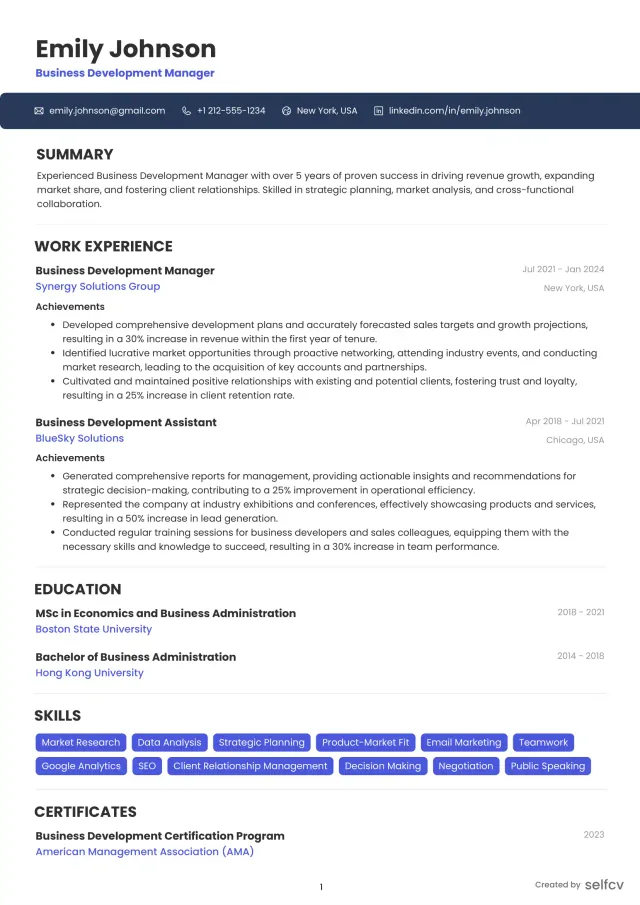
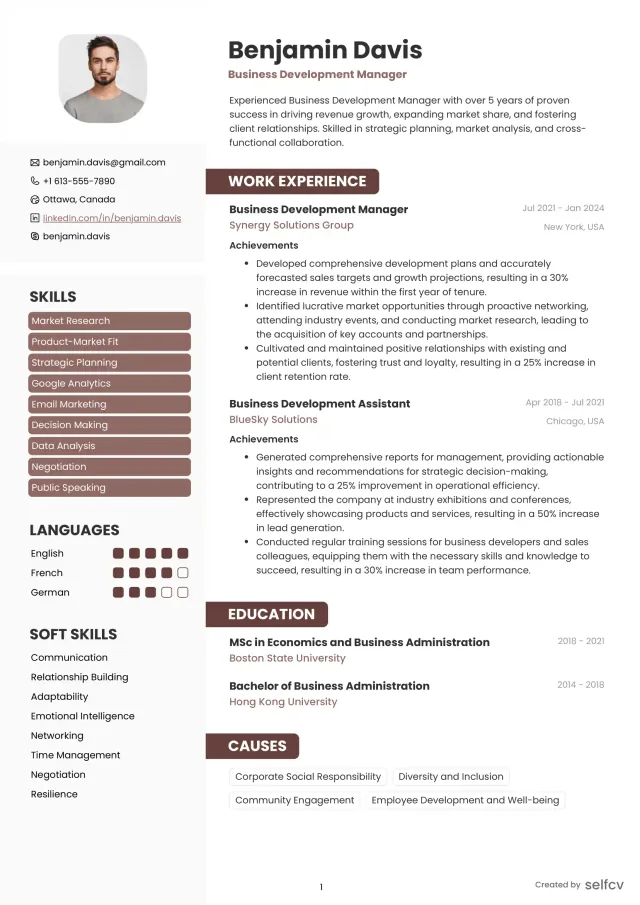
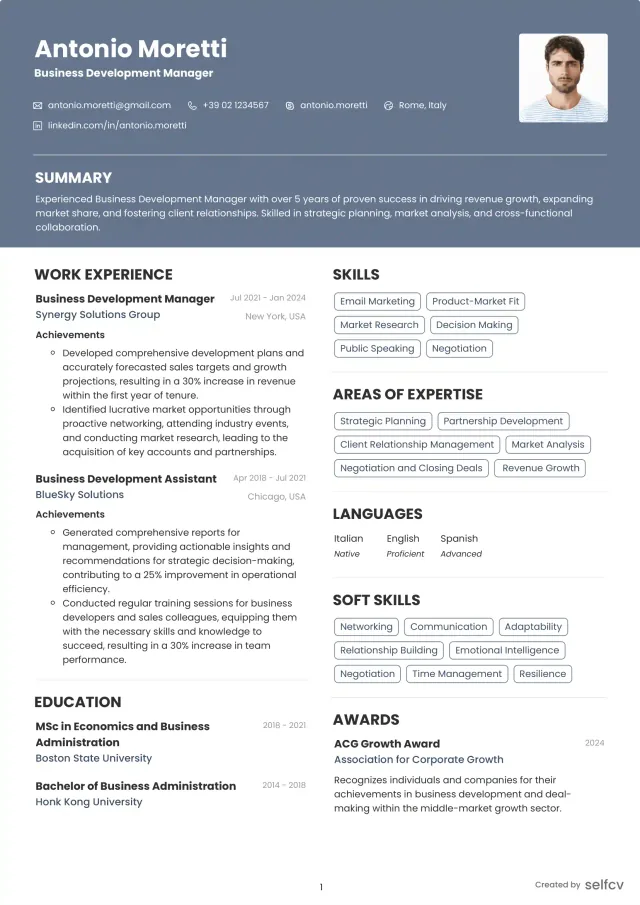
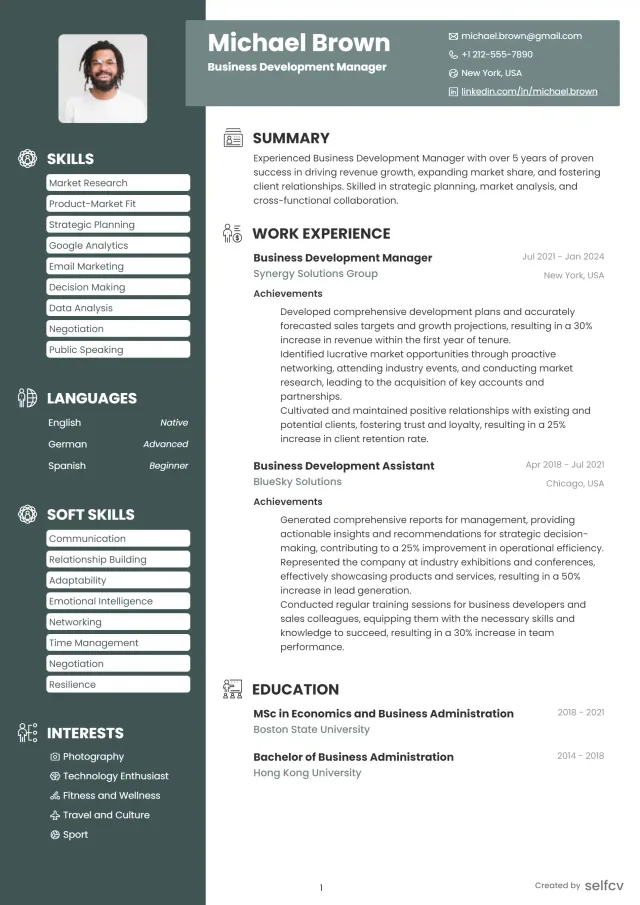
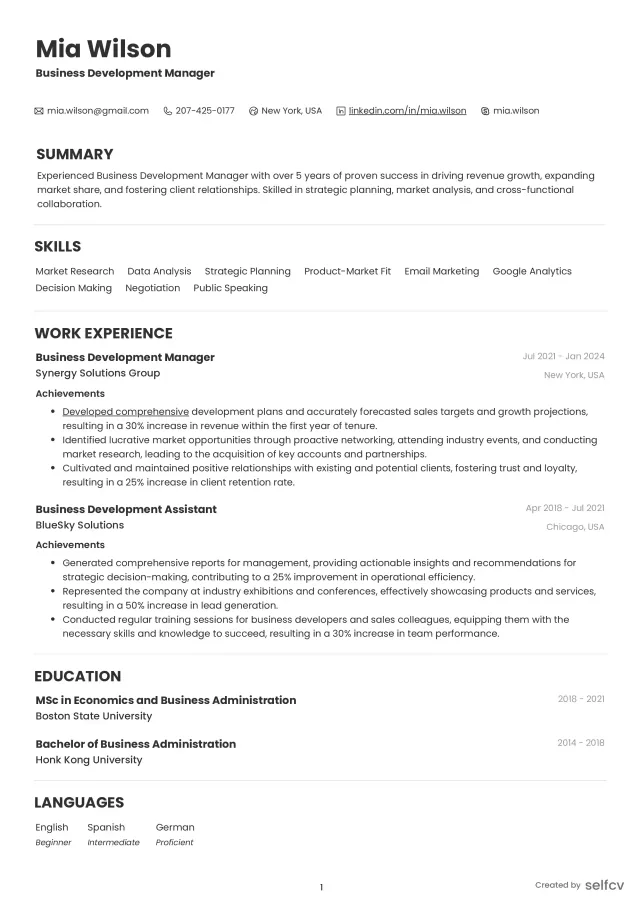
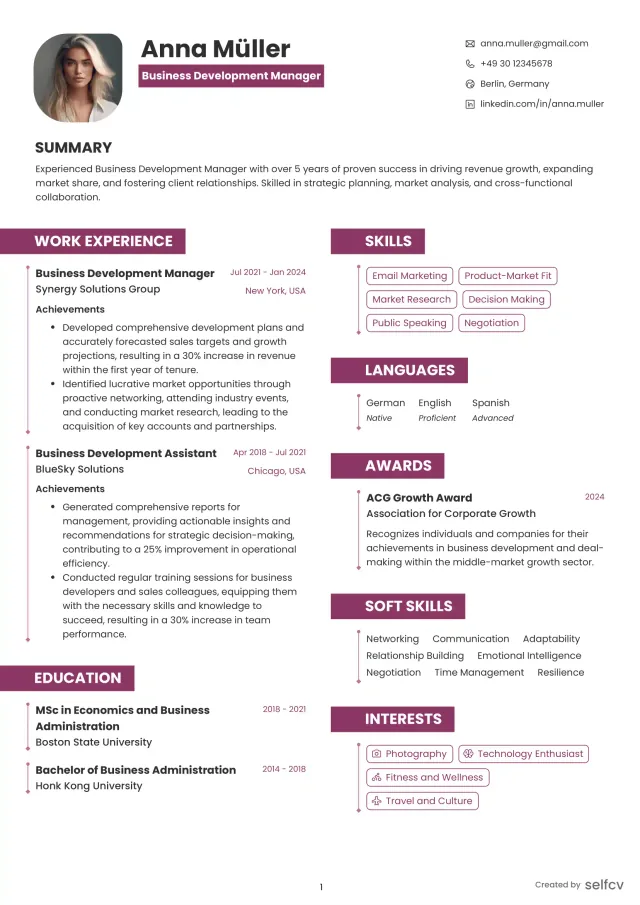
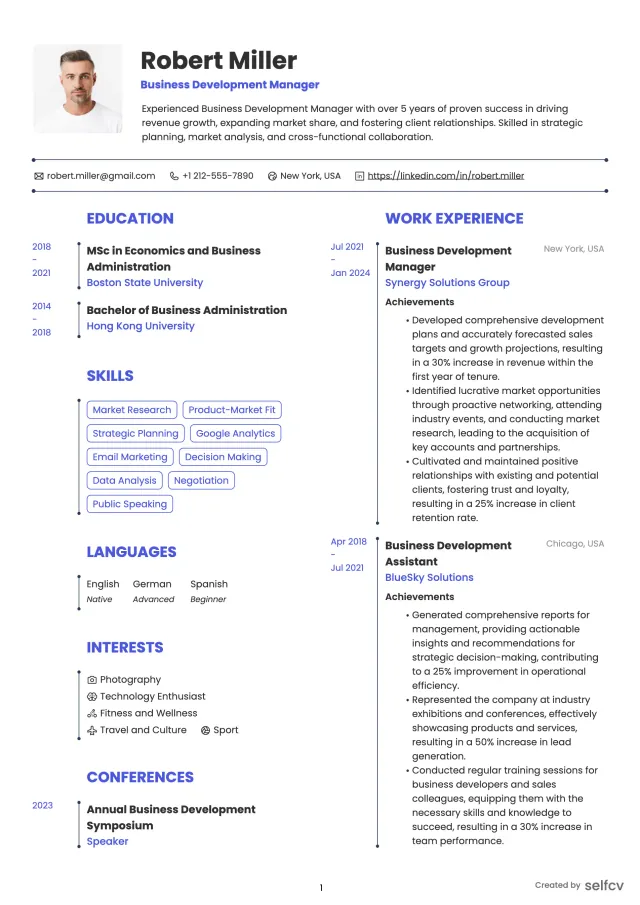
Find the template that’s right for you
No need to build anything from scratch. Using our templates or upload feature, you’ll get started easily and have a powerful resume in a few clicks.
Weak-to-strong achievement rewrites
Example 1:
Weak:
- Improved API performance.
Strong:
- Reduced 95th-percentile API latency 40% and error rate 35% in 9 months by adding request-level caching and async endpoint refactors; increased mobile conversion 8%.
Why it works:
- Shows metric, timeframe, actions, and a business outcome.
Example 2:
Weak:
- Worked on data pipelines to make them more reliable.
Strong:
- Reduced ETL failures 75% and backfill time from 6 hours to 45 minutes through schema contract tests and partition-level alerts; improved model freshness for personalization features.
Why it works:
- Converts vague improvement into measurable reliability and product impact.
Example 3:
Weak:
- Helped lower cloud costs.
Strong:
- Cut monthly cloud spend 22% during a 30% traffic increase by implementing autoscaling, spot instances for batch jobs, and query cost optimizations while maintaining SLOs.
Why it works:
- Adds scale context, exact percent savings, and preservation of reliability.
ATS checklist and keywords (organized for 2026 hiring filters)
Resume formatting for ATS
- Use standard headings: Professional Summary, Experience, Education, Skills.
- Avoid images, tables, and uncommon fonts.
- Include job title variations near top: Technical Product Manager, TPM, Platform PM, API Product Manager.
Core keywords to include (global)
- Technical Product Manager
- API design
- Observability
- SLO, SLA
- Distributed systems
- Cloud (AWS, GCP, Azure)
- Kubernetes, Terraform
- Data pipelines, ETL
- Model monitoring
Industry-targeted keywords
- Fintech: PCI, payment gateway, reconciliation, chargeback
- ML: model drift, feature store, A/B testing, MLOps
- Cloud/platform: autoscaling, cost optimization, service mesh
How to place keywords naturally
- Integrate into summary, skills list, and within bullet context describing tools, scale, and outcomes.
- Use both abbreviations and full forms (SLOs and service level objectives).
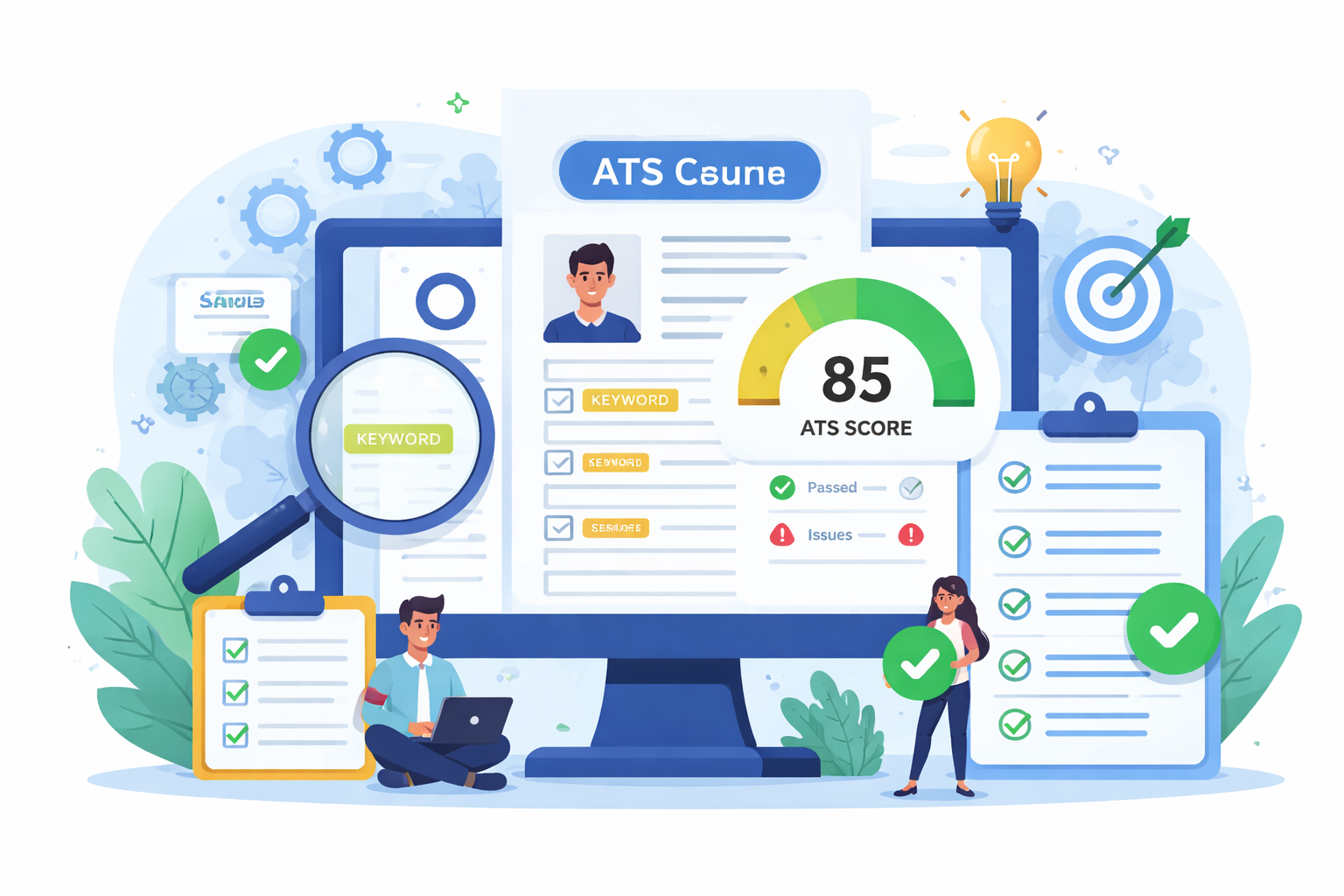
Check Your Resume with ATS
Make sure your resume passes Applicant Tracking Systems before recruiters see it.
- 📄 Upload your resume and get instant ATS feedback
- 🎯 Improve keyword matching for your target job
- ⚡ Boost your chances of getting shortlisted
Tools, software, and technical skills to show in 2026
Programming and query languages
- Python, SQL, JavaScript/Node.js
Cloud and infra
- AWS, GCP, Azure, Kubernetes, Terraform, Docker
Observability and testing
- Prometheus, Grafana, Jaeger, OpenTelemetry, CloudWatch, synthetic monitoring
Data and ML
- Kafka, Spark, Airflow, dbt, MLflow, feature stores
APIs and integration
- REST, gRPC, GraphQL, API gateways, Postman
Product and delivery
- JIRA, Confluence, Aha!, Figma for specs
Security and compliance
- PCI, SOC2, GDPR basics
How to present skills
- Group skills and add short context in experience bullets: tool name, scale, and outcome (for example, "Instrumented services with OpenTelemetry, reducing MTTR 2.5x").
How to quantify product impact: metrics and formulas TPMs use
Common TPM metrics
- Latency: p95, p99, average response time
- Reliability: uptime percentage, MTTR, failure rate
- Adoption: DAU/MAU, activation rate, feature adoption percent
- Revenue and retention: ARPU, conversion lift, churn reduction
- Cost: monthly infra cost, cost per transaction
Formulas and framing
- Conversion lift: (post - pre) / pre * 100
- Cost reduction: (old cost - new cost) / old cost * 100
- Time-to-ship improvements: reduced cycle time in days or sprints
What to avoid
- Using absolute numbers without scale context. Prefer percentages plus baseline size (for example, 12% lift on a 200k MAU cohort).
Formatting, length, and ATS tips that matter for TPMs
Length and structure
- Keep to 1 page for entry to mid-level roles, 2 pages acceptable for senior/lead with >10 years.
- Put most recent and relevant experience first; use 3-5 bullets per recent role.
Bullet construction
- Start with action verb, include technical area, add metric and timeframe.
- Example structure: Action + scope (system/scale) + result (metric).
ATS technical tips
- Use plain section headers and a linear layout.
- Avoid icons, photos, and unusual characters.
- Save as PDF or DOCX depending on application instructions; some ATS parse DOCX more reliably.
Customization
- Tailor top third of resume to match the job posting: copy exact role names and technical stacks where applicable while staying truthful.
Career changer and engineering-to-TPM resume advice
What to emphasize
- Translate engineering work into ownership statements: decision, tradeoff, measurable result.
- Highlight cross-functional interactions, product thinking, and any customer or stakeholder-facing work.
Structure for career changers
- Strong professional summary that states intent and transferable strengths.
- Project or Selected Projects section that shows end-to-end delivery examples.
- Keep technical depth but reframe as product impact.
Sample objective for an engineering-to-TPM candidate
- Objective: Engineering background (4 years) seeking Associate TPM role to apply system design experience, stakeholder management, and data-driven decision making to improve platform reliability and developer experience.
Resume summary and objective examples by career level
Entry-level / Associate TPM summary
- Recent CS grad with internship experience in backend services and API testing. Built an evented notification system used by 10k users, reduced delivery errors 30%, seeking Associate TPM role to bridge engineering and product.
Mid-level TPM summary
- Technical Product Manager with 4 years building data pipelines and APIs for SaaS products. Owned roadmap features that lifted activation 15% and reduced infra costs 10% through targeted optimizations.
Senior TPM summary
- Senior Technical Product Manager with 8 years leading platform migrations and observability at scale. Directed multi-team programs that improved system availability to 99.99% and enabled a 2x increase in throughput.
Career changer objective
- Software engineer transitioning to TPM, with hands-on experience in distributed systems and product analytics. Seeking a role where I can convert technical decisions into measurable customer outcomes and roadmap prioritization.
Portfolio and project appendix: what to include and how to present it
Artifacts to link from resume
- One-page product case studies for 2-3 major projects.
- Architecture diagrams and before/after performance charts.
- API specification examples and contract test snippets.
- Postmortem summaries showing actions and follow-ups.
How to format case studies
- Use micro-case template: context, role, action, measurable outcome.
- Keep each case to one page and include a headline metric.
Where to host
- Personal site, GitHub repo for technical artifacts, or a PDF attached to applications.
Portfolio checklist
- One-line headline metric for each project.
- Clear ownership statement.
- Reproducible artifacts or screenshots where allowed.
- Notes on team and timeframe.
Interview talking points tied to common resume bullets
Turn bullets into stories
- For each bullet, prepare a 2-minute STAR-style talk: Situation, Task, Action, Result.
- Focus on tradeoffs you made and why.
Sample talking points
- API latency bullet: explain root cause analysis, the tradeoffs of caching vs consistency, and rollback plan.
- Data pipeline reliability: discuss contract testing approach, alert thresholds, and how you validated fixes in staging.
- Cost optimization: describe measurement of cost vs reliability and how you convinced stakeholders to accept spot instances.
Practice notes
- Have one anecdote for leadership and one for technical depth per role.
- Be ready to show instrumentation, dashboards, or ticket numbers if requested.
Common red flags hiring teams spot on TPM resumes
Red flags
- Vague ownership: "owned roadmap" with no scope or result.
- Purely technical or purely product language without bridging both.
- No measurable outcomes across multiple recent roles.
- Overly long descriptions for early-career positions and too few bullets for recent roles.
- Unsupported scale claims: include user counts, API calls, or traffic if claiming large scale.
How to fix
- Add at least one metric to major bullets.
- Clarify scope: number of services, team size, traffic, or revenue impact.
- Swap generalities for specific actions and outcomes.
FAQs for Technical Product Manager resumes (2026)
How do I write a Technical Product Manager resume that clears ATS?
- Use standard headings, include core keywords naturally in summary and skills, and describe tools and scale in experience bullets.
What technical skills should a TPM list on a resume in 2026?
- Cloud platforms (AWS/GCP), Kubernetes, Terraform, observability (OpenTelemetry, Prometheus), API protocols (REST/gRPC), data tooling (Airflow, Kafka), and model monitoring for ML roles.
How do I quantify product impact (revenue, latency, adoption) on a TPM resume?
- Use percentages with baseline scale and timeframe, for example: "Reduced p95 latency 40% in 9 months, improving mobile conversion 8% on a 200k MAU product."
What projects should be included in a TPM 'Selected Projects' section?
- End-to-end projects where you influenced requirements, technical design, and delivery: API launches, migrations, model deployments, and observability overhauls.
How should TPMs show technical leadership vs. delivery on a resume?
- Show both: a bullet on architecture or tradeoffs for leadership, and bullets with execution outcomes for delivery. Mention mentoring, cross-team governance, or SLO policy authorship for leadership.
Which keywords do recruiters search for when hiring a TPM for cloud infrastructure?
- Autoscaling, cost optimization, SLO, Kubernetes, Terraform, multi-region, service mesh, observability.
How can an engineering-to-TPM career changer format their resume?
- Start with a clear objective, add a Selected Projects section, and reframe engineering accomplishments as product outcomes with metrics.
Related careers
Roles to consider or collaborate with
- Technical Program Manager
- Product Manager (PM)
- Engineering Manager
- Data Product Manager
- Machine Learning Product Manager
- Solutions Architect
How TPM resumes differ from related roles
- TPM: emphasizes technical ownership and system-level decisions plus product outcomes.
- TPM vs TPM program role: more product strategy and roadmap focus, less solely program coordination.
Conclusion: prioritized edits, targeted keywords, interview prompts, and next steps
Practical conclusion for Technical Product Managers
- Focus your resume on concrete systems, the scale you handled, and measurable outcomes. Prioritize showing technical tradeoffs and stakeholder alignment.
Prioritized edits checklist
- Top edit: Add metrics to any recent role missing numbers.
- Second: Replace vague verbs with specific outcomes and tools (for example, "implemented" becomes "implemented contract tests using Great Expectations, reducing failures 75%").
- Third: Ensure your top third of the resume matches the job posting language for role and core stack.
Targeted keywords for 3 industries
- Fintech: PCI, payment gateway, settlement, reconciliation
- Machine learning: model monitoring, drift detection, feature store, A/B testing
- Cloud/platform: Kubernetes, autoscaling, Terraform, SLOs
Interview talking points tied to resume bullets
- Pick 3 bullets to expand into 2-minute tradeoff stories: one on architecture, one on incident reduction, one on monetization or adoption.
- Prepare to show metrics sourcing: dashboards, ticket IDs, or postmortem summaries.
Next action
- Use the Selected Projects micro-case templates to build 2 one-page case studies for your portfolio and attach them or host them on your personal site.
- Run an ATS keyword pass: highlight job posting phrases and ensure 6-10 exact matches across summary, skills, and experience.
Project templates and portfolio checklist
- Create 1-page case studies with context, your role, actions, and a headline metric.
- Include architecture diagrams, before/after charts, and a short note on stakeholder decisions.
Final note
- Convert at least two resume bullets into interview stories this week and prepare one observable artifact to share during interviews.
Why job seekers choose selfcv
Thousands of professionals use selfcv to build modern, ATS-friendly resumes, customize templates, and apply for jobs with confidence.
Thanks to SelfCV, I now have a professional and polished resume that I'm confident in sending to potential employers. I will definitely be recommending your service to other job seekers. Keep up the great work!
SelfCV offers an intuitive interface that makes creating a professional CV straightforward. Whether you're a student, a fresh graduate, or an experienced professional, the step-by-step process ensures that users of all levels can craft an impressive CV.
Easy to use resume builder. They have very intuitive ui for customizing and keeping multiple versions of resume.
The right tool for creating CVs. As a student I was looking for a tool that could help me quickly create a CV for internship applications. This was just the right tool. I am very satisfied!
This is one of the best tools I’ve ever used - I was able to build my CV in seconds with high quality template. Highly recommended!
Amazing app with easy user experience. Loved it. Its intuitive and easy to navigate, designs are very nice.
