
Web Developer Resume 2026: ATS-Proof Bullets, Portfolio Pairing, and Measurable Project Wins
Written by Armen Mkhitaryan
Two common hiring pain points stand out for web developer roles in 2026 - resumes that vanish in ATS filters and resumes that claim impact without verifiable proof. This guide gives concrete, stack-led resume bullets, annotated project entries, and ATS keyword strategies so your resume gets screened and your portfolio backs every claim.
What you will get in this article:
- Role- and industry-specific resume examples for entry, mid, senior, and career-change paths
- A complete fictional resume you can adapt
- Before/after bullets with metrics and tech callouts
- An ATS keyword matrix and project write-up templates
- Interview prompts tied to resume claims
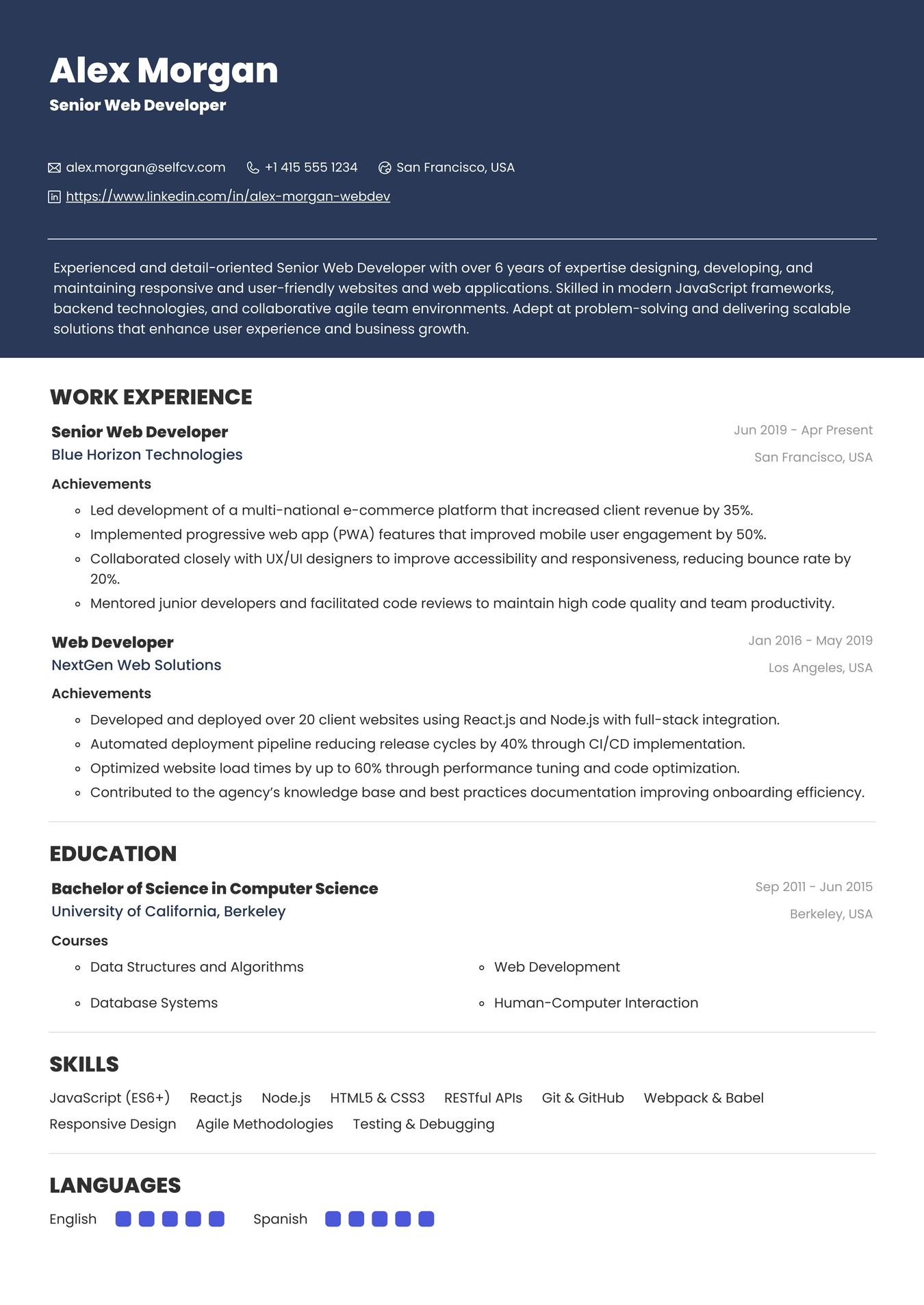
What Belongs on a Web Developer Resume in 2026
Essential sections and the reason they matter:
- Header: name, location or remote note, email, phone, GitHub, portfolio link, LinkedIn
- Title line: role + specialism (example: Full-Stack Web Developer - React/Node.js)
- Professional summary or objective: 1-3 lines with top stack and measurable outcome focus
- Grouped skills: Frameworks, languages, dev tools, cloud/services, testing
- Experience: company, role, dates, 3-5 achievement bullets per recent role
- Projects: 2-4 annotated projects with live demo, repo, tech notes, and measurable result
- Education and training: degrees, bootcamps, workshops, relevant coursework
- Certifications: optional and realistic certificates such as AWS Certified Developer or Google Mobile Web Specialist
ATS and hiring notes:
- Use plain section headings and a single-column layout to pass ATS parsing
- Put important keywords in context, not in a keyword-stuffed list
- Prioritize recent, verifiable production work over outdated tech
Resume Makeover: Annotated Before and After Bullets
Problem: vague tasks, no metrics, missing tech context.
Before:
- Built web pages using React.
After:
- Rebuilt checkout components in React and TypeScript, reducing render time by 35% and decreasing cart abandonment by 7% across the US market.
Before:
- Improved site performance.
After:
- Implemented server-side rendering and image optimization, cutting first contentful paint from 1.8s to 0.9s and improving Lighthouse performance score from 72 to 91.
Before:
- Worked on APIs.
After:
- Designed Node.js REST API endpoints and introduced pagination and caching, lowering average response time from 320ms to 95ms and reducing database read volume by 48%.
How to rewrite bullets quickly:
- Start with the action verb and tech used
- Add the deliverable or scope (feature, page, service)
- Add measurable impact or user-facing result
- Add timeframe or scale when possible
Resume Example for Web Developer
Complete Fictional Resume Example
The candidate, companies, and career history shown are fictional examples created for illustration and any resemblance to a real person or organization is coincidental.
Lena Park
Target Position
Senior Full-Stack Web Developer
Location
Berlin, Germany (Open to remote work, CET hours)
Professional Summary
Full-stack web developer with 7 years of production experience building fintech and e-commerce products. Primary daily stack: React, TypeScript, Node.js, PostgreSQL, Docker. Led a cross-functional team to reduce page load by 42% and increase conversion on onboarding flows by 18%. Focused on performance, API design, and accessible components.
Grouped Skills
Languages: TypeScript, JavaScript, SQL, HTML, CSS
Frontend: React, Next.js, Tailwind CSS, Jest, Cypress
Backend: Node.js, Express, PostgreSQL, Prisma, Redis
DevOps and cloud: Docker, GitHub Actions, AWS (EC2, S3), Cloudflare
Observability and performance: Lighthouse, WebPageTest, Sentry, New Relic
Testing and quality: unit tests, integration tests, end-to-end tests, accessibility audits
Professional Experience
Senior Web Developer, FinPay GmbH, 2021-2025
- Led frontend and API work for a payment onboarding flow used by 1.2M annual signups.
- Rewrote onboarding UI in React and TypeScript, improving LCP from 2.9s to 1.1s and increasing completion rate by 18% quarter over quarter.
- Built a Node.js microservice to validate KYC documents with retry and caching, reducing verification failures by 35% and API costs by 28%.
- Mentored 4 junior developers, established code review standards, and introduced component library documentation.
Frontend Developer, ShopCraft AG, 2018-2021
- Implemented a headless storefront with Next.js and a GraphQL layer, enabling personalized product recommendations that lifted AOV by 12%.
- Led performance sprint that reduced bundle size by 55% and improved Core Web Vitals, contributing to a 9% increase in mobile conversion.
- Set up CI pipelines with automated tests and staging deployments, decreasing hotfixes by 46%.
Junior Web Developer, StudioWave (agency), 2016-2018
- Built responsive sites and client dashboards with vanilla JS and early React prototypes.
- Improved accessibility of client sites by applying ARIA roles and semantic markup, passing WCAG AA audits for 6 clients.
Education / Training
BSc Computer Science, Technical University of Munich, 2016
Advanced TypeScript and React workshops, 2020-2022
Certifications
AWS Certified Developer - Associate (optional)
Google Mobile Web Specialist (optional)
Notes on verification
- All production metrics are tied to tracked A/B tests and analytics events
- Portfolio entries list live demo environment and repo with setup notes
Career-Level Resume Summaries and Objectives
Entry level:
- Objective: Recent web development bootcamp graduate skilled in React and modern JavaScript seeking a junior frontend role to contribute to accessible UI components and real-world features. Built 5 portfolio apps including a Jamstack blog and a mock e-commerce checkout.
Mid level:
- Summary: Frontend developer with 3 years building customer-facing features in React and Next.js. Owned feature lifecycle from design to monitoring and delivered a 22% improvement in page performance and 10% lift in user engagement.
Senior level:
- Summary: Senior full-stack developer with 6+ years in SaaS and fintech, strong background in TypeScript, API design, and team mentoring. Known for reducing platform latency, shipping cross-team integrations, and guiding architecture decisions that scale to millions of users.
Career changer (UX to Web Dev):
- Objective: UX designer transitioning to frontend engineering after 18 months of focused coursework in React and TypeScript. Combines design thinking with practical component development to lower iteration time between design and production.
Skills, Tools, and ATS Keyword Matrix
How to organize skills on the resume:
- Group by category: Languages, Frontend, Backend, DevOps, Testing, Monitoring
- Put the top 6-10 skills on the first screen of the resume
High-impact ATS keywords (use in context):
- web developer resume
- frontend web developer resume
- backend web developer resume
- full-stack web developer resume
- react developer resume
- node.js developer resume
- typescript
- performance optimization
- accessibility (WCAG)
- REST API
- GraphQL
- server-side rendering
Tools and software to list when relevant:
- Git, GitHub, GitLab
- Docker, Kubernetes (if used in production)
- AWS, Vercel, Netlify
- Jira, Linear
- Lighthouse, WebPageTest, Sentry
ATS tips:
- Repeat core stack terms naturally across summary, experience, and project sections
- Use common abbreviations and full names (example: Node.js and Node)
- Save a plain PDF and a clean Word version for automated systems
Projects and Portfolio Presentation (how to list and annotate)
What to include for each project entry on your resume or portfolio:
- Title and short description (what you built)
- Role and scope (solo, lead, contributor)
- Tech stack used
- Deliverable and measurable result (percent, time, user metric)
- Verification notes: link to live demo, link to repo, short setup or README note
Project example entries you can adapt:
- FastCart Checkout - Lead developer
- Tech: React, Next.js, TypeScript, Node.js, Redis
- Deliverable: Rebuilt checkout to enable server-side rendering and persistent carts
- Impact: Reduced checkout abandonment by 7% and decreased average checkout time by 22% across desktop and mobile
- Repo notes: includes migration notes and test scripts
How to reference repos on resumes:
- Use short labels rather than full URLs to avoid long lines
- Indicate private repos with a note and provide access on request
- Include a one-line tech note when a repo needs a complex local setup
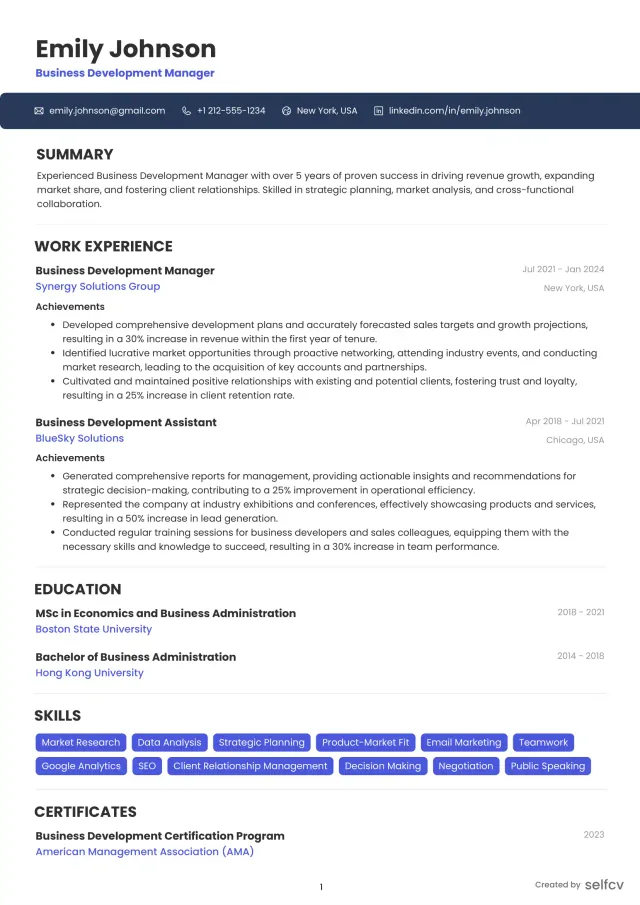
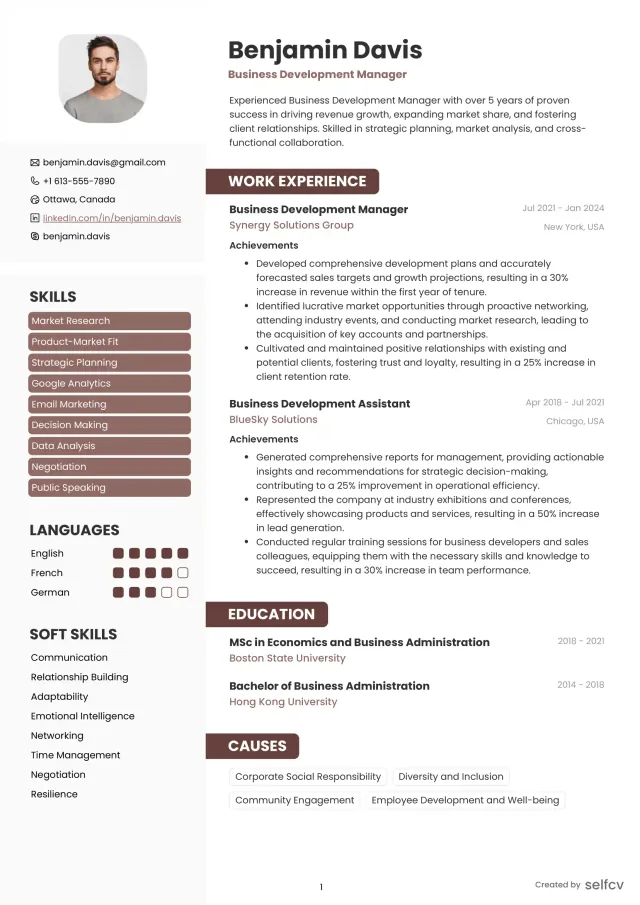
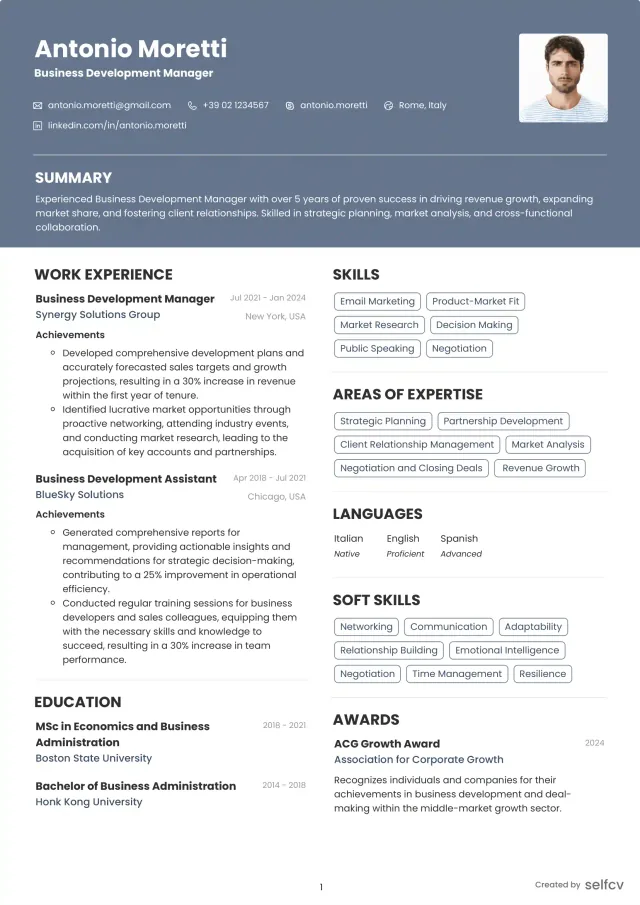
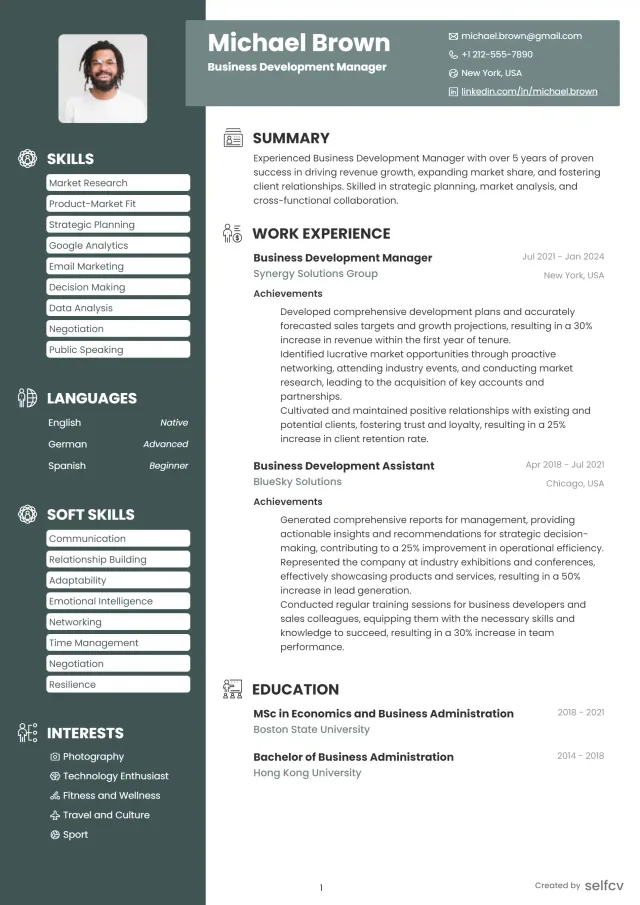
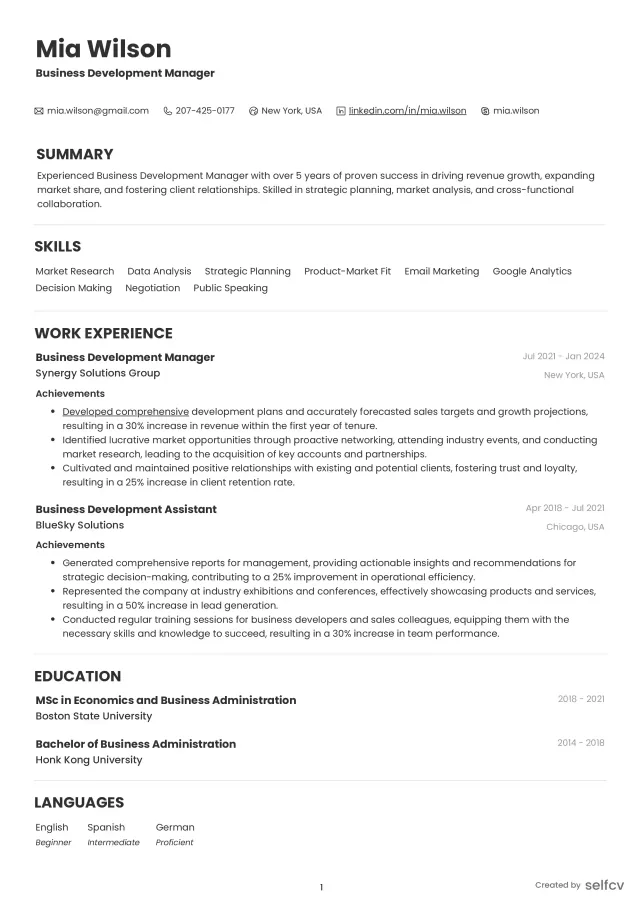
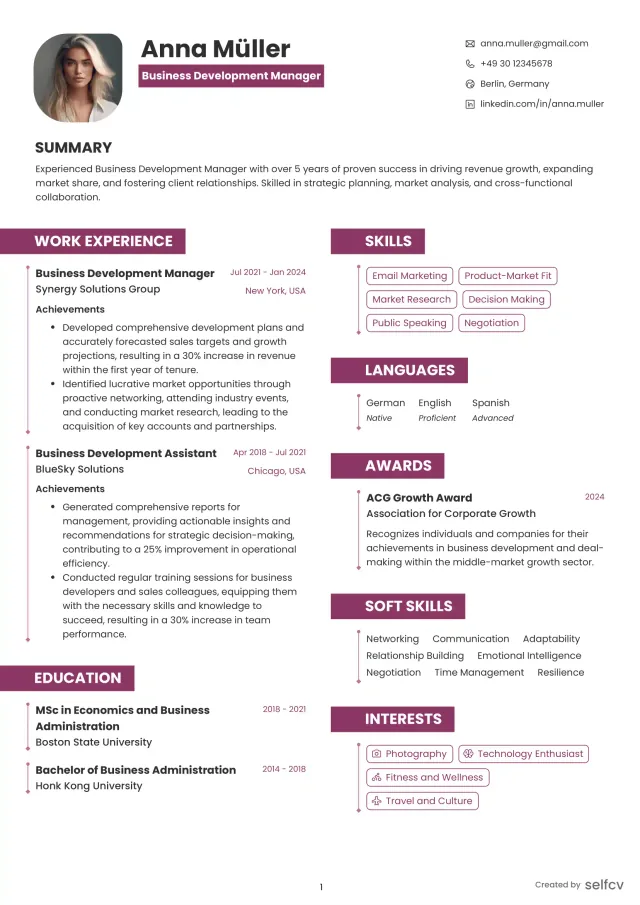
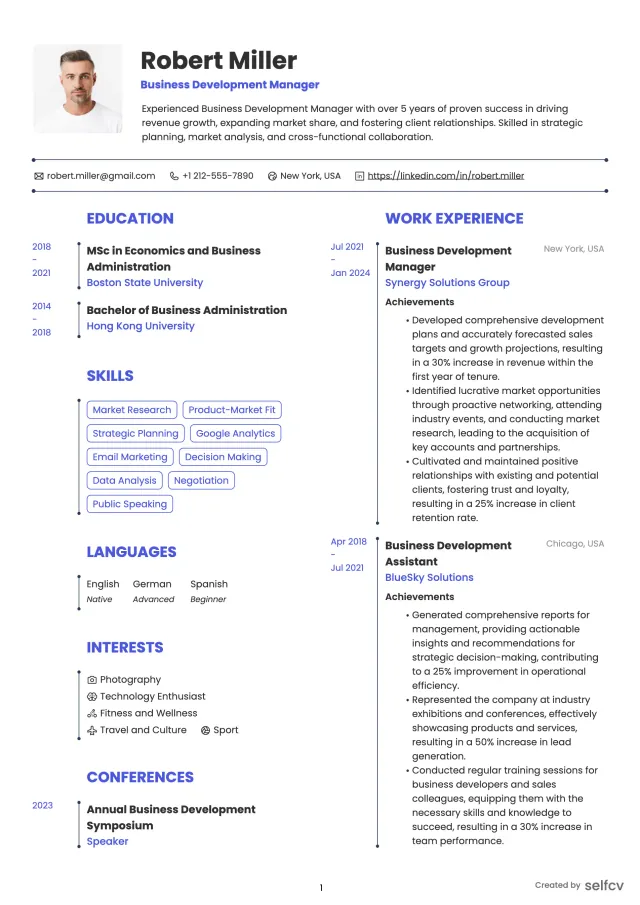
Find the template that’s right for you
No need to build anything from scratch. Using our templates or upload feature, you’ll get started easily and have a powerful resume in a few clicks.
Industry-Focused Resume Variants
SaaS:
- Emphasize multi-tenant architecture, API reliability, analytics, SLAs, and cloud deployment.
E-commerce:
- Highlight conversion metrics, personalization, payment integrations, and performance for mobile shoppers.
Agency:
- Focus on client deliverables, quick turnarounds, cross-discipline collaboration, and diverse tech stacks.
Fintech:
- Note compliance awareness, secure coding practices, encryption, and experience with KYC or payments.
Mobile web:
- Call out Core Web Vitals wins, responsive design patterns, and progressive web app work
How to tailor:
- Swap project examples to match domain problems
- Use industry-specific keywords in summary and skills
Role-Focused Variants: Frontend, Backend, Full-Stack, Jamstack, WordPress
Frontend web developer resume focus:
- Deliverables: component libraries, accessibility fixes, performance sprints
- Key tech: React, Angular, Vue, TypeScript, CSS-in-JS, testing tools
Backend web developer resume focus:
- Deliverables: APIs, background jobs, database schema design, observability
- Key tech: Node.js, Python, Go, PostgreSQL, Redis, message queues
Full-stack web developer resume focus:
- Deliverables: end-to-end features, integration work, deployment pipelines
- Key tech: React/Next.js, Node.js/Express, SQL, Docker, CI
Jamstack developer focus:
- Deliverables: static site builds, incremental builds, edge functions, CDN
- Key tech: Next.js, Gatsby, Netlify, Vercel, headless CMS
WordPress developer focus:
- Deliverables: custom themes, plugin work, WooCommerce integrations, performance hardening
- Key tech: PHP, WP REST API, WP-CLI, caching layers
When to emphasize each:
- Mirror the job posting: if it asks for SSR or serverless, show matching experience in projects and skills
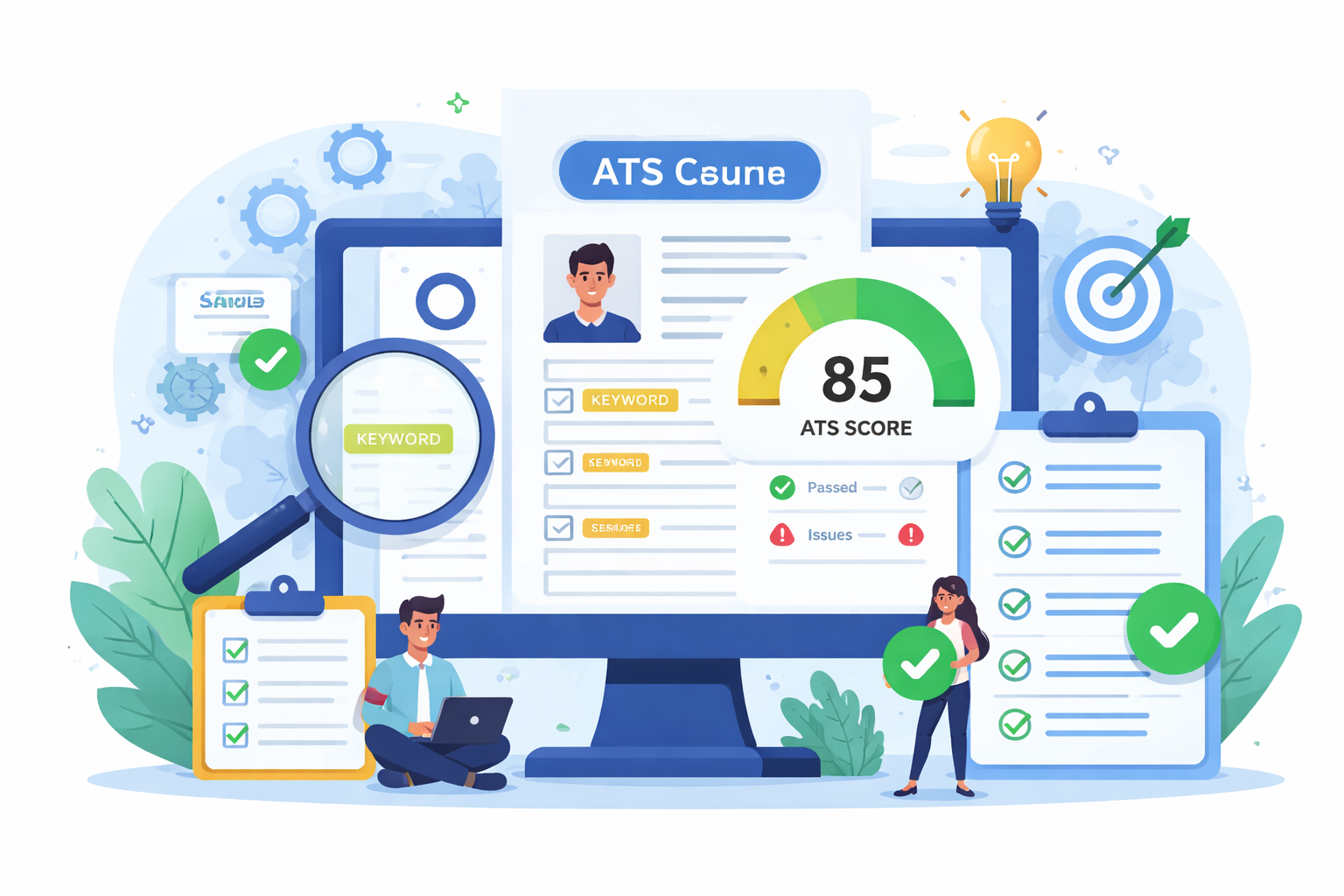
Check Your Resume with ATS
Make sure your resume passes Applicant Tracking Systems before recruiters see it.
- 📄 Upload your resume and get instant ATS feedback
- 🎯 Improve keyword matching for your target job
- ⚡ Boost your chances of getting shortlisted
Measuring Impact: Metrics That Matter for Web Developers
Common production metrics to include and how to present them:
- Performance: LCP, FCP, TTFB, bundle size, page load time reductions (before vs after)
- Business: conversion rate, average order value, retention, signup completion rate
- Reliability: error rate, uptime percentage, mean time to recovery (MTTR)
- Efficiency: API response time, database query counts, cost savings
- Accessibility: WCAG level achieved, number of pages remediated
Example metric phrasing:
- Improved LCP from 3.2s to 1.0s across product pages, increasing mobile conversion by 11%.
- Reduced database reads by 46%, cutting monthly DB costs by 22%.
Quality standards and compliance:
- State applicable standards: WCAG AA, GDPR awareness, PCI scope reduction when relevant
- Mention security practices like input validation, parameterized queries, and secret rotation
Hiring Evaluation Criteria and Red Flags
What hiring teams typically evaluate:
- Production ownership and measurable outcomes
- Clear stack expertise and recent hands-on work
- Ability to explain trade-offs and architecture decisions
- Testing, observability, and deployment discipline
Red flags on resumes:
- Vague one-line tech lists with no context or projects
- Claims of scale without verification or metrics
- Long gaps with no mention of learning or building
- Excessively outdated tech as primary stack (example: heavy focus on jQuery without modern tooling)
How to avoid red flags:
- Add one clear project that demonstrates modern stack use
- Include short verification notes for major claims
- Keep most recent 10-15 years focused on relevant production work
ATS and Formatting Checklist
Quick format checklist to pass automated screens:
- Use a single-column layout and standard section headings
- Save a PDF and a plain DOCX for different ATS requirements
- Avoid images, icons, and unusual fonts
- Keep keywords in natural context across summary, experience, and projects
- Use ISO-like date formats such as 2020-2022 for clarity
Resume length guidance:
- Entry and mid level: 1 page is often sufficient
- Senior and lead roles: 2 pages allowed when recent roles include high-impact outcomes
- Put most relevant experience on the first page
Achievement Examples - Weak-to-Strong
Example 1:
Weak:
- Improved site speed.
Strong:
- Reduced TTFB by 60% and lowered bundle size by 45% through code-splitting and server-side rendering, raising Lighthouse performance score from 58 to 93.
Why it works:
- Gives concrete metrics, technical actions, and measurable result tied to a standard metric.
Example 2:
Weak:
- Worked on checkout system.
Strong:
- Rebuilt checkout web flow using Next.js and Redis-backed sessions, cutting average checkout time by 22% and decreasing cart abandonment by 7% in A/B test across 120k sessions.
Why it works:
- Specifies stack, scope, measurable business result, and test scale.
Example 3:
Weak:
- Fixed bugs and improved code quality.
Strong:
- Introduced unit and E2E tests with Jest and Cypress, raising test coverage from 34% to 78% and reducing production regressions by 53% over six months.
Why it works:
- Shows clear deliverable, tools, numeric improvement, and timeframe
Interview Prompts Tied to Resume Claims
Map resume bullets to likely interview questions and prep prompts:
- Bullet: "Reduced LCP from 3.1s to 1.0s"
- Interview prompt: Explain the optimizations you implemented, why you chose them, and how you measured impact.
- Bullet: "Designed Node.js API lowering response time from 320ms to 95ms"
- Interview prompt: Walk through API profiling steps, caching strategy, and database changes.
- Bullet: "Led component library rollout"
- Interview prompt: Describe versioning, documentation, onboarding for designers, and how breaking changes were handled.
Prep tips:
- Keep a short tech note for each major claim: design decisions, trade-offs, and monitoring results
- Be ready to show code snippets or simplified architectural diagrams during interviews
Related Careers and Transition Paths
Related professions to consider:
- UX Designer - transition benefit: strong UI and user research knowledge
- QA Engineer - transition benefit: strong testing and automation skills
- Data Engineer - transition benefit: experience with backend systems and ETL
Transition guidance:
- From UX to Web Dev: build a component-focused portfolio showing how designs become production components
- From QA to Web Dev: highlight test automation experience and slowly add feature work to resume
- From Data Engineering to Web Dev: emphasize API design and data modeling for product features
When to highlight domain overlap:
- If moving from a related role, keep a short section showing transferable achievements and one technical project that demonstrates new skills
Conclusion, Practical Checklist, and Next Actions
Web developer specific closing notes:
- Hiring teams look for verifiable production work, clear tech context, and measurable outcomes. Resumes that combine ATS-aware formatting with portfolio-proof projects perform best.
One-week makeover plan:
- Day 1: Clean header, add accurate title line and stack keywords
- Day 2: Rewrite summary for target role and industry
- Day 3: Update 2-3 recent bullets with metrics and tech callouts
- Day 4: Pick 2 projects and write annotated entries with repo notes
- Day 5: Run Lighthouse and note performance metrics for one project
- Day 6: Format for ATS, save PDF and DOCX
- Day 7: Prepare 5 interview prompts tied to your top bullets
Final resume checklist:
- Clear role title and top 6 skills on first screen
- 3-5 measurable bullets for each recent role
- 2 annotated portfolio projects with repo notes
- ATS keywords used naturally across sections
- File types: clean PDF and DOCX ready
Next action:
- Save three sample bullets from this article and replace your weakest bullets in your resume
- Prepare one short demo environment and repo README to verify claims during interviews
Suggested resources to consult next:
- Portfolio builder tools and Git/GitHub guides
- Technical skills deep dives for React, Node.js, TypeScript, CSS, and performance
- Interview question sets for frontend, backend, and full-stack roles
Why job seekers choose selfcv
Thousands of professionals use selfcv to build modern, ATS-friendly resumes, customize templates, and apply for jobs with confidence.
Thanks to SelfCV, I now have a professional and polished resume that I'm confident in sending to potential employers. I will definitely be recommending your service to other job seekers. Keep up the great work!
SelfCV offers an intuitive interface that makes creating a professional CV straightforward. Whether you're a student, a fresh graduate, or an experienced professional, the step-by-step process ensures that users of all levels can craft an impressive CV.
Easy to use resume builder. They have very intuitive ui for customizing and keeping multiple versions of resume.
The right tool for creating CVs. As a student I was looking for a tool that could help me quickly create a CV for internship applications. This was just the right tool. I am very satisfied!
This is one of the best tools I’ve ever used - I was able to build my CV in seconds with high quality template. Highly recommended!
Amazing app with easy user experience. Loved it. Its intuitive and easy to navigate, designs are very nice.
