
Phlebotomist Resume Example
What does a Phlebotomist do?
A Phlebotomist is responsible for drawing blood from patients for medical testing, transfusions, or donations. They typically work in hospitals, clinics, or laboratories using needles, syringes, and collection tubes. They collaborate closely with nurses, lab technicians, and other healthcare staff to ensure accurate and safe sample collection.
What are some responsibilities of a Phlebotomist?
Phlebotomists prepare patients for blood draws, identify correct veins, and ensure safe and hygienic extraction procedures. They handle labeling, documentation, and transportation of samples to the lab. They must observe strict protocols to maintain sample integrity and patient comfort, resolving issues such as difficult veins or patient anxiety. Their role supports accurate diagnostics and overall patient care quality.
Phlebotomist Skills for a Resume
Relevant skills include patient communication, attention to detail, infection control, and manual dexterity. Technical abilities in venipuncture and capillary puncture are essential, along with knowledge of lab safety and sample handling.
- Empathy and patient care
- Attention to detail
- Communication skills
- Team collaboration
- Stress management
- Time management
- Venipuncture techniques
- Capillary puncture
- Sample labeling and handling
- Use of collection devices and lab software
- Knowledge of infection control protocols
- Compliance with safety regulations
- Specimen processing and documentation
- Problem-solving during blood collection
- Maintaining sterile work environment
- Data entry and record keeping
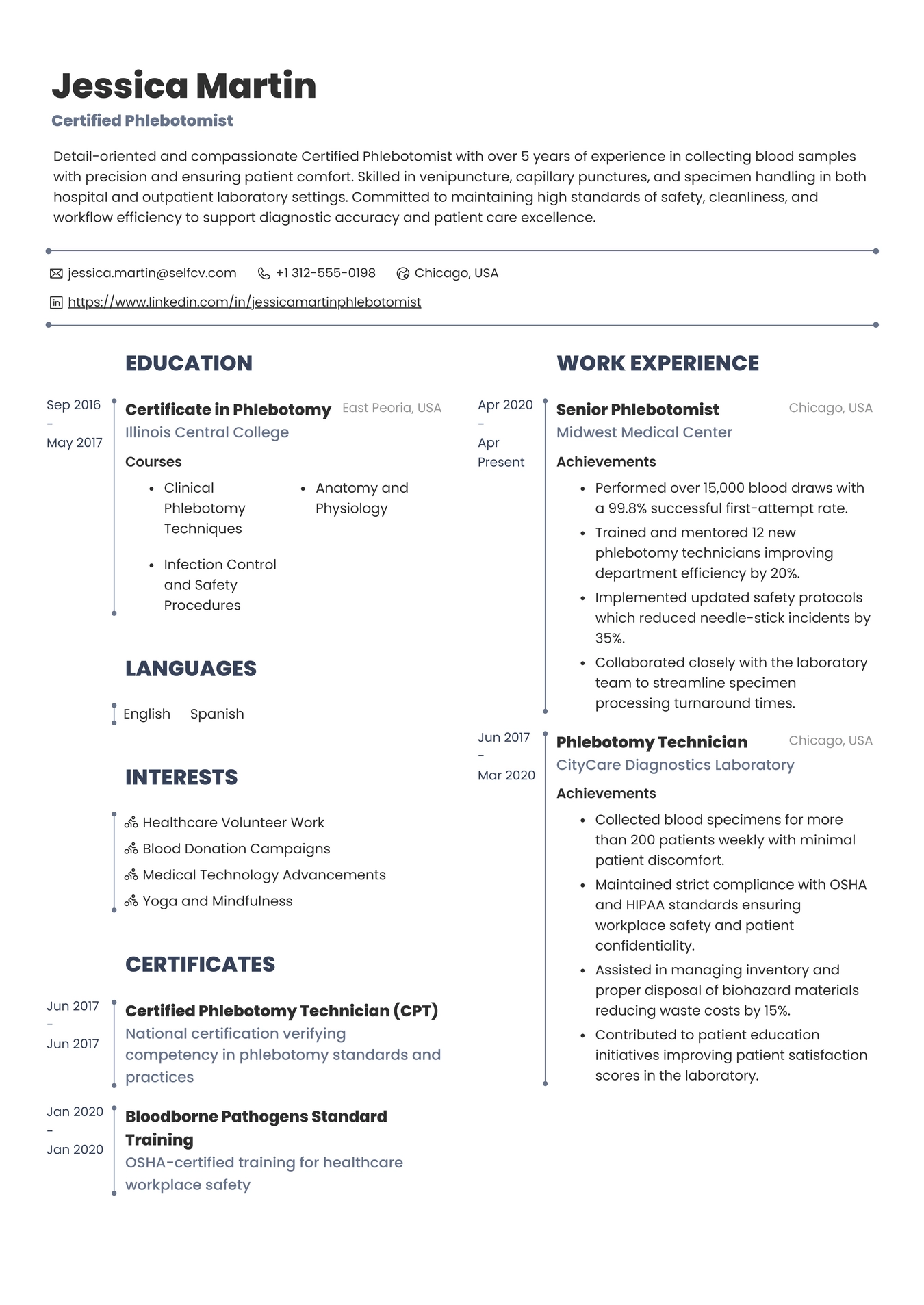
Example Resume for Phlebotomist
Common Mistakes to Avoid When Writing a Phlebotomist Resume
Candidates often list outdated or overly generic skills, neglect measurable achievements, or fail to tailor their resumes to specific job postings. Missing relevant certifications like phlebotomy licenses or CPR training also weakens the resume.
Key Takeaways for a Phlebotomist Resume
A strong Phlebotomist resume clearly highlights hands-on experience and relevant certifications. It uses measurable results to showcase reliability and patient care quality while aligning skills and qualifications with job requirements.
- Highlight hands-on experience relevant to the Phlebotomist role.
- Use measurable results to demonstrate achievements and impact.
- Add relevant certifications or completed courses related to Phlebotomist.
- Tailor each resume to the specific job posting.
- Balance technical expertise with communication and teamwork skills.
More than a resume builder
Get startedFind the template that’s right for you
No need to build anything from scratch. Using our templates or upload feature, you’ll get started easily and have a powerful resume in a few clicks.


Check Your Resume with ATS
Make sure your resume passes Applicant Tracking Systems before recruiters see it.
- 📄 Upload your resume and get instant ATS feedback
- 🎯 Improve keyword matching for your target job
- ⚡ Boost your chances of getting shortlisted

