
Medical Interpreter Resume Example
What does a Medical Interpreter do?
A Medical Interpreter facilitates communication between healthcare providers and patients who speak different languages. They interpret medical information accurately in real-time during consultations, procedures, and emergency situations. Typically working in hospitals, clinics, or other healthcare settings, they use specialized terminology and collaborate closely with medical staff and patients to ensure clear understanding.
What are some responsibilities of a Medical Interpreter?
A Medical Interpreter accurately translates spoken and written medical information between patients and healthcare professionals. They ensure confidentiality and cultural sensitivity while facilitating clear communication. The role requires quick decision-making to clarify misunderstandings and problem-solving to address linguistic or cultural barriers. By providing accurate interpretation, they support better patient outcomes and effective care coordination.
Medical Interpreter Skills for a Resume
Relevant skills include fluency in multiple languages, medical terminology knowledge, and cultural competency. Strong communication and active listening are essential for effective interpretation. Additional skills involve confidentiality adherence, empathy, and the ability to remain impartial under pressure.
- Active Listening
- Cultural Sensitivity
- Empathy
- Attention to Detail
- Stress Management
- Clear Communication
- Fluency in Source and Target Languages
- Medical Terminology Proficiency
- Simultaneous and Consecutive Interpretation
- Use of Interpretation Technology and Equipment
- Knowledge of Healthcare Privacy Regulations (e.g., HIPAA)
- Documentation and Reporting Skills
- Problem-solving and Conflict Resolution
- Familiarity with Medical Software Platforms
- Time Management
- Understanding of Clinical Procedures and Workflows
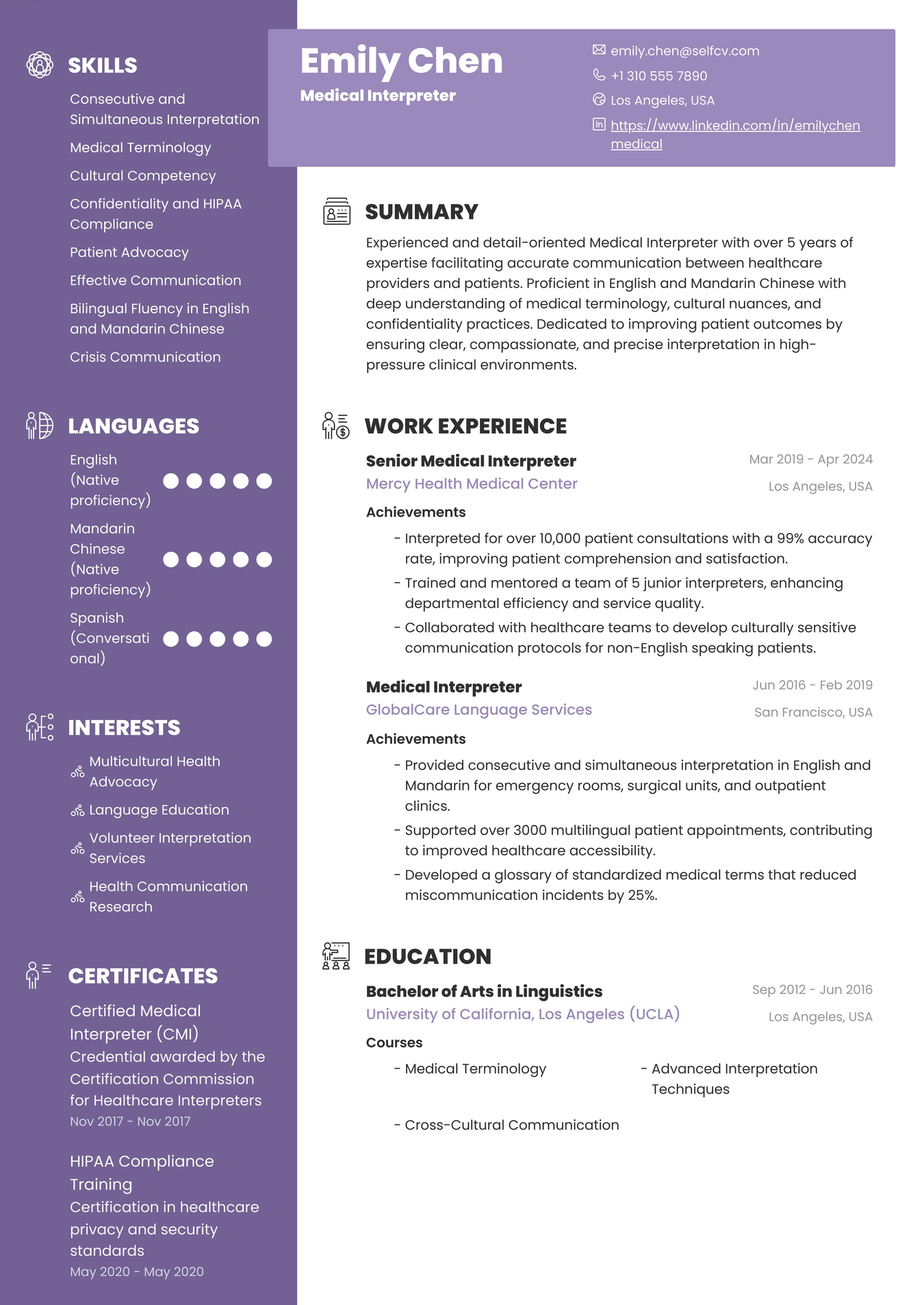
Example Resume for Medical Interpreter
Common Mistakes to Avoid When Writing a Medical Interpreter Resume
Candidates often list outdated language skills or irrelevant experience without showing current proficiency. Using vague descriptions rather than specific accomplishments or failing to highlight certifications like CCHI or NBCMI can weaken the resume. Additionally, resumes that neglect tailoring to the healthcare setting or omit evidence of cultural competency are less effective.
Key Takeaways for a Medical Interpreter Resume
A strong Medical Interpreter resume clearly demonstrates language proficiency, relevant certifications, and experience in healthcare settings. Using measurable results and specific examples to highlight communication skills and cultural understanding enhances the resume’s impact.
- Highlight hands-on experience relevant to the Medical Interpreter role.
- Use measurable results to demonstrate achievements and impact.
- Add relevant certifications or completed courses related to Medical Interpreter.
- Tailor each resume to the specific job posting.
- Balance technical expertise with communication and teamwork skills.
More than a resume builder
Get startedFind the template that’s right for you
No need to build anything from scratch. Using our templates or upload feature, you’ll get started easily and have a powerful resume in a few clicks.


Check Your Resume with ATS
Make sure your resume passes Applicant Tracking Systems before recruiters see it.
- 📄 Upload your resume and get instant ATS feedback
- 🎯 Improve keyword matching for your target job
- ⚡ Boost your chances of getting shortlisted

