
Sign Language Interpreter Resume Example
What does a Sign Language Interpreter do?
A Sign Language Interpreter facilitates communication between deaf or hard-of-hearing individuals and hearing people by translating spoken language into sign language and vice versa. They typically work in environments such as schools, hospitals, legal settings, and conferences using video equipment or in-person interpretation. Collaborating closely with clients, educators, medical professionals, and legal teams, they ensure accurate and clear communication.
What are some responsibilities of a Sign Language Interpreter?
A Sign Language Interpreter translates spoken language into sign language during conversations, presentations, or events. They must accurately convey tone and context while ensuring confidentiality and professionalism. Decision-making is crucial when selecting appropriate signs or clarifying communication nuances. Their role supports equal access to information and promotes inclusivity within diverse teams and organizations.
Sign Language Interpreter Skills for a Resume
Relevant skills include strong communication and active listening, cultural competence, attention to detail, and proficiency in various sign language dialects. Technical skills involve using video remote interpreting platforms and understanding industry regulations. Problem-solving and collaboration skills are essential for working effectively with diverse stakeholders.
- Active Listening
- Cultural Sensitivity
- Attention to Detail
- Clear Communication
- Empathy
- Adaptability
- American Sign Language (ASL) Proficiency
- Simultaneous Interpretation Techniques
- Video Remote Interpreting (VRI) Tools
- Technical proficiency in interpretation equipment
- Knowledge of legal and medical interpreting standards
- Problem-solving and troubleshooting techniques
- Documentation and workflow optimization
- Use of collaboration and communication platforms
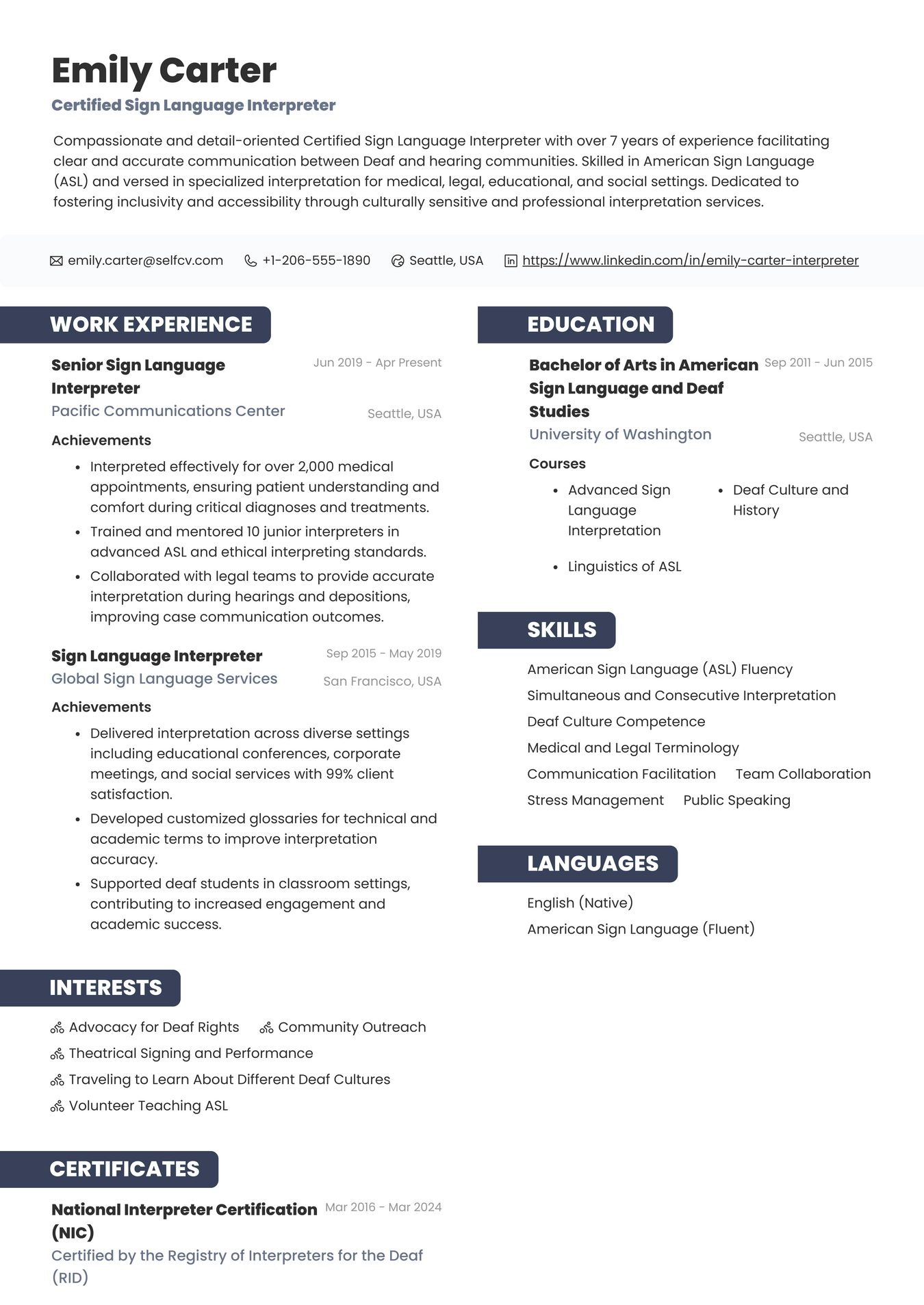
Example Resume for Sign Language Interpreter
Common Mistakes to Avoid When Writing a Sign Language Interpreter Resume
Candidates often list outdated or irrelevant skills and use generic descriptions that lack specifics about interpretation contexts. Many fail to showcase measurable achievements or omit certifications such as RID or NAD. Poor tailoring to the job posting and neglecting to emphasize the ability to handle specialized interpretation scenarios are also common errors.
Key Takeaways for a Sign Language Interpreter Resume
A strong Sign Language Interpreter resume clearly demonstrates relevant hands-on experience and highlights measurable outcomes. Including certifications and customizing the resume to match the job requirements enhances its effectiveness. Balancing technical expertise with communication and cultural sensitivity skills is essential.
- Highlight hands-on experience relevant to the Sign Language Interpreter role.
- Use measurable results to demonstrate achievements and impact.
- Add relevant certifications or completed courses related to Sign Language Interpreter.
- Tailor each resume to the specific job posting.
- Balance technical expertise with communication and teamwork skills.
More than a resume builder
Get startedFind the template that’s right for you
No need to build anything from scratch. Using our templates or upload feature, you’ll get started easily and have a powerful resume in a few clicks.


Check Your Resume with ATS
Make sure your resume passes Applicant Tracking Systems before recruiters see it.
- 📄 Upload your resume and get instant ATS feedback
- 🎯 Improve keyword matching for your target job
- ⚡ Boost your chances of getting shortlisted

