
Entry-Level System Administrator Resume Example
What does an Entry-Level System Administrator do?
An Entry-Level System Administrator manages and maintains an organization’s IT infrastructure, including servers, networks, and workstations. They perform routine system checks, troubleshoot hardware and software issues, and support user requests. Typically, they work in IT departments and collaborate with other IT professionals and end-users.
What are some responsibilities of an Entry-Level System Administrator?
An Entry-Level System Administrator handles system monitoring and maintenance, deployment of updates and patches, and user account administration. They diagnose and resolve technical problems under supervision and assist with system documentation. Their work ensures system stability and supports the overall IT operations, contributing to the organization's productivity.
Entry-Level System Administrator Skills for a Resume
Relevant soft and hard skills for an Entry-Level System Administrator include strong communication, problem-solving, teamwork, and time management abilities, alongside technical expertise in system administration, network basics, and troubleshooting.
- Effective Communication
- Problem-Solving
- Team Collaboration
- Time Management
- Adaptability
- Attention to Detail
- Windows and Linux Server Administration
- Network Configuration and Troubleshooting
- Active Directory and User Account Management
- Technical proficiency in core tools or software used by an Entry-Level System Administrator
- Basic Scripting and Automation (e.g., PowerShell, Bash)
- System Monitoring and Performance Tuning
- Backup and Recovery Procedures
- Problem-solving and troubleshooting techniques
- Documentation and workflow optimization
- Use of collaboration and communication platforms
- Basic coding or scripting (if relevant)
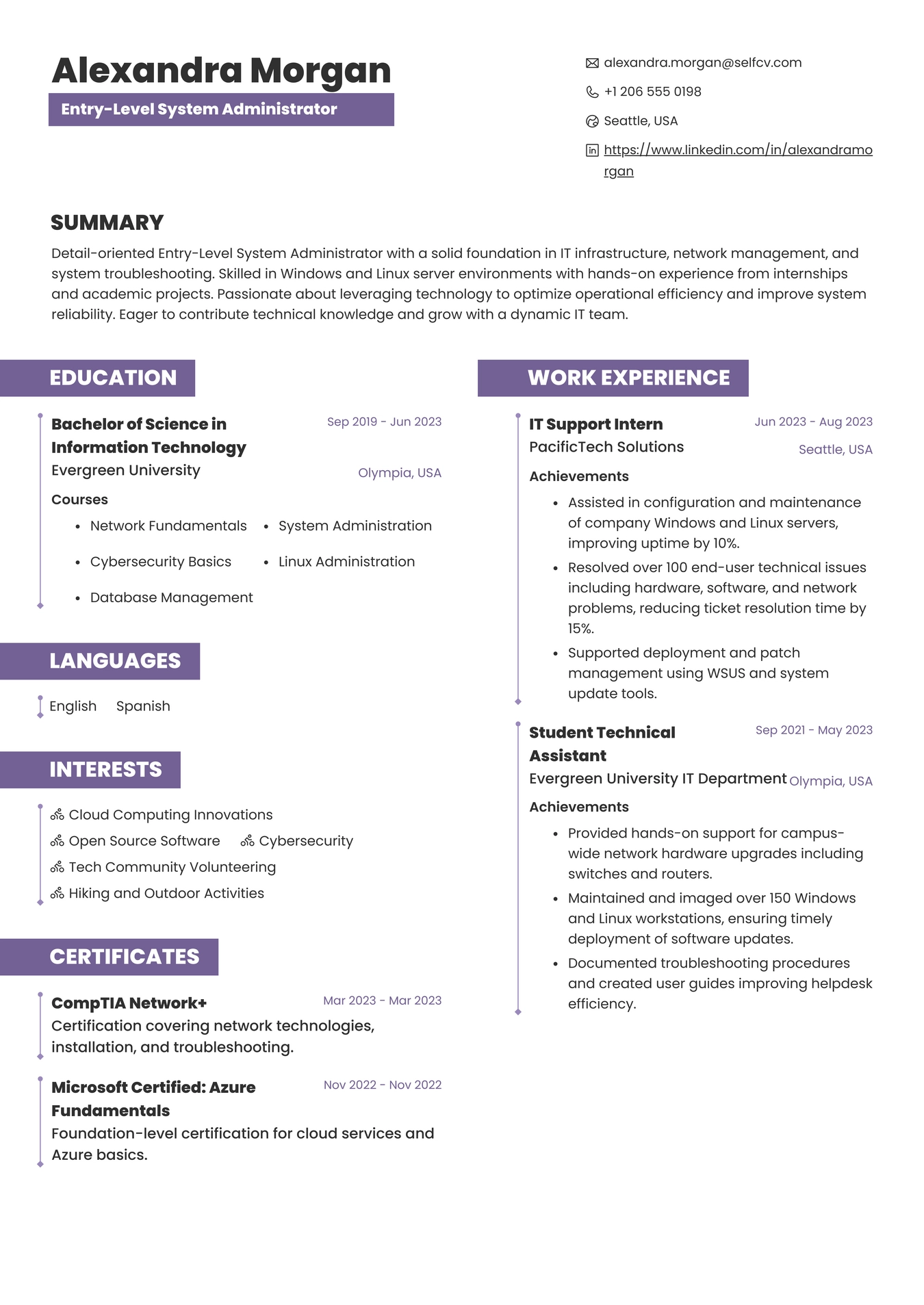
Example Resume for Entry-Level System Administrator
Common Mistakes to Avoid When Writing an Entry-Level System Administrator Resume
Common mistakes include listing outdated or irrelevant skills, using vague or generic job descriptions, neglecting to quantify achievements, failing to customize the resume for specific job requirements, and omitting relevant certifications or training.
Key Takeaways for an Entry-Level System Administrator Resume
A strong Entry-Level System Administrator resume clearly highlights practical experience and relevant certifications, emphasizes measurable achievements, and is tailored to the job description. Balancing technical skills with communication and teamwork competencies makes the candidate more attractive to employers.
- Highlight hands-on experience relevant to the Entry-Level System Administrator role.
- Use measurable results to demonstrate achievements and impact.
- Add relevant certifications or completed courses related to Entry-Level System Administrator.
- Tailor each resume to the specific job posting.
- Balance technical expertise with communication and teamwork skills.
More than a resume builder
Get startedFind the template that’s right for you
No need to build anything from scratch. Using our templates or upload feature, you’ll get started easily and have a powerful resume in a few clicks.


Check Your Resume with ATS
Make sure your resume passes Applicant Tracking Systems before recruiters see it.
- 📄 Upload your resume and get instant ATS feedback
- 🎯 Improve keyword matching for your target job
- ⚡ Boost your chances of getting shortlisted

