
Kubernetes Resume Example
What does a Kubernetes do?
A Kubernetes manages container orchestration platforms to deploy, scale, and maintain applications efficiently. They oversee cluster configuration, monitor system health, and automate deployment workflows. Typically, they work closely with development, operations, and security teams using tools like kubectl, Helm, and Prometheus.
What are some responsibilities of a Kubernetes?
A Kubernetes is responsible for maintaining cluster stability and performance by managing nodes and workloads. They automate deployment pipelines and ensure availability via monitoring and alerting systems. Troubleshooting issues and coordinating with cross-functional teams to optimize infrastructure are critical. Their role supports continuous integration and continuous delivery (CI/CD) practices to drive business success.
Kubernetes Skills for a Resume
A combination of soft and hard skills essential for effective Kubernetes management including collaboration, problem-solving, scripting, and technical proficiency in container orchestration.
- Effective communication
- Problem-solving
- Attention to detail
- Collaboration and teamwork
- Adaptability
- Time management
- Kubernetes cluster administration
- Containerization technologies (Docker)
- Infrastructure as Code (Terraform, Helm)
- CI/CD pipeline implementation
- Monitoring and logging tools (Prometheus, Grafana)
- Scripting languages (Bash, Python)
- Cloud platforms (AWS, GCP, Azure)
- Networking and security best practices
- Troubleshooting and debugging
- Version control systems (Git)
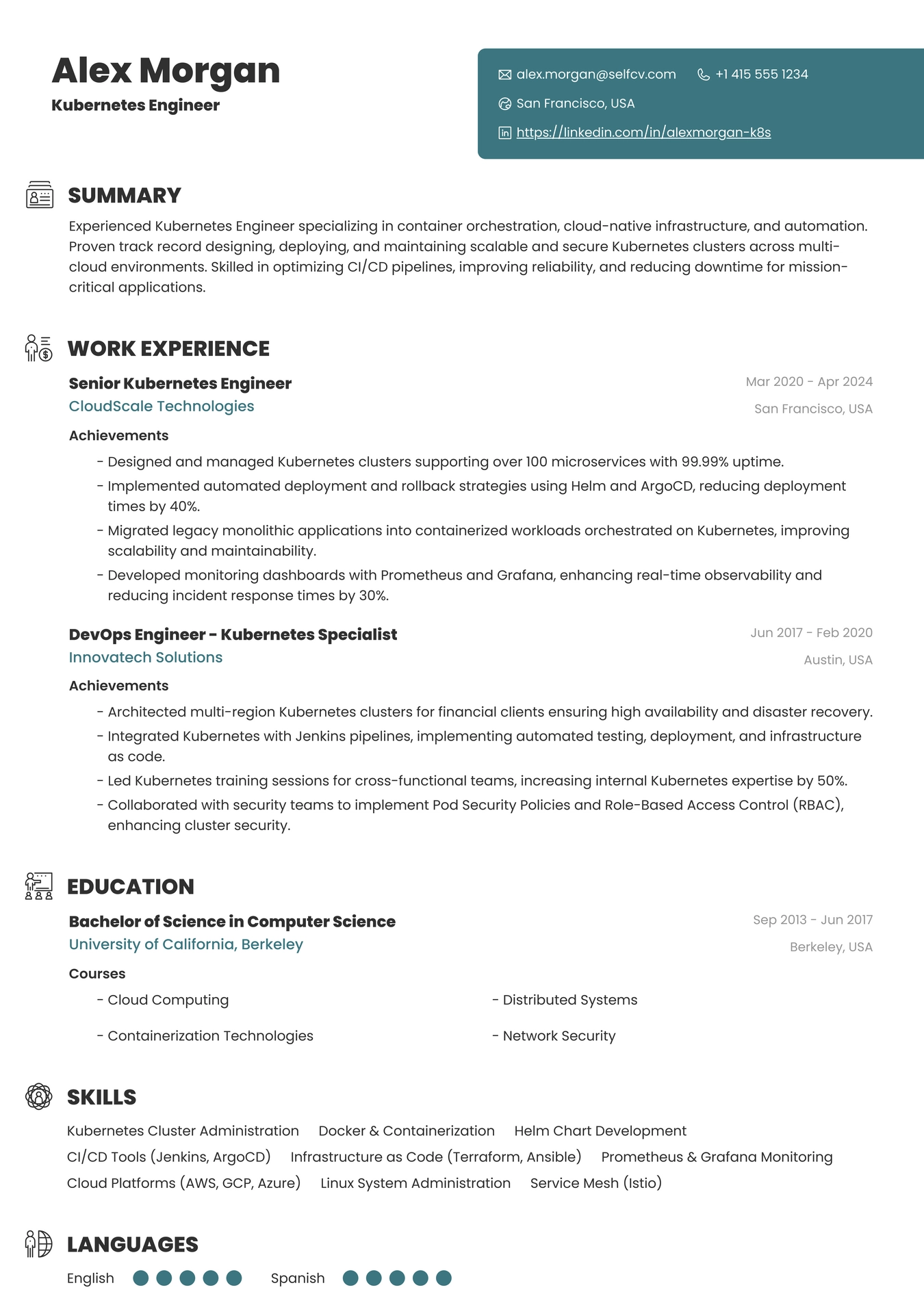
Example Resume for Kubernetes
Common Mistakes to Avoid When Writing a Kubernetes Resume
Candidates often list outdated tools or generic skills without demonstrating specific achievements. Many fail to highlight measurable impacts like improved deployment efficiency. Poor tailoring to job descriptions and omission of relevant certifications also weaken resumes.
Key Takeaways for a Kubernetes Resume
A strong Kubernetes resume clearly demonstrates hands-on experience alongside quantifiable results. It should include certifications and be tailored to match the job requirements, balancing technical and interpersonal skills.
- Highlight hands-on experience relevant to the Kubernetes role.
- Use measurable results to demonstrate achievements and impact.
- Add relevant certifications or completed courses related to Kubernetes.
- Tailor each resume to the specific job posting.
- Balance technical expertise with communication and teamwork skills.
More than a resume builder
Get startedFind the template that’s right for you
No need to build anything from scratch. Using our templates or upload feature, you’ll get started easily and have a powerful resume in a few clicks.


Check Your Resume with ATS
Make sure your resume passes Applicant Tracking Systems before recruiters see it.
- 📄 Upload your resume and get instant ATS feedback
- 🎯 Improve keyword matching for your target job
- ⚡ Boost your chances of getting shortlisted

