
Network Security Engineer Resume Example
What does a Network Security Engineer do?
A Network Security Engineer designs and implements security measures to protect an organization's computer networks. Their daily workflow involves monitoring systems for vulnerabilities, responding to security incidents, and collaborating with IT teams to ensure network integrity. They typically use tools like firewalls, intrusion detection systems, and encryption technologies in environments ranging from corporate offices to data centers.
What are some responsibilities of a Network Security Engineer?
A Network Security Engineer is responsible for developing and maintaining network security protocols, analyzing security risks, and responding promptly to security breaches. They make critical decisions to safeguard data and system access, conduct regular security audits, and work closely with network administrators and other stakeholders. Their role is essential in minimizing downtime and protecting company assets from cyber threats.
Network Security Engineer Skills for a Resume
Key skills include strong problem-solving abilities, adeptness in network security technologies, effective communication, attention to detail, and teamwork. Technical skills cover firewall configuration, intrusion detection, threat analysis, encryption methods, and familiarity with industry standards such as ISO 27001 and NIST.
- Analytical thinking
- Effective communication
- Attention to detail
- Team collaboration
- Problem-solving
- Time management
- Firewall and VPN configuration
- Intrusion Detection and Prevention Systems (IDPS)
- Vulnerability assessment and penetration testing
- Technical proficiency in tools like Wireshark and Splunk
- Data analysis and security reporting
- Project management and task prioritization
- Knowledge of compliance standards (e.g., ISO 27001, NIST)
- Incident response and troubleshooting techniques
- Documentation and workflow optimization
- Use of collaboration platforms (e.g., Jira, Confluence)
- Basic scripting (Python, Bash)
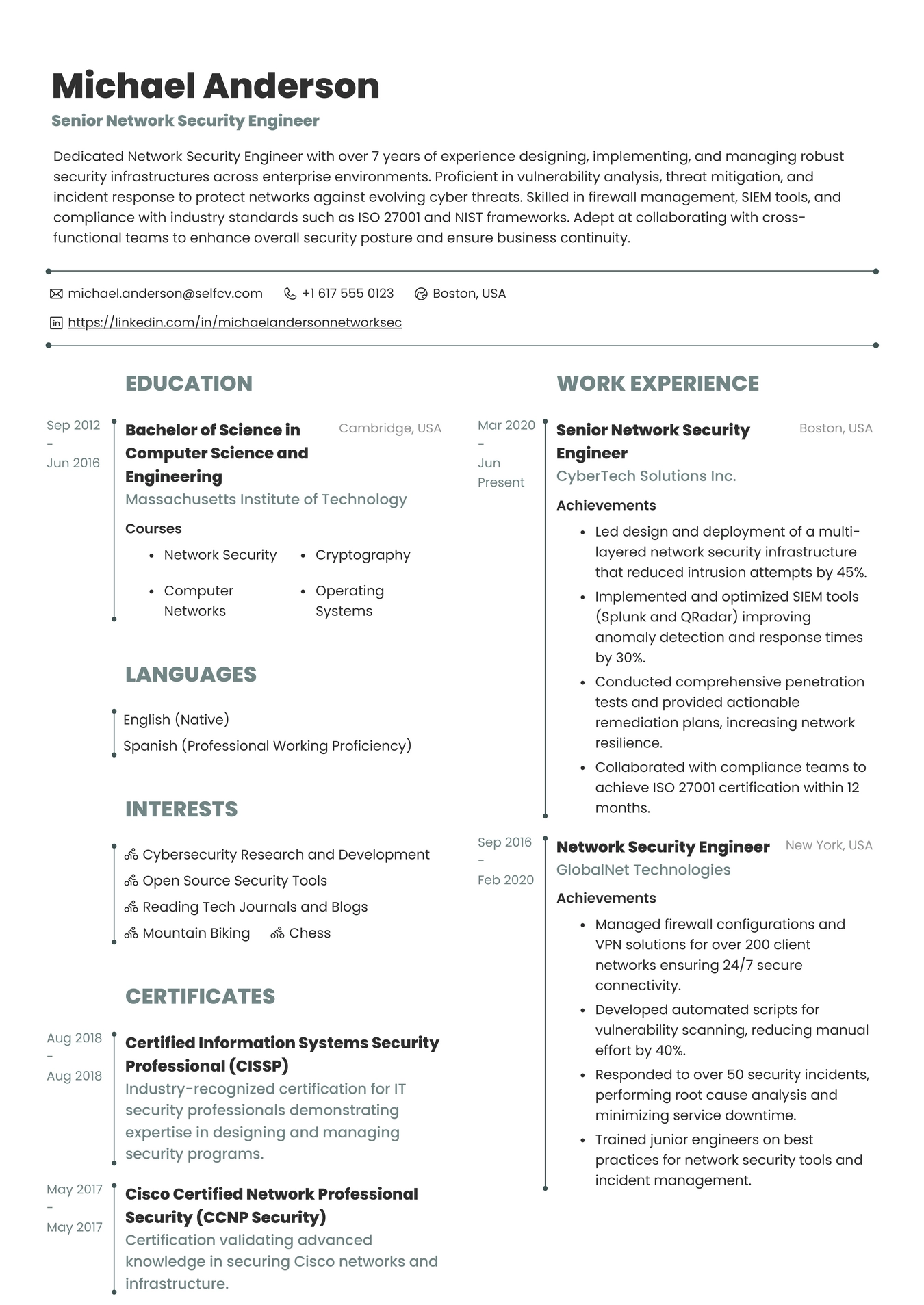
Example Resume for Network Security Engineer
Common Mistakes to Avoid When Writing a Network Security Engineer Resume
Candidates often list outdated technologies or vague skills, fail to include quantifiable achievements, and neglect tailoring their resumes to specific job requirements. Missing relevant certifications or using generic language without highlighting problem-solving capabilities and teamwork can weaken the resume's impact.
Key Takeaways for a Network Security Engineer Resume
A strong Network Security Engineer resume clearly demonstrates relevant hands-on experience and measurable results. Including certifications and customizing the resume for each job posting enhances credibility, while balancing technical skills with effective communication showcases well-rounded expertise.
- Highlight hands-on experience relevant to the Network Security Engineer role.
- Use measurable results to demonstrate achievements and impact.
- Add relevant certifications or completed courses related to Network Security Engineer.
- Tailor each resume to the specific job posting.
- Balance technical expertise with communication and teamwork skills.
More than a resume builder
Get startedFind the template that’s right for you
No need to build anything from scratch. Using our templates or upload feature, you’ll get started easily and have a powerful resume in a few clicks.


Check Your Resume with ATS
Make sure your resume passes Applicant Tracking Systems before recruiters see it.
- 📄 Upload your resume and get instant ATS feedback
- 🎯 Improve keyword matching for your target job
- ⚡ Boost your chances of getting shortlisted

