
SAS Clinical Programmer Resume Example
What does a SAS Clinical Programmer do?
A SAS Clinical Programmer develops and validates SAS programs to analyze clinical trial data, ensuring compliance with regulatory standards. They work in close collaboration with biostatisticians, data managers, and clinical researchers within pharmaceutical or biotechnology companies. Their daily tasks often involve data manipulation, reporting, and quality checks using SAS software.
What are some responsibilities of a SAS Clinical Programmer?
A SAS Clinical Programmer is responsible for creating and testing SAS code to prepare datasets for analysis and reporting. They ensure data quality and consistency through detailed validations and adhere to regulatory guidelines. They solve data-related issues, contribute to protocol development, and support the statistical team by generating tables, listings, and figures. Their work directly impacts the accuracy and reliability of clinical study results.
SAS Clinical Programmer Skills for a Resume
Relevant skills for a SAS Clinical Programmer include expertise in SAS programming, attention to detail, and strong problem-solving abilities. Effective communication and teamwork are essential for collaborating across departments. Additional skills involve knowledge of clinical trial data standards, regulatory compliance, and the ability to manage multiple tasks efficiently.
- Attention to detail
- Effective communication
- Problem-solving
- Team collaboration
- Time management
- Adaptability
- SAS programming and macro development
- SDTM and ADaM data standards
- Clinical trial data analysis
- Technical proficiency in SAS Base and SAS Clinical
- Data analysis and reporting
- Project management and task prioritization
- Knowledge of FDA and ICH regulations
- Problem-solving and troubleshooting techniques
- Documentation and workflow optimization
- Use of collaboration and communication platforms
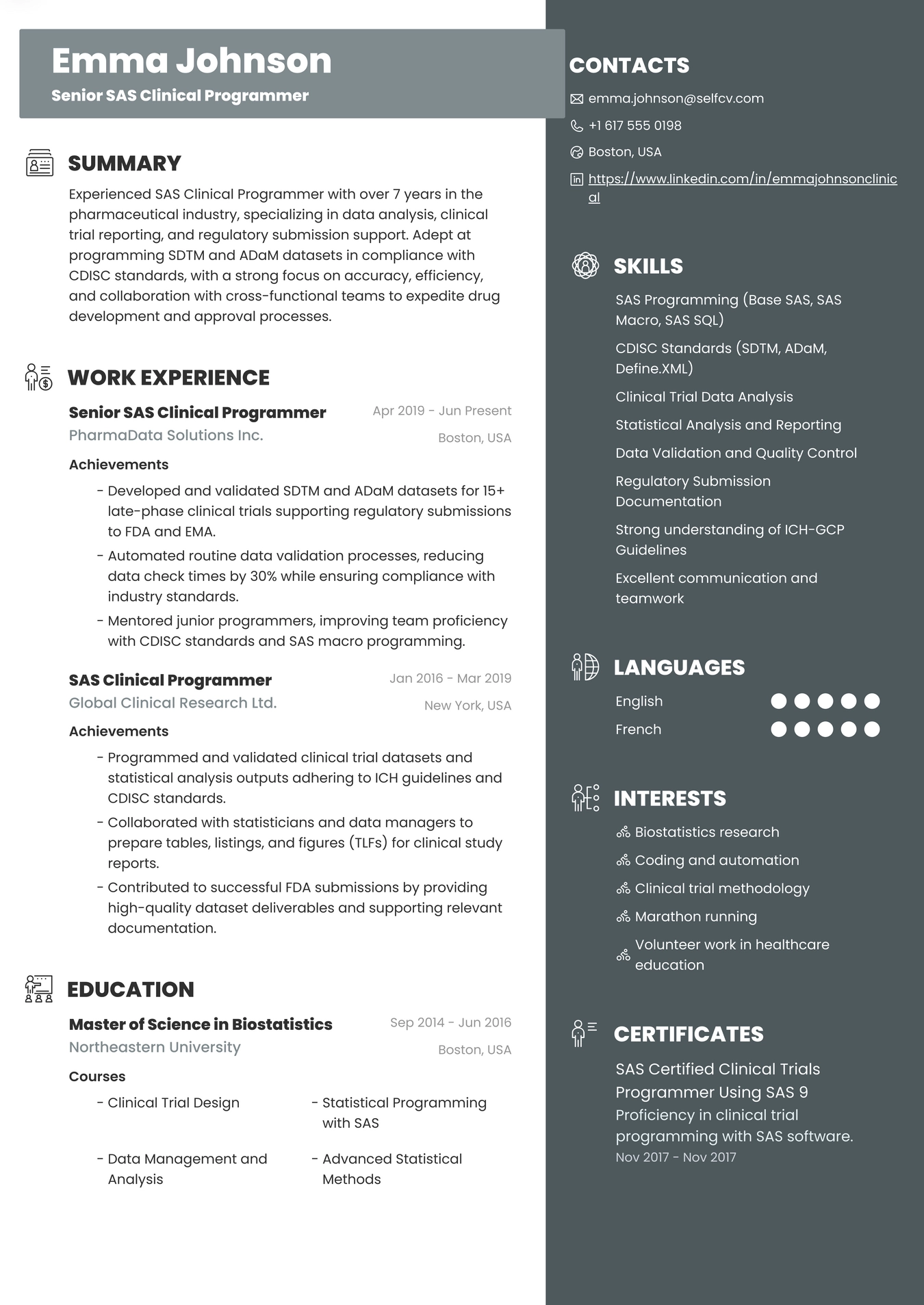
Example Resume for SAS Clinical Programmer
Common Mistakes to Avoid When Writing a SAS Clinical Programmer Resume
Common mistakes include listing outdated SAS versions or irrelevant programming languages, providing generic job descriptions without specifics, and omitting measurable accomplishments. Candidates often fail to tailor resumes to job postings or neglect to mention certifications such as SAS Base or Advanced Programmer. Missing keywords related to clinical data standards and regulatory knowledge can also reduce resume effectiveness.
Key Takeaways for a SAS Clinical Programmer Resume
A strong SAS Clinical Programmer resume clearly demonstrates relevant technical experience and includes measurable outcomes from previous projects. It should highlight certifications and adhere closely to job requirements to stand out. Balancing technical skills with communication and teamwork abilities ensures a well-rounded presentation.
- Highlight hands-on experience relevant to the SAS Clinical Programmer role.
- Use measurable results to demonstrate achievements and impact.
- Add relevant certifications or completed courses related to SAS Clinical Programmer.
- Tailor each resume to the specific job posting.
- Balance technical expertise with communication and teamwork skills.
More than a resume builder
Get startedFind the template that’s right for you
No need to build anything from scratch. Using our templates or upload feature, you’ll get started easily and have a powerful resume in a few clicks.


Check Your Resume with ATS
Make sure your resume passes Applicant Tracking Systems before recruiters see it.
- 📄 Upload your resume and get instant ATS feedback
- 🎯 Improve keyword matching for your target job
- ⚡ Boost your chances of getting shortlisted

