
Site Reliability Engineer Resume Example
What does a Site Reliability Engineer do?
A Site Reliability Engineer ensures the reliability, scalability, and performance of software systems by applying software engineering principles to operations. They monitor system health, automate processes, and manage infrastructure using tools like Kubernetes and Terraform. They collaborate closely with development, operations, and security teams to maintain seamless service delivery.
What are some responsibilities of a Site Reliability Engineer?
A Site Reliability Engineer designs and implements scalable infrastructure, monitors system performance, and responds to incidents to minimize downtime. They automate repetitive tasks and improve deployment processes for efficiency. The role requires identifying root causes of system failures and collaborating with teams to enhance overall reliability and security.
Site Reliability Engineer Skills for a Resume
Relevant soft and hard skills include problem-solving, communication, and teamwork combined with expertise in system administration and automation tools. Proficiency in cloud platforms, container orchestration, and scripting is essential for success.
- Problem-solving
- Effective communication
- Collaboration
- Adaptability
- Attention to detail
- Time management
- Infrastructure as Code (IaC) using Terraform or CloudFormation
- Container orchestration with Kubernetes
- Cloud platforms such as AWS, Azure, or GCP
- Monitoring and alerting tools like Prometheus and Grafana
- Linux system administration
- Incident response and root cause analysis
- Automation scripting in Python, Bash, or Go
- CI/CD pipeline implementation
- Configuration management with Ansible or Puppet
- Version control with Git
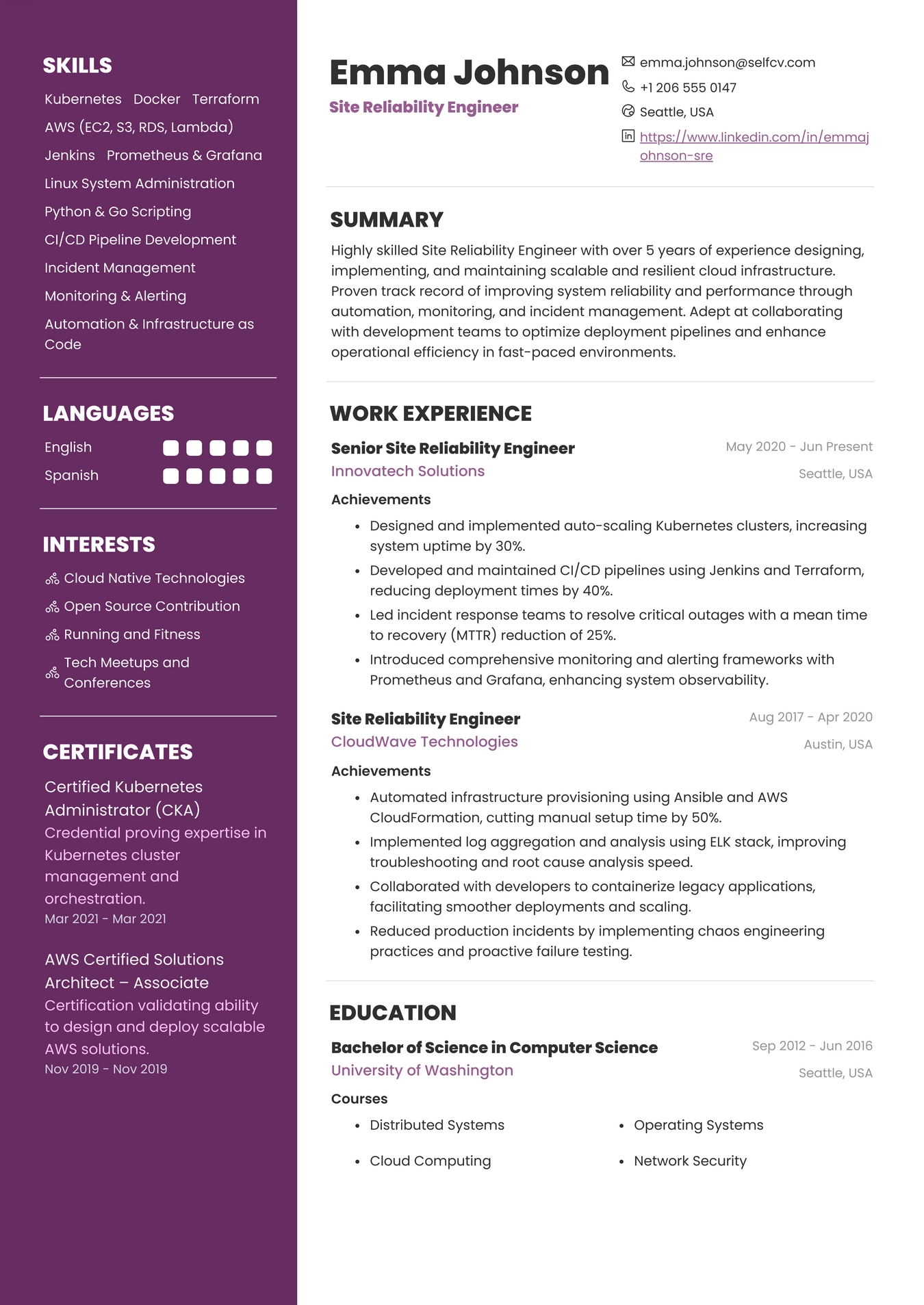
Example Resume for Site Reliability Engineer
Common Mistakes to Avoid When Writing a Site Reliability Engineer Resume
Candidates often list outdated technologies and use vague language without quantifying results. Failing to tailor the resume to specific job descriptions or omitting key certifications can reduce impact. Avoid generic responsibilities by focusing on achievements and measurable improvements.
Key Takeaways for a Site Reliability Engineer Resume
A strong Site Reliability Engineer resume clearly demonstrates relevant technical skills and measurable achievements. Tailoring content to the job posting and highlighting collaboration and automation expertise enhances the application.
- Highlight hands-on experience relevant to the Site Reliability Engineer role.
- Use measurable results to demonstrate achievements and impact.
- Add relevant certifications or completed courses related to Site Reliability Engineer.
- Tailor each resume to the specific job posting.
- Balance technical expertise with communication and teamwork skills.
More than a resume builder
Get startedFind the template that’s right for you
No need to build anything from scratch. Using our templates or upload feature, you’ll get started easily and have a powerful resume in a few clicks.


Check Your Resume with ATS
Make sure your resume passes Applicant Tracking Systems before recruiters see it.
- 📄 Upload your resume and get instant ATS feedback
- 🎯 Improve keyword matching for your target job
- ⚡ Boost your chances of getting shortlisted

